





What is a PLC liquid crystal touch impact testing machine?
2026/08/24
Share:

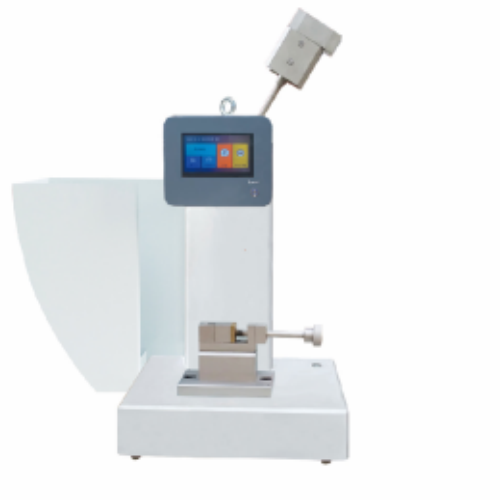
Technical Core of the PLC LCD Touchscreen Impact Tester
The core advantage of the PLC LCD Touchscreen Impact Tester lies in its highly automated and intelligent control system. Traditional impact testers often use relay-based control or simple microcontrollers. With the integration of a PLC, the equipment provides stronger resistance to electromagnetic interference, more powerful logic-processing capabilities, and greater programming flexibility.Combined with a high-resolution LCD touchscreen, the operator can complete parameter setting, test-status monitoring, and data management through an intuitive graphical interface, representing a transition from conventional manual operation to intelligent human-machine interaction.
1. Control System: PLC + PID Algorithm
The equipment uses an imported or high-performance domestic PLC as the main control unit, combined with PID automatic control technology.
For thermal shock testing, the PID algorithm precisely regulates the heater output and refrigeration compressor operation, helping maintain stable temperature fluctuations within ±0.5°C, depending on the equipment configuration.
For mechanical impact testing, the PLC works together with high-speed sensors to achieve automated control of the entire process, including pendulum lifting, impact, measurement, and resetting, thereby minimizing operating errors and improving test efficiency and repeatability.
2. Human-Machine Interface: Color LCD Touchscreen
The equipment is equipped with a 7-inch to 10.4-inch color TFT LCD touchscreen, with support for Chinese and English language switching.
The interface uses graphical control software, allowing operators to directly set test parameters, monitor real-time curves, review historical data, and access fault diagnosis information through the touchscreen.
The display may also support functions such as backlight adjustment and automatic screen-off timing, providing convenient operation while helping extend the service life of the display.
Main Types and Applications of the PLC LCD Touchscreen Impact Tester
Depending on the testing purpose, PLC LCD Touchscreen Impact Testers can generally be divided into the following two main types:
1. Temperature Shock Test Chamber
This type of equipment is used to simulate the ability of products to withstand rapid changes between extreme high and low temperatures. It is widely used in semiconductor, automotive electronics, aerospace, and other industries.
Working Principle:
Three-Zone Structure:
The chamber consists of a high-temperature chamber, low-temperature chamber, and test chamber. During testing, the specimen remains stationary in the test chamber while pneumatic dampers rapidly switch the high-temperature or low-temperature airflow into the test chamber to create thermal shock conditions. This design prevents mechanical movement of the specimen during testing and provides short temperature recovery times and rapid zone transition.
Two-Zone Structure:
The specimen is physically transferred between the high-temperature and low-temperature zones by a carrier basket. This design provides an extremely rapid temperature change rate, although slight mechanical vibration may occur during specimen transfer.
Key Technical Specifications:
Temperature Range: Typically -70°C to +180°C
Refrigeration System: Uses cascade refrigeration technology with refrigerants such as R404A and R23. and is commonly equipped with imported compressors.
2. Computer-Controlled Pendulum Impact Testing Machine
This type of equipment is used to determine the impact resistance and impact toughness of materials such as metals, plastics, and rubber under dynamic loading.
Working Principle:
Based on the principle of conservation of energy, the impact energy absorbed by the specimen is calculated by measuring the difference in the pendulum's potential energy before and after impacting the specimen.
The PLC controls the entire testing process, including motorized pendulum lifting, automatic specimen feeding, positioning, pendulum release, and data acquisition.
The machine can be equipped with a high-precision photoelectric encoder or force sensor to record force-time or energy-time curves in real time.
Functional Features:
Supports both simply supported beam and cantilever beam test modes.
An optional liquid nitrogen cryogenic cooling system can be provided for impact testing at temperatures as low as -196°C, allowing investigation of the ductile-to-brittle transition behavior of materials.
Equipped with a safety guard and interlock system to enhance operational safety.
Advantages and Value of the PLC LCD Touchscreen Impact Tester
1. High Precision and Excellent Stability
The combination of the PLC's high-speed processing capability and PID control technology enables precise control of temperature and mechanical test parameters. This helps minimize human error and the influence of environmental interference, ensuring stable and reliable test results.
2. Easy Operation and Improved Efficiency
The intuitive touchscreen interface makes operation simple and straightforward. The system may support functions such as program storage, scheduled start, automatic defrosting, and power-failure data memory, significantly reducing operator workload and improving testing efficiency.
3. Digital Data Management
The built-in data storage system can record test curves, historical data, and fault logs. Depending on the model, the equipment may provide RS-485. USB, or Ethernet interfaces for computer connectivity, enabling remote monitoring, data export, and test report generation.
4. Safe and Reliable Operation
The equipment incorporates multiple safety protection mechanisms, including over-temperature protection, leakage protection, high- and low-pressure protection for the compressor, and door-switch interlocking. When an abnormal condition occurs, the system can automatically stop operation and display the corresponding fault information, providing effective protection for both the equipment and operators.
Selection and Maintenance Recommendations for the PLC LCD Touchscreen Impact Tester
When selecting a PLC LCD Touchscreen Impact Tester, the following parameters should be considered carefully:
1. Temperature / Mechanical Test Range
Select an appropriate temperature range or impact energy range according to the characteristics and testing requirements of the products being evaluated.
2. Transition / Recovery Time
For a temperature shock test chamber, a shorter temperature transition time generally provides more severe thermal shock conditions and can improve testing efficiency.
3. Chamber Capacity and Load Capacity
Select a suitable working chamber volume and load capacity according to the size and weight of the specimens to ensure sufficient testing space and safe operation.
4. Brand and Technical Support
Priority should be given to reputable manufacturers with appropriate qualifications and certifications. The source and quality of key components, such as refrigeration compressors and PLC modules, should also be considered.
Daily Maintenance
During routine maintenance, the following measures are recommended:
Regularly clean the condenser and heat-dissipation components.
Check the refrigeration system for refrigerant leakage.
Regularly calibrate sensors and measurement components to maintain measurement accuracy.
Keep adequate ventilation around the equipment.
Avoid operating the equipment near sources of strong electromagnetic interference.
Proper maintenance helps extend the service life of the equipment and maintain the accuracy and reliability of test results.
Conclusion
In summary, the PLC LCD Touchscreen Impact Tester has become an important tool in modern industrial reliability testing due to its intelligent control, high-precision testing capabilities, and convenient human-machine interaction. It provides reliable test data for improving product quality, optimizing product design, and evaluating product reliability.
Previous: What is an Airbag-Type Contact Pressure Tester?
N e x t : the last page
