





What Is a Shock Absorption and Cushioning Tester Used For?
2026/08/24
Share:

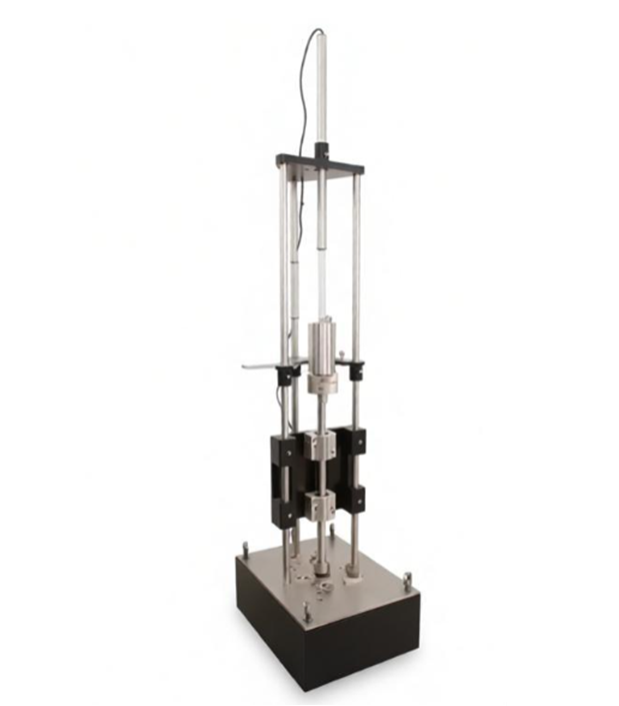
Applications of the Shock Absorption and Cushioning Tester
The primary purpose of the Shock Absorption and Cushioning Tester is to simulate reciprocating vibration and impact loads under actual operating conditions and evaluate the fatigue life, dynamic mechanical properties, and reliability of shock absorbers and related elastic components, helping ensure that they do not fail during long-term use.
1. Main Application Areas
Industries Covered:
Automotive, motorcycles, electric vehicles, special-purpose vehicles, rail transportation, construction machinery, aerospace, and industrial automation equipment.
Test Specimens:
Hydraulic, electromagnetic, and air shock absorbers, coil springs, seal springs, leaf springs, dampers, and other cushioning components.
2. Key Test Items
Fatigue Life Verification
Applies tens of thousands to hundreds of thousands of load cycles while monitoring the test component for failure conditions such as oil leakage, structural cracking, and damping degradation.
Dynamic Performance Characterization
Measures indicator diagrams, velocity characteristic curves, dynamic stiffness, static stiffness, and changes in the damping coefficient.
Extreme Operating Condition Simulation
When combined with an environmental chamber, the tester can perform high- and low-temperature testing and multi-axis combined-load testing, supporting product development and compliance certification.
3. Applications in Quality Control
The tester can be used throughout the product quality-control process, including:
New product development and design optimization
Sampling inspection during mass production
Supplier qualification and approval
Failure reproduction and root-cause analysis
Detailed Features of the Shock Absorption and Cushioning Tester
1. Dynamic Cyclic Loading Capability
Supports multiple waveforms, including sine, square, triangular, ramp, and random waves, to accurately reproduce complex loading conditions such as vehicle vibration and impact.
Wide frequency range: Conventional models typically cover 0.1–5 Hz, while high-end electro-hydraulic servo models can reach 0.01–50 Hz, meeting the requirements of different operating conditions from passenger vehicles to heavy-duty commercial vehicles.
Adjustable amplitude/stroke: Typical maximum amplitude is ±50–100 mm, while long-stroke models can reach ±125 mm or more, accommodating shock absorbers of different lengths.
2. High-Precision Closed-Loop Control and Monitoring
Uses electro-hydraulic servo or servo motor + cam-linkage drive systems, combined with full-digital PIDF closed-loop control, with force control accuracy of ≤±1% and displacement resolution of 0.001–0.01 mm.
Real-time acquisition of force-displacement-time data enables automatic generation of indicator diagrams, velocity characteristic curves, and damping degradation trends, with automatic detection and shutdown for abnormalities such as oil leakage, abnormal noise, and structural failure.
3. Automated and Intelligent Operation
Supports preset cycle counts and load spectrum programs for unattended long-term testing. Equipped with a LCD/touchscreen human-machine interface, supporting Chinese-language programming and data export.
High-end models integrate an environmental chamber, air-pressure monitoring, and AI data analysis modules to improve testing efficiency and simulation accuracy.
4. High-Rigidity Structure and Safety Protection
The main unit generally adopts a four-column high-rigidity frame with vibration- and fatigue-resistant design to ensure stable operation during long-term, high-frequency testing. It is equipped with overload protection, emergency stop, and quick-change fixtures.
Core Value of the Shock Absorption and Cushioning Tester
The core value of the Shock Absorption and Cushioning Tester lies in its ability to accurately simulate real-world operating conditions and expose potential fatigue risks before products enter service, ensuring the safety, reliability, and comfort of critical components throughout their service life. It is an indispensable part of R&D validation, quality control, and standards compliance.
Early Safety Protection:
Identifies potential failure modes of shock-absorbing and cushioning components before delivery, helping prevent accidents or structural instability caused by sudden failures during service.
Quantitative Performance Evaluation:
Accurately reproduces dynamic processes such as compression, rebound, and cyclic impact, objectively evaluating key parameters including damping characteristics, energy absorption capacity, and fatigue life, providing a basis for design optimization and process improvement.
Multi-Scenario Validation:
Covers multiple fields, including vehicles, rail transportation, construction machinery, and sports protective equipment, and supports customized simulation of temperature, frequency, and load spectra to meet complex service-environment requirements.
Supply Chain Qualification:
As an essential testing method in high-end manufacturing and major engineering applications, such as high-speed rail and aerospace, it helps ensure the long-term stability of components while reducing after-sales risks and maintenance costs.
Overall, the Shock Absorption and Cushioning Tester provides precise mechanical performance evaluation and long-term reliability verification, making it a key testing instrument in modern industrial and consumer-product applications where quality and safety are critical. It is not only an effective tool for optimizing product design during R&D but also an important part of ensuring stable product performance and improving the end-user experience.
Previous: What is a PLC liquid crystal touch impact testing machine?
N e x t : the last page
