





What Is a Mattress Rolling Durability Tester?
2026/08/25
Share:

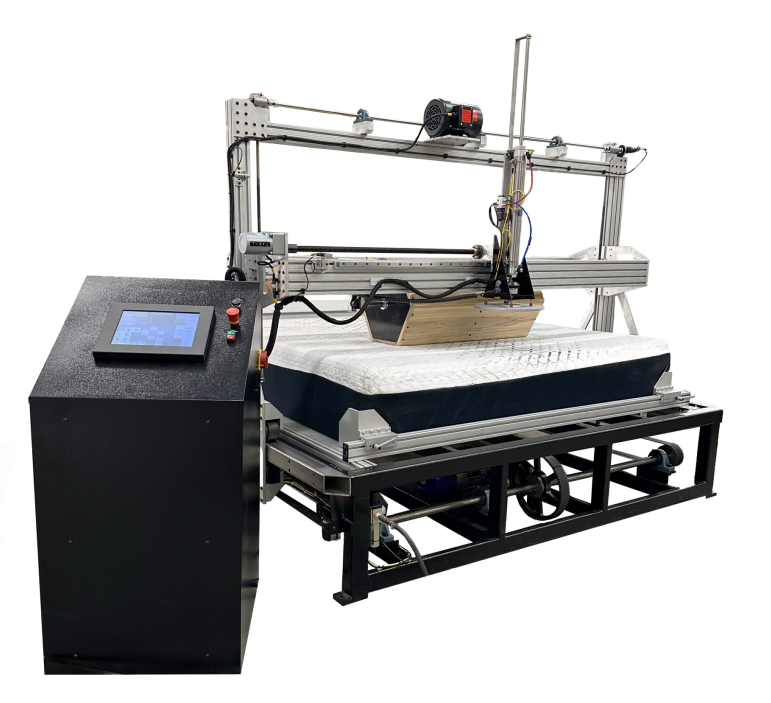
Basic Principle and Working Method of the Mattress Rolling Durability Tester
The Mattress Rolling Durability Tester simulates human movements on a mattress, such as turning over, sitting up, and lying down, by applying cyclic pressure to the mattress. The equipment is typically equipped with a mechanical arm or roller assembly, which moves back and forth across the mattress surface at a preset frequency and force.
The testing cycle can usually reach tens of thousands of repetitions or even more, simulating the long-term usage conditions of a mattress over several years. This type of test helps manufacturers identify potential issues in advance, such as material fatigue, spring system failure, and deformation of filling materials.
The durability and reliability of the testing equipment itself are also critical to the accuracy of the test. Any equipment failure may result in test interruptions, inaccurate data, or unreliable evaluation results.
Common Durability Issues and Their Causes
The durability issues of the Mattress Rolling Durability Tester mainly occur in three areas: mechanical components, the control system, and the overall structural design. The common problems are as follows:
Mechanical Component Wear
Components such as rollers, bearings, and transmission belts operate under high loads for extended periods, making them prone to wear. For example, the surface of the roller may deform due to frequent friction, resulting in uneven testing force and increased operating noise. This type of wear not only affects testing accuracy but also reduces the overall service life of the equipment.
Control System Failures
The control system of the equipment consists of motors, sensors, and supporting software, which are responsible for controlling the movement frequency and applied testing pressure. If the control system fails, such as motor overheating or sensor malfunction, the test process may not proceed as planned. Software errors may also lead to incorrect data recording, affecting the final quality evaluation results.
Structural Fatigue
During repeated operation, the overall frame and support structures of the equipment are subjected to continuous stress, which may cause stress concentration and eventually lead to cracks or deformation. Especially in high-intensity testing environments, structural fatigue accumulates over time and may ultimately result in equipment failure.
The root causes of these problems are usually related to material selection, manufacturing processes, and operating conditions. If low-quality materials are used for components, or if load distribution is not fully considered during the design stage, the durability of the equipment will be significantly reduced. In addition, insufficient regular maintenance can accelerate equipment aging and shorten its service life.
Factors Affecting the Accuracy of Test Results
The durability issues of the Mattress Rolling Durability Tester directly affect the reliability of test results. If the equipment itself operates unstably, testing data may become inaccurate, causing manufacturers to make incorrect judgments regarding mattress quality.
For example, worn rollers may fail to apply uniform pressure, causing test results to be biased and potentially hiding the actual defects of the mattress. Control system failures may interrupt the testing cycle, resulting in incomplete or incomparable data. This not only wastes time and resources but also affects decision-making in product quality control.
Therefore, ensuring the high durability and stable performance of the testing equipment itself is essential for maintaining the accuracy and reliability of test results.
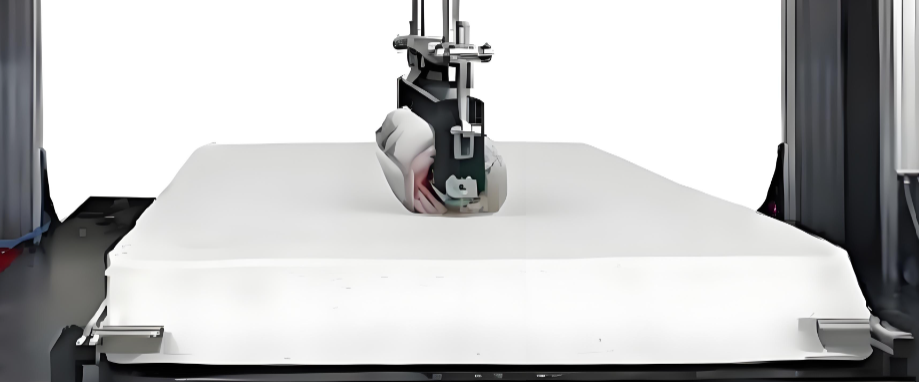
Maintenance and Improvement Recommendations for the Mattress Rolling Durability Tester
To improve the durability and service life of the Mattress Rolling Durability Tester, users can adopt the following measures:
Regular Inspection and Maintenance
Establish a standardized maintenance plan, including cleaning components, lubricating moving joints, and checking electrical connections. A comprehensive inspection should be carried out at least once a month to identify and repair minor issues in time, preventing small problems from developing into major failures.
Use High-Quality Replacement Components
When replacing components, select materials with excellent wear resistance and fatigue resistance, such as reinforced steel or high-performance engineering plastics. This can extend the service life of the equipment and reduce downtime caused by maintenance and repairs.
Control the Operating Environment
Place the testing equipment in an environment with stable temperature and low dust levels to prevent damage caused by harsh conditions. Proper humidity control is also necessary to prevent corrosion of electrical circuits.
Regular Software Updates and Equipment Calibration
Regularly update the control system software and calibrate the equipment according to a scheduled maintenance cycle to ensure accurate testing parameters. Recording maintenance activities and test data each time can help track equipment performance and operating conditions.
From the manufacturer’s perspective, optimizing the equipment design can further improve durability. For example, adopting a modular design can simplify component replacement, while adding cushioning devices can reduce impact loads during operation. These improvements can not only extend equipment service life but also reduce long-term operating costs.
Conclusion
The durability of the Mattress Rolling Durability Tester is an important issue that deserves attention within the industry. By understanding common problems, analyzing their causes, and implementing effective maintenance measures, users can improve equipment reliability and ensure the accuracy of test results.This not only supports better quality control in the mattress industry but also helps save resources and reduce operational costs. With continuous technological advancement, more durable and intelligent testing equipment is expected to emerge in the future, providing greater value and support for industry development.
Previous: How Does a Digital Display Electronic Ink Viscosity Meter Work?
N e x t : the last page
