





What Is an Automotive & Motorcycle Control Cable Fatigue Tester?
2026/08/25
Share:

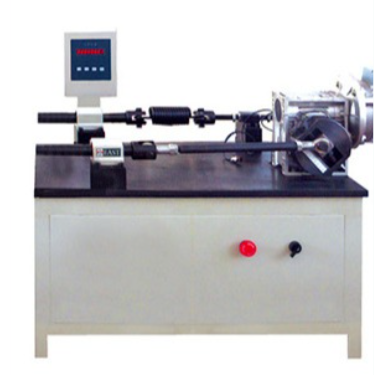
Working Principle of the Automotive and Motorcycle Cable Fatigue Testing System
The Automotive and Motorcycle Cable (Flexible Shaft) Fatigue Testing System can accelerate and reproduce the stress conditions that cables experience throughout the entire vehicle life cycle under laboratory conditions. Its core working principle mainly consists of three aspects: reciprocating motion simulation, combined load application, and intelligent failure monitoring.
1. Reciprocating Motion Simulation Mechanism
The testing system usually uses a variable-frequency motor combined with a crank-link mechanism as the power source, converting the motor’s rotary motion into controlled linear reciprocating motion. This mechanism accurately reproduces repeated operations performed by drivers, such as pressing the clutch pedal, rotating the throttle grip, or shifting gears.
By adjusting the motor speed, the movement frequency can be controlled. Different connecting rods can be replaced to adjust the stroke length, allowing the system to match the actual operating range and frequency of cables used in different vehicle models. This ensures standardized and consistent testing conditions.
2. Combined Load Application and Stress Simulation
During actual vehicle operation, cables are subjected not only to axial tensile forces but also to lateral forces and bending stresses caused by vehicle vibration and component displacement.
Advanced testing systems are equipped with adjustable weights, pneumatic loading systems, or servo-controlled tension mechanisms to apply the rated working load to the cable. At the same time, adjustable swinging brackets and bending wheel assemblies enable the cable to undergo repeated bending at specific angles during reciprocating movement, reproducing complex installation conditions in areas such as vehicle frames and steering systems.
This combined simulation of tensile and bending stresses provides a comprehensive evaluation of the load-bearing capability of cable wires, protective sleeves, and connection terminals.
3. Intelligent Monitoring and Failure Detection
The equipment integrates high-precision counting modules, position sensors, and current monitoring units to continuously record the number of reciprocating cycles throughout the test.
When failures occur, such as wire breakage, terminal detachment, or movement blockage, the sensors immediately detect abnormal stroke changes or sudden increases in resistance. The system then automatically stops operation and records the final cycle count.
Engineers can determine the service life of the cable based on the number of cycles completed before failure. By analyzing the failure location and failure mode, potential defects in product design, material selection, or manufacturing processes can be identified and improved.
Main Application Scenarios of the Automotive and Motorcycle Cable Fatigue Testing System
The Automotive and Motorcycle Cable (Flexible Shaft) Fatigue Testing System covers the entire industrial chain, from raw material selection to final product delivery. Its main applications include:
1. New Product Development and Process Optimization
During the product development stage, engineers can use the testing system to compare performance data from samples with different numbers of steel wire strands, cable materials, sheath formulations, and terminal crimping processes. This helps optimize structural design, avoid early failure risks such as wire breakage and terminal detachment, and shorten the product development cycle.
2. Raw Material Qualification Control
Manufacturers can use fatigue testing to select raw material suppliers that provide high-strength, bending-resistant, and wear-resistant materials. By establishing strict material qualification standards, companies can control product quality from the source.
3. Mass Production Quality Inspection and Batch Sampling
As a routine quality inspection device in production workshops, the testing system can perform fatigue tests on randomly selected finished products from each production batch. It helps identify defective products caused by manufacturing issues such as poor terminal crimping, damaged steel wires, or assembly defects, preventing non-conforming products from entering the market.
4. Vehicle Integration and Certification Testing
Automobile and motorcycle manufacturers often require cable fatigue testing as a mandatory supplier qualification test. This ensures that components can withstand actual vehicle operating conditions, helping guarantee overall vehicle performance and driving safety.
5. Third-Party Testing and Quality Arbitration
Third-party testing organizations can conduct type testing and quality inspection according to relevant national standards. The test results and professional reports provide reliable technical evidence for product market access, export certification, and quality dispute resolution.
The Importance of the Automotive and Motorcycle Cable Fatigue Testing System
The Automotive and Motorcycle Cable (Flexible Shaft) Fatigue Testing System is a core testing device for ensuring vehicle control safety and reliability. Its importance is reflected in four key aspects: preventing failures, controlling quality, supporting product development, and ensuring compliance requirements.
1. Safety Assurance: Preventing Sudden Failures in Critical Control Systems
Cables are widely used in safety-critical systems such as throttle control, clutch operation, braking, and gear shifting. During long-term operation, they are continuously subjected to alternating loads including tension, bending, and twisting, which may lead to issues such as wire breakage, movement blockage, and terminal loosening.
The testing system accelerates the simulation of full-life-cycle operating conditions, allowing potential fatigue defects to be identified in advance. This helps prevent vehicle control failures and safety accidents caused by cable breakage during actual driving.
2. Supporting Full-Chain Quality Control
Product Development Stage
The system enables engineers to compare different materials and manufacturing processes, optimize structural designs, and eliminate potential weaknesses affecting service life.
Supplier and Supply Chain Evaluation
By quantitatively evaluating the durability differences of raw materials and components from different suppliers, manufacturers can establish reliable qualification standards.
Mass Production Quality Inspection
Finished products can be randomly sampled from production batches for fatigue testing, helping detect short-life products caused by manufacturing defects or process abnormalities before they reach the market.
Vehicle Manufacturer Qualification and Certification
As a mandatory supplier evaluation item for many vehicle manufacturers, fatigue testing ensures that cable assemblies can withstand complex vehicle operating conditions, including off-road environments and frequent start-stop operations.
3. Irreplaceable Technical Advantages
The fatigue testing system solves the limitations of manual testing, such as inaccurate testing frequency, inconsistent stroke control, and poor data repeatability.It supports multi-station simultaneous testing, automatic cycle counting, alarm functions, and automatic shutdown. The system can accurately monitor various failure modes, including cable breakage and movement blockage.
In addition, the equipment can be customized to simulate special operating conditions, making it suitable for emerging applications such as new energy vehicles and specialized vehicles.
Conclusion
Overall, the Automotive and Motorcycle Cable (Flexible Shaft) Fatigue Testing System plays a vital role in ensuring the reliability and durability of critical vehicle components and deserves significant attention from the industry.The equipment can accurately simulate the complex alternating loads experienced by cables during actual operation. Through rigorous fatigue life testing, it provides scientific support for product quality control, design optimization, and validation of industry standards.We sincerely welcome customers, partners, and industry professionals to contact us for further discussion on technical requirements and application solutions. Detailed product information, technical specifications, and customized service options are available upon request.
Previous: What Is a Mattress Rolling Durability Tester?
N e x t : the last page
