





What are the characteristics of a car seat belt locking performance tester?
2026/08/25
Share:

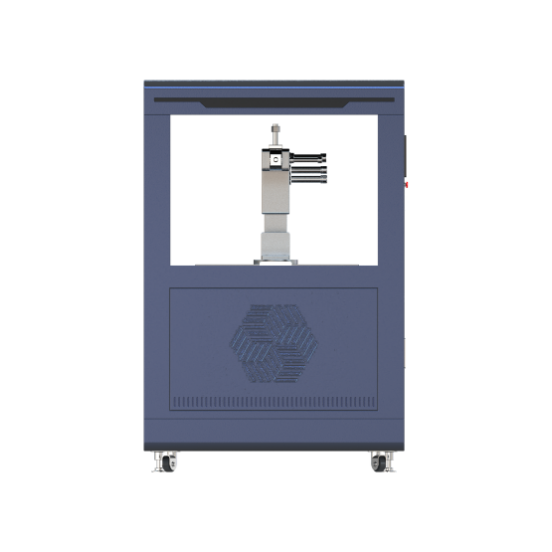
Features of the Automotive Seat Belt Locking Performance Tester
1. Excellent Operating Condition Simulation Capability
The Automotive Seat Belt Locking Performance Tester features outstanding simulation capabilities, allowing it to accurately reproduce various emergency scenarios such as sudden braking, collisions, and vehicle tilting.Taking the Automotive Seat Belt Retractor Emergency Locking Test System as an example, the equipment provides a wide acceleration simulation range. The vehicle acceleration can be flexibly set between 0.2 and 1.5g, while the belt acceleration adjustment range is not less than 0.2 to 2.5g. The acceleration adjustment step is ≤ 0.05g, and the acceleration measurement accuracy is < 0.01g, enabling precise simulation of different vehicle acceleration conditions.
2. High-Speed Dynamic Response and Precise Acceleration Control
Some advanced testing systems adopt an electronically controlled hydraulic system, which can generate any required acceleration waveform from 0 to 10g within 5ms. This effectively eliminates the response delay of traditional mechanical triggering devices and significantly improves dynamic response accuracy.
3. Multi-Angle Tilt Locking Performance Simulation
For the Automotive Seat Belt Tilt Locking Performance Tester, the equipment can simulate vehicle inclination conditions at different angles.The retractor rotation angle range can reach ±45° (adjustable), with an adjustable rotation speed of 0–6°/s and a rotation speed error of less than 1.0%. It can comprehensively simulate the complex stress conditions experienced during vehicle rollover, tilting, and other extreme situations.
4. Accurate Evaluation of Real Accident Locking Performance
Through high-precision operating condition simulation, the tester can realistically reproduce seat belt locking behavior under actual accident conditions, providing reliable technical data for performance evaluation.
5. Multi-Dimensional and Comprehensive Performance Testing
The Automotive Seat Belt Locking Performance Tester enables multi-dimensional and full-process performance evaluation, covering critical parameters such as:Locking sensitivity,Reliability,Mechanical strength,Durability,Environmental adaptability.This comprehensive testing capability ensures a complete evaluation of seat belt system performance.
6. High-Precision Locking Sensitivity Detection
For locking sensitivity testing, the equipment can accurately record the locking trigger time of the seat belt retractor.According to GB14166-2013. when vehicle acceleration reaches 0.7g, the retractor should complete locking within 2ms. The tester uses high-speed imaging systems and high-precision sensors to capture key data at the exact moment of locking, ensuring accurate and reliable test results.
7. Mechanical Strength and Durability Testing
For strength evaluation, high-performance universal material testing machines equipped with dedicated fixtures can perform mechanical tests on seat belt locking mechanisms, including locking strength and webbing tensile tests. These tests verify the reliability of the locking system under loads of up to 2 tons.During durability testing, the equipment can simulate hundreds of thousands of seat belt pulling and locking cycles. For example, an Automotive Seat Belt Retractor Durability Test Bench can perform repeated locking tests ranging from 10⁴ to 10⁵ cycles, evaluating wear conditions and locking force degradation after long-term operation.
Functions and Applications of the Automotive Seat Belt Locking Performance Tester
1. Ensuring Product Quality for Automotive Manufacturers and Component Suppliers
For automobile manufacturers and automotive component suppliers, the Automotive Seat Belt Locking Performance Tester is a key tool for quality control. By conducting strict locking performance tests during product development and manufacturing, companies can identify design defects and production issues in seat belt locking systems at an early stage, such as insufficient locking sensitivity, rapid reduction of locking force, and poor environmental adaptability. This allows targeted improvements and optimization to enhance product reliability and safety.
2. Providing Independent Testing Support for Third-Party Inspection Organizations
Third-party testing organizations use the tester to perform professional evaluations, providing independent and objective technical data for vehicle manufacturers, component suppliers, and regulatory authorities.These test results serve as important evidence for product quality certification and provide objective criteria for automotive safety performance evaluation. They also help improve the overall safety standards of the automotive industry.
3. Supporting Innovation in Automotive Seat Belt Technology
The tester provides an important experimental platform for the research and development of automotive seat belt technologies. Research institutions and corporate R&D departments can use the equipment to study new seat belt materials, locking mechanism designs, and other safety technologies.For example, by testing the locking performance of different materials under various operating conditions, engineers can select webbing materials with better wear resistance, higher strength, and improved environmental adaptability. Through repeated testing and optimization of new locking mechanisms, the sensitivity and reliability of seat belt systems can be significantly improved.
4. Promoting Technological Development in Automotive Safety Systems
The continuous upgrading and improvement of testing equipment also drives the development of related technologies.To meet the requirements of higher precision and more complex testing conditions, modern testers continue to innovate in areas such as sensor technology, automated control systems, and data processing technology. These technological advances further support the development of automotive seat belts and other vehicle safety systems, promoting innovation across the entire automotive safety industry.
5. Supporting Safety Regulations and Market Supervision
With increasingly strict automotive safety regulations, the Automotive Seat Belt Locking Performance Tester has become an important tool for regulatory authorities to enforce standards and maintain market order.Automotive safety standards issued by different countries, such as China’s GB 14166-2013. specify clear requirements for seat belt locking performance. Regulatory agencies can use testing equipment to conduct product inspections and ensure that vehicles and components comply with safety requirements.For products that fail to meet regulatory standards, authorities can take appropriate measures and require manufacturers to make improvements. This helps maintain fair market competition and protects consumer safety and rights.
6. Providing Data Support for the Improvement of Automotive Safety Regulations
Test results generated by the equipment also provide valuable data for the revision and improvement of automotive safety regulations.By analyzing large amounts of test data, regulatory authorities can understand the overall performance level and potential issues of automotive seat belt locking systems. This provides scientific support for developing and adjusting safety regulations, ensuring that standards better meet practical requirements and provide stronger protection for drivers and passengers.
Conclusion
Overall, the Automotive Seat Belt Locking Performance Tester is far more than a conventional testing device; it serves as a technological safeguard for occupant safety. Through high-precision operating condition simulation and strict data verification, it ensures that seat belts can lock accurately and rapidly at critical moments, minimizing injuries during accidents.With continuous advancements in automotive safety technology, seat belt testing will continue to evolve toward higher precision, broader testing coverage, and greater intelligence, making an essential contribution to safer road transportation worldwide.
Previous: What Is an Automotive & Motorcycle Control Cable Fatigue Tester?
N e x t : the last page
