





What Can We Learn from Large-Scale Fire Testing?
2026/08/27
Share:

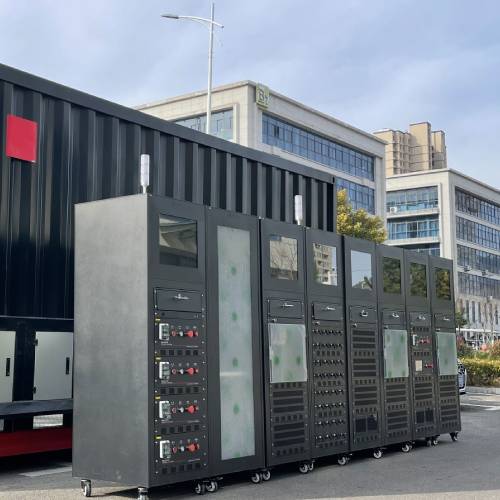
Features of LSFT Large-Scale Fire Testing System
1. Realistic Simulation of Extreme Fire Scenarios in Energy Storage Systems
The core mission of the system is to accurately reproduce the most severe fire conditions that energy storage power stations may encounter during actual operation. To achieve this goal, the LSFT system abandons idealized mild testing environments and adopts highly destructive, real-world fire testing strategies. The system can intentionally ignite an entire energy storage unit (or even multiple connected containers) outdoors or inside a specially designed large-scale test chamber. During testing, all active fire protection systems (such as air conditioning and fire suppression sprinklers) can be intentionally disabled, allowing the fully charged battery system to undergo uncontrolled natural combustion without external intervention.
2. Multi-Dimensional Sensor Network for Comprehensive Data Acquisition
Large-scale combustion processes can last for several hours or even dozens of hours, making accurate capture of massive amounts of data essential for understanding fire evolution mechanisms. Modern LSFT systems integrate a comprehensive multi-dimensional sensor network, including high-precision thermocouple arrays, heat flux meters, gas analyzers, pressure sensors, and high-definition infrared thermal imaging systems.
3. Real-Time Monitoring and Quantitative Analysis of Fire Behavior
The system can continuously monitor and record critical parameters throughout the combustion process, including flame propagation rate, heat release rate (HRR), total heat release (THR), smoke density and toxicity, explosion overpressure, and surface temperature variations of adjacent battery cabinets.
Advanced LSFT systems also utilize digital twin technology to achieve real-time visualization and automatic data acquisition throughout the entire testing process. Through in-depth analysis of millisecond-level dynamic data, engineers can accurately establish fire evolution curves from initial thermal runaway to full-scale flashover, providing reliable data support for evaluating fire containment and control performance.
4. Intelligent Automated Operation and High-Level Safety Protection
Operators only need to preset the test program in the central control room, and the system can automatically execute the ignition procedure while remotely securing and controlling the test area. The system is equipped with multiple physical pressure relief devices and explosion-proof structural designs, ensuring that the test facility remains stable and reliable even under severe combustion or explosive events.
5. Automated Reporting and Traceable Test Data Management
Supported by powerful backend analysis software, the system can automatically generate test reports that comply with international standards. This eliminates subjective errors caused by manual recording and ensures that every destructive test produces accurate, reliable, and traceable scientific data.
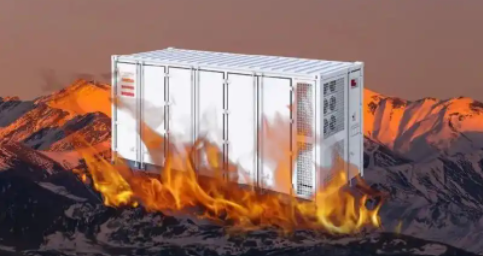
Applications of LSFT Large-Scale Fire Testing System
1. Evaluation of Thermal Runaway Propagation Prevention Capability
Through LSFT testing, the ability of an energy storage product to prevent risk propagation under extreme fire conditions can be directly evaluated. The core objective of the test is to verify “thermal runaway non-propagation” — that is, when a single battery cluster or cabinet experiences severe combustion, whether the fire can be effectively contained within the initial unit without igniting adjacent energy storage units or causing cascading explosions throughout the entire energy storage station.
This quantitative performance evaluation enables system integrators to identify and eliminate critical structural design defects before mass production, ensuring that delivered energy storage systems possess strong passive safety resilience.
2. Providing Reliable Safety Evidence for Project Approval and Risk Assessment
For many years, the lack of real-world experimental data on large-scale energy storage fires has caused concerns among local fire departments, insurance companies, and nearby communities, resulting in difficulties during project approval and increased insurance costs.
The LSFT Large-Scale Fire Testing System provides the industry with reliable safety evidence through transparent and rigorous extreme-condition validation.
3. Enhancing Confidence in Energy Storage System Safety
When an energy storage system can achieve “combustion without propagation” under extreme conditions such as 100% state of charge, no fire suppression intervention, and minimal spacing between units, it not only demonstrates outstanding safety performance but also provides strong confidence for regulatory approval, insurance coverage, and public acceptance.
As a result, the implementation process of energy storage projects can be significantly streamlined.
4. Verification Platform for New Technologies and Structural Designs
For energy storage companies, LSFT serves as an ideal testing platform for validating the feasibility of new processes and architectures. During the development of advanced air-cooling or liquid-cooling systems, high-performance fire-resistant and thermal insulation materials, or optimized pressure relief and explosion-proof designs for battery packs, R&D teams can utilize the LSFT system to conduct destructive tests.
5. Driving Product Innovation Through Post-Fire Analysis
By analyzing fire-damaged components and combustion data, engineering teams can quickly identify key factors influencing thermal propagation. These insights drive continuous product optimization and enable the development of innovative energy storage systems that achieve both high energy density and advanced safety redundancy.
Overall, the LSFT Large-Scale Fire Testing System has established an authoritative position in the field of energy storage safety testing through its realistic extreme fire scenario simulation technology, high-precision multi-dimensional sensing system, and rigorous automated testing procedures.With the rapid global expansion of energy storage installations and increasingly stringent safety requirements, hidden fire chain reactions have become a critical concern. By creating controllable and standardized disaster-level fire scenarios in a laboratory environment, the LSFT system transforms the abstract concept of “system safety” into specific and measurable engineering data. It continuously drives improvements across the entire energy storage industry chain, promoting advancements in material science, structural design, and manufacturing technologies.
Previous: How to Test Coating Adhesion Strength?
N e x t : the last page
