





What is a Geotextile wear tester?
2026/08/28
Share:

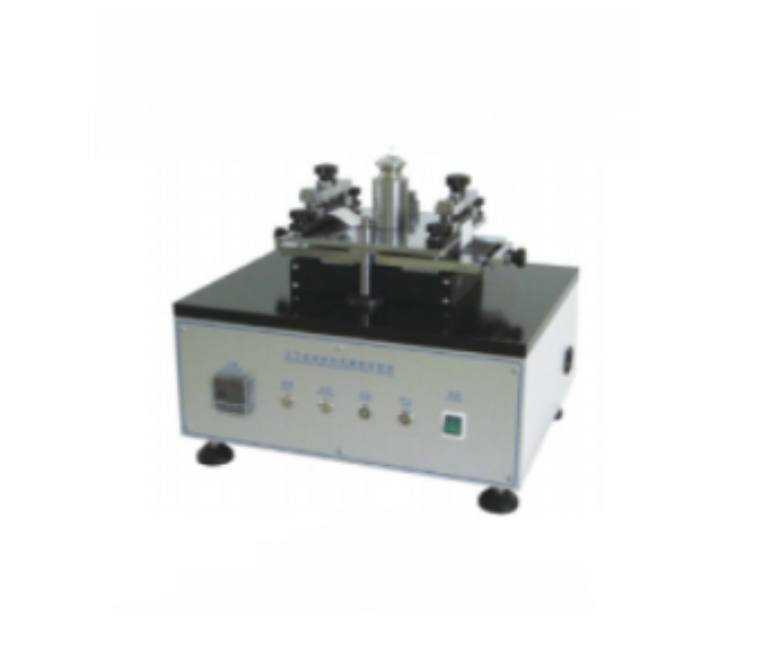
Instrument Classification: A Testing System for Diverse Applications
According to the testing principles and application scenarios, Geotextile Abrasion Testers can be divided into three main categories:
1. Plane Abrasion Tester
This type adopts a design in which the upper and lower plates move relative to each other, generating friction between the specimen and the abrasive disc through a slight difference in movement speed. The specimen size is typically 50 mm × 114 mm. It is suitable for testing the planar abrasion resistance of woven and nonwoven geotextiles.In one study, a research institution found through plane abrasion testing that a polyester needle-punched fabric exhibited only an 8% loss in tensile strength after 1.000 abrasion cycles under a pressure of 1 kg, demonstrating the material's suitability for highway subgrade reinforcement applications.
2. Dynamic Abrasion Tester
This type integrates combined tensile, bending, and friction movements to simulate dynamic loads encountered during construction. The specimen is subjected to a preset initial tension through a guide roller system and undergoes reciprocating friction against an abrasive rack equipped with sandpaper.A railway project test showed that after 50.000 cycles of dynamic abrasion, a nonwoven fabric had a surface fiber breakage rate of less than 5%, meeting the application requirements for the surface layer of the subgrade bed of a high-speed railway ballastless track.
3. Curved and Folding Abrasion Tester
This type is designed to evaluate the abrasion resistance of geotextiles under bending conditions. In curved abrasion testing, the specimen is repeatedly bent around rollers with a fixed radius of curvature. Folding abrasion testing simulates the material's resistance to abrasion when it comes into contact with sharp objects.A water conservancy project test showed that a polypropylene nonwoven fabric exhibited no breakage after 2.000 cycles of curved abrasion testing, demonstrating its suitability for riverbank slope protection applications.
Core Principle: Quantitative Evaluation of Material Durability
All Geotextile Abrasion Testers follow the basic testing logic of “pressure–friction–strength loss”:
1. Pressure Application System
A vertical pressure of 6 kg ± 0.01 kg is applied through a combination of weights or a pneumatic device to ensure the repeatability of test results. A comparative test conducted by a laboratory showed that when the pressure fluctuation exceeded 0.1 kg, the deviation in the specimen abrasion rate could reach 15%.
2. Friction Motion Control
The reciprocating motion frequency is generally set at 90 cycles/min to simulate dynamic loads encountered in actual engineering applications. For high-frequency testing, the pressure needs to be reduced to 4 kg to prevent the equipment from overheating. On some instruments, continuous operation for 2 hours may cause a temperature increase that results in a frequency fluctuation of up to 5 cycles/min. In such cases, the equipment needs to be stopped temporarily for cooling.
3. Strength Loss Measurement
After completion of the abrasion test, the specimen is subjected to a tensile test in accordance with the applicable standard, and the strength loss rate is calculated.
Technical Parameters: Balancing High Precision and Versatility
Modern Geotextile Abrasion Testers have achieved significant technological advances in precision control and functional integration:
1. Pressure Accuracy
A servo motor-driven pressure application system is used, with the error controlled within ±0.01 kg. In a laboratory test, three instruments were used to test the same specimen, and the data deviation was only 0.5%, demonstrating the high reliability of this type of equipment.
2. Abrasion Cycle Setting
The number of abrasion cycles can be freely set between 2 and 99.999 cycles, meeting the testing requirements of different engineering applications. For example, a highway project in a desert region may need to simulate 10 years of wind and sand abrasion, for which 200.000 abrasion cycles can be set.
3. Specimen Compatibility
By replacing the fixtures, the tester can also be used to test composite materials such as geomembranes and geogrids. A research institution successfully conducted an abrasion resistance test on a bio-based biodegradable geotextile using customized fixtures, providing data support for the application of the material in environmental protection projects.
Typical Applications: Extending from the Laboratory to Engineering Sites
The Geotextile Abrasion Tester is used throughout the entire process of material development, quality control, and engineering acceptance:
1. Material Development
By analyzing test data, a company optimized the fiber arrangement process of its nonwoven geotextiles, improving the abrasion resistance of the products by 30% and successfully entering the high-end market.
2. Quality Control
A railway project once experienced excessive track settlement due to the use of geotextiles that had not passed abrasion testing, ultimately resulting in rework costs of tens of millions of yuan. Since then, the industry has incorporated abrasion resistance into the mandatory testing requirements for geotextiles.
3. Engineering Material Selection
After conducting low-temperature abrasion testing, a water conservancy project in a cold region found that the geotextile used in the project exhibited increased fiber brittleness under friction at −15°C, resulting in a 20% increase in the strength loss rate. These test results provided critical data for improving the material's performance.
Performance Advantages of the Geotextile Abrasion Tester
Compared with traditional abrasion testing devices, the Geotextile Abrasion Tester offers significant advantages:
Parameter Accuracy: Standardized abrasion frequency and stroke ensure consistent abrasion intensity, whereas traditional devices may experience considerable parameter fluctuations, which can easily lead to testing errors.
Flexibility: The number of abrasion cycles can be freely set to simulate different degrees of wear corresponding to various service periods, while traditional devices typically support only a fixed number of cycles.
Improved Efficiency: The stable abrasion mechanism and automatic counting function can reduce the test time for a single set of specimens from 2 hours to 1 hour, doubling testing efficiency.
Standardized Results: Strict compliance with applicable standards ensures that test results are reliable and comparable.
For geotextile manufacturers and engineering quality inspection organizations, this is not merely a testing instrument, but also a key tool for ensuring the long-term durability of engineering materials. Its precise simulation capability, stable performance, and flexible parameter settings can help effectively reduce the risk of abrasion-related failure and enhance product competitiveness in engineering applications.
Conclusion
The Geotextile Abrasion Tester quantitatively evaluates the performance of geotechnical materials through scientific testing methods and supports engineering decisions with accurate data. From microscopic performance testing in the laboratory to large-scale applications at engineering sites, its value extends beyond engineering quality control and makes it an important tool for promoting technological innovation and industry advancement. With the continued development of infrastructure construction and advances in materials science, such testing instruments will play an increasingly important role in ensuring engineering safety and promoting sustainable development.
Previous: How to learn about Carbon Black Content Tester?
N e x t : the last page
