





How to learn about Carbon Black Content Tester?
2026/08/27
Share:

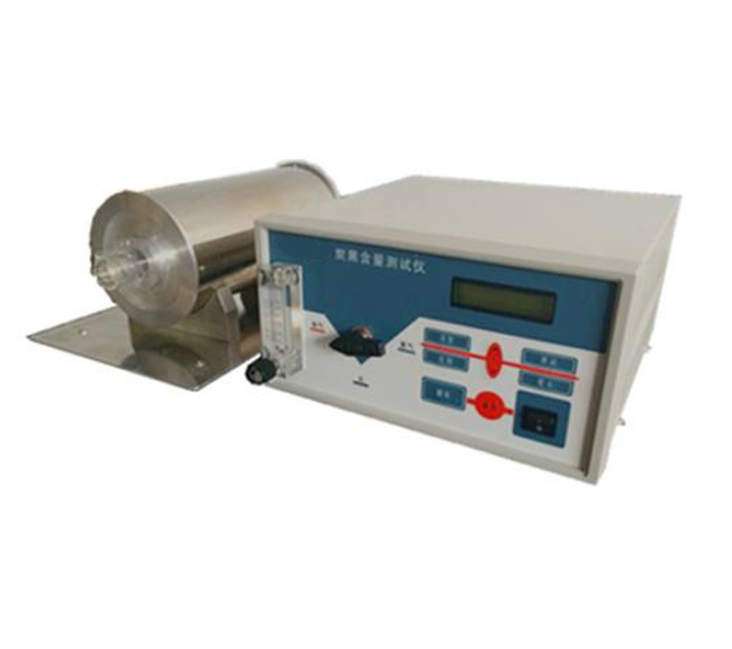
Structural Analysis of the Instrument: A Functional Module Perspective
Rather than analyzing the instrument through traditional “structural components”, a Carbon Black Content Tester can be better understood as an integrated system composed of several core functional modules working together to achieve accurate measurement.
First is the sample reaction and condition control system.
This is the core reaction unit of the instrument. Depending on the selected testing method, it may consist of a precision high-temperature tube furnace used to accurately control the pyrolysis temperature profile, or a corrosion-resistant digestion vessel equipped with safe reagent addition and stirring mechanisms. The diversity of these designs ensures highly repeatable and stable reaction conditions.
Second is the mass change monitoring system.
In thermogravimetric analysis methods, this system typically consists of a highly sensitive microbalance integrated into the reaction chamber. It can continuously and accurately record the mass changes of the sample during the testing process. Its measurement accuracy directly determines the reliability of the final test results.
Third is the data acquisition and processing system.
This system is responsible for collecting raw signals from sensors and automatically calculating and outputting the carbon black content percentage based on preset algorithm models. Modern instruments are usually equipped with human-machine interfaces (HMI), making operation and result interpretation more intuitive and convenient.
Finally is the safety and auxiliary system.
For testing processes involving high temperatures or potentially harmful gases, the instrument is equipped with safety features such as exhaust systems, cooling devices, gas purification units, and sealed protective structures. These systems ensure safe operation while reducing environmental impact.
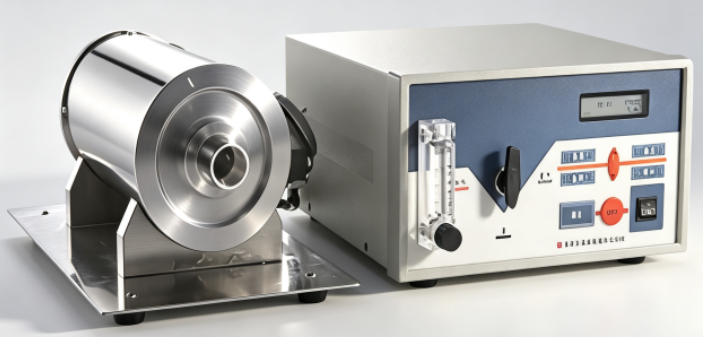
Understanding the Working Principle of Carbon Black Content Tester
The analysis of the concentration of specific components in a material usually relies on the changes in measurable physical properties introduced by that component. For carbon black in polymer materials such as rubber and plastics, this change is reflected in its specific energy absorption characteristics within infrared spectra.
When carbon-carbon bonds and carbon-hydrogen bonds in hydrocarbons are exposed to infrared radiation, they vibrate and absorb energy at specific wavelengths. The presence of carbon black interferes with this process, and its absorption characteristics differ from those of the polymer matrix. This difference forms the physical basis for the instrument to identify and measure carbon black content.
Energy Interaction: How Infrared Light Is “Filtered” by Materials
The instrument does not directly “see” carbon black particles. Instead, it determines carbon black content indirectly by quantifying energy loss.
When a modulated infrared beam passes through or reflects from the tested sample, chemical bonds within the material selectively absorb photon energy that matches their vibration frequencies. Carbon black, as a highly carbonized material, has absorption characteristics that differ from the carbon-hydrogen structures in organic polymers.The detector receives the remaining optical signal after it has been “filtered” by the sample. The reduction in signal intensity is related to the total amount of material absorbing infrared energy at that wavelength. However, at this stage, the obtained signal still contains information from multiple components.
Signal Separation: Extracting Characteristic Values from Mixed Responses
To separate the contribution of carbon black from the mixed signal, the instrument applies mathematical processing methods.Typically, two or more characteristic wavelengths are selected during measurement:One wavelength is highly sensitive to changes in carbon black content and serves as the measurement channel.Another wavelength, or multiple reference wavelengths, is minimally affected by carbon black but sensitive to factors such as polymer matrix characteristics, sample thickness, or surface conditions, serving as reference channels.By establishing a ratio or functional relationship between the measurement channel and reference channel signal intensities, fluctuations caused by non-carbon-black factors can be effectively compensated. This allows extraction of characteristic values directly related to carbon black content.
Calibration Conversion: Transforming Abstract Ratios into Percentage Values
The electrical signals or calculated ratios directly obtained by the instrument are abstract values for operators. Converting them into an intuitive carbon black mass percentage requires a pre-established calibration model.This model is developed by measuring a series of standard samples with accurately known carbon black contents. The instrument response values are mathematically correlated with the actual carbon black concentrations to establish a calibration curve or calculation formula.When testing unknown samples, the internal processor automatically converts the measured characteristic values into carbon black content readings according to this model. The accuracy and applicability of the calibration directly determine the reliability of the final measurement results.
Implementation Components: How Hardware Modules Work Together to Complete the Measurement Process
The above principles are realized through specific hardware components. A typical carbon black content measurement system includes:Infrared light source — generates the measuring radiation.Optical system (such as filters or wavelength selection components) — selects specific infrared wavelengths.
Sample platform — positions the test specimen.
Optical detector — receives the transmitted or reflected optical signals and converts them into electrical signals.Control and display unit — processes signals, performs calculations, and displays test results.
These components work together to form a complete measurement chain:
Light source → Sample interaction → Detector signal acquisition → Signal processing and characteristic extraction → Calibration model conversion → Carbon black content display
The stability of each stage directly affects measurement repeatability and accuracy.
Conclusion
Understanding the working principle of the Carbon Black Content Tester is essential for optimizing material quality control and improving testing accuracy. By combining infrared detection technology, signal processing algorithms, and calibration models, the instrument provides a reliable method for quantitative carbon black analysis.In the future, with continued development in new material research and increasingly advanced industry standards, carbon black content testers will continue evolving toward higher accuracy, improved efficiency, and greater intelligence, providing strong technical support for product quality assurance and technological innovation in related industries.
Previous: How to measure the softness of leather?
N e x t : the last page
