





Why Choose a Fully Automatic High-Temperature Specific Heat Capacity Tester?
2026/08/28
Share:

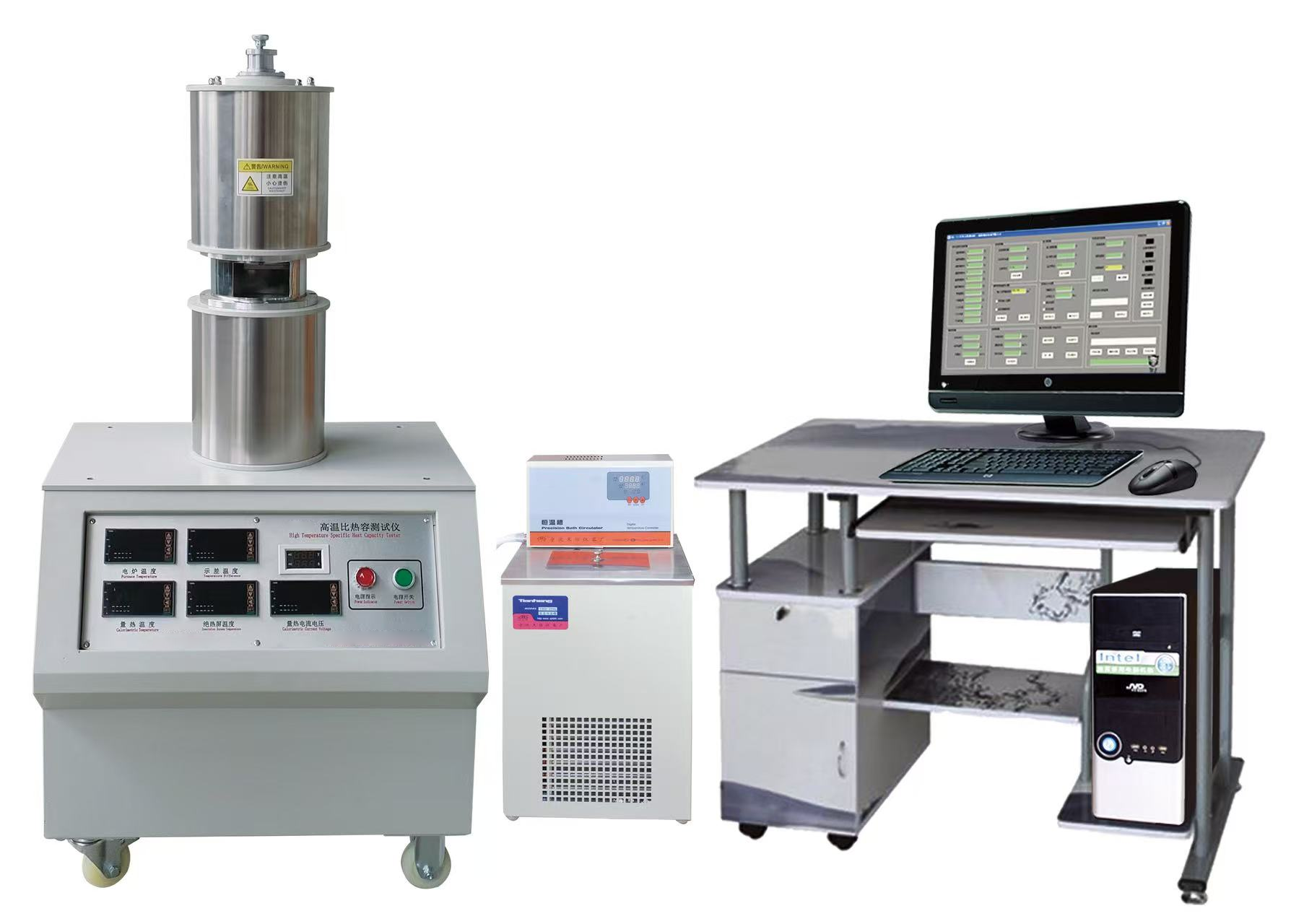
From Manual Operation to Full Automation: An Inevitable Choice in Technological Advancement
Traditional specific heat capacity testing relies heavily on manual operation, requiring operators to manually adjust the temperature and record data. This process is not only time-consuming and labor-intensive but is also more susceptible to result deviations caused by environmental fluctuations and operational errors. The Fully Automatic High-Temperature Specific Heat Capacity Tester integrates a computer control system to achieve full-process automation, covering heating, temperature stabilization, and data acquisition. For example, one model uses PID intelligent temperature control technology to limit temperature fluctuations to within ±0.1°C. Combined with high-precision sensors, it can achieve a test repeatability error of less than 0.5%, significantly improving data reliability.
More importantly, fully automatic instruments overcome the limitations of high-temperature testing. Traditional equipment typically covers a temperature range from room temperature to approximately 300°C, while next-generation products can increase the upper testing limit to 1600°C or even higher through optimized furnace materials and thermal insulation design. This breakthrough makes testing possible for high-temperature applications involving ceramics, metals, refractory materials, and other materials, providing broader opportunities for materials research and development.
Core Functions: Dual Assurance of Precision and Efficiency
The core advantages of the Fully Automatic High-Temperature Specific Heat Capacity Tester are reflected in three major functional modules:
1. Intelligent Temperature Control System
The instrument adopts a multi-stage programmed heating mode to simulate complex thermal histories that materials may experience during actual use. For example, some instruments support customizable heating curves, allowing users to set segmented heating rates from room temperature to 1200°C according to specific requirements while monitoring temperature changes in real time. This ensures that the test conditions closely correspond to actual application scenarios.
2. High-Precision Data Acquisition
By integrating heat flow sensors and differential scanning calorimetry (DSC) technology, the instrument can simultaneously capture differences in heat flow between the sample and reference material and calculate the specific heat capacity directly using computer algorithms. This process requires no manual intervention, avoiding result deviations caused by insufficient thermal equilibrium time or data reading errors in traditional methods.
3. Automatic Report Generation
After the test is completed, the system can automatically generate a comprehensive report containing temperature-specific heat capacity curves, statistical data tables, and error analysis, with support for exporting data in Excel or PDF formats. This function not only saves researchers time when organizing data but also improves the readability and professionalism of reports through standardized output.
Expanded Application Scenarios: A Bridge from the Laboratory to Industrialization
The Fully Automatic High-Temperature Specific Heat Capacity Tester has been applied across multiple key fields. In the new energy industry, specific heat capacity testing of battery materials is required to evaluate thermal stability and optimize heat dissipation designs. In the aerospace sector, specific heat capacity data for high-temperature alloys and ceramic matrix composites directly affect the performance of thermal protection systems for aerospace vehicles. In the ceramics and refractory materials industries, the instrument provides quantitative data for formulation optimization and quality control.
Taking a sodium-ion battery hard carbon anode material developed by a company as an example, researchers used a fully automatic instrument to test the material and found significant differences in specific heat capacity at different heat treatment temperatures. This finding directly guided adjustments to the production process, increasing the energy density of the product by 12% while reducing the risk of thermal runaway. Similar cases demonstrate that the Fully Automatic Specific Heat Capacity Tester is not only a research and development tool but also an important support for the industrialization of advanced materials.
Future Trends: Deep Integration of Intelligence and System Integration
As materials science continues to demand higher testing accuracy and efficiency, Fully Automatic High-Temperature Specific Heat Capacity Testers are evolving toward greater intelligence and system integration. Next-generation products may incorporate artificial intelligence algorithms, using machine learning to optimize temperature control strategies and data analysis models. At the same time, modular designs will enable instruments to work in conjunction with other testing equipment, such as thermal conductivity testers and dilatometers, creating one-stop material thermal performance analysis platforms.
For materials researchers, choosing a reliable Fully Automatic High-Temperature Specific Heat Capacity Tester means gaining an advantage in an increasingly competitive market. Whether the goal is to improve data accuracy, increase testing efficiency, or investigate material behavior under extreme high-temperature conditions, such instruments will become indispensable research partners.
If you are looking for a solution to improve your material thermal performance testing capabilities, it is worthwhile to explore the technical details and application cases of Fully Automatic High-Temperature Specific Heat Capacity Testers in greater depth. It may be the key tool for overcoming R&D bottlenecks and accelerating product commercialization.
Conclusion
With its outstanding measurement accuracy, highly efficient automated workflow, and excellent high-temperature stability, the Fully Automatic High-Temperature Specific Heat Capacity Tester undoubtedly deserves close attention from materials researchers and engineers. It can not only significantly improve the reliability and repeatability of experimental data but also provide solid technical support for in-depth investigations into the thermophysical behavior of materials under extreme high-temperature conditions. We sincerely welcome you to contact us directly for detailed technical specifications, specific application solutions, successful case studies, and other product information, and to explore together how this advanced tool can be integrated into your research and development system.
Previous: Why Should Plastic Products Undergo Scratch Testing?
N e x t : the last page
