





What is Filter Membrane Pore Analysis Tester?
2026/09/01
Share:

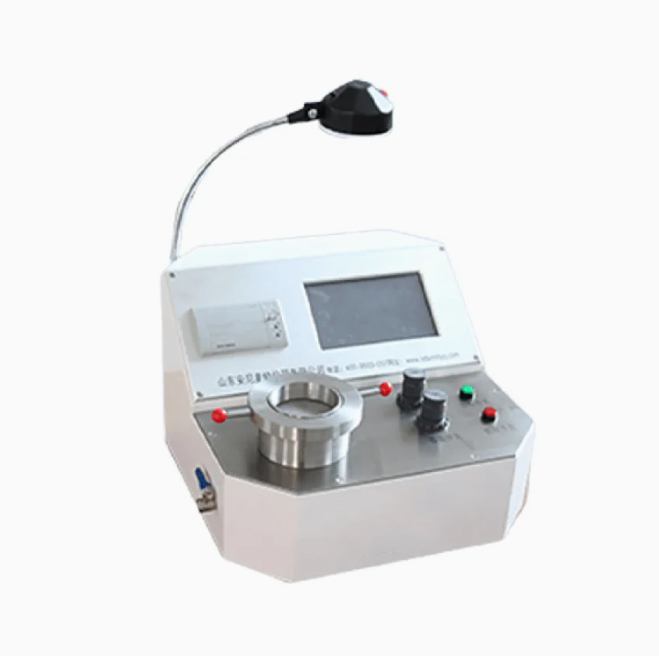
In-Depth Analysis of the Working Principle of the Membrane Pore Size Analyzer
As a core component of modern industrial separation technologies, the pore structure of a filter membrane directly determines its filtration efficiency, selectivity, and service life. The Membrane Pore Size Analyzer is a precision instrument specifically designed to accurately characterize this microscopic pore structure. Among the various mainstream testing technologies, the gas-liquid displacement method, also known as the bubble point method, can realistically reflect the physical process of fluid passing through membrane pores and is widely recognized as a standard method for membrane pore size characterization. Rather than directly “measuring” pore size, this technique indirectly determines pore throat size and its distribution by monitoring the changes in pressure required for gas to overcome the surface tension of the liquid.
1. Core Physical Mechanism: The Interaction Between Surface Tension and Pressure
The working principle of the Membrane Pore Size Analyzer is based on the Young-Laplace equation, which clearly describes the relationship among pressure, surface tension, and pore size in capillary phenomena. In simple terms, when a wetting liquid fills the micropores of a membrane, the surface tension of the liquid forms a natural barrier that prevents gas from easily passing through the pores.
The smaller the pore size, the greater the curvature of the liquid meniscus and the stronger the resulting capillary resistance. Therefore, a higher gas pressure is required to displace the liquid from the pore. Conversely, larger pores require a lower breakthrough pressure. This inverse relationship forms the theoretical basis of the entire testing process: by accurately determining the critical pressure at which gas breaks through the liquid seal, the corresponding pore size can be calculated.
2. Dynamic Interpretation of the Testing Process
The entire analysis process involves dynamic pressure scanning and gas flow monitoring, mainly consisting of three key stages: wetting, pressurization, and detection.
Sample Wetting:
First, the membrane specimen is completely immersed in a suitable wetting liquid, such as deionized water, isopropanol, or a specialized low-surface-tension fluid. This step is critical. All interconnected pores must be thoroughly filled with the liquid while air bubbles are eliminated, allowing surface tension to securely retain the liquid within the pore channels.
Stepwise Pressurization:
The instrument then introduces an inert gas, such as nitrogen or compressed air, to one side of the membrane and gradually increases the pressure at a controlled rate. At the same time, high-sensitivity sensors continuously monitor the transmembrane pressure difference and the flow rate of the gas passing through the membrane.
At the initial stage of pressure increase, the pressure is insufficient to overcome the capillary force of the pores, so gas cannot pass through and the flow rate remains nearly zero. As the pressure continues to increase, the breakthrough pressure corresponding to the largest pores is reached first. The liquid in these largest pores is displaced, allowing gas to pass through. The instrument detects the first continuous generation of bubbles, and the corresponding pressure is known as the bubble point pressure, which is associated with the maximum pore size of the membrane.
As the pressure increases further, pores of medium and smaller sizes are progressively opened. The gas flow rate increases in a stepwise or continuous manner. When the pressure reaches the upper limit, the liquid has been completely displaced from the interconnected pores, and the gas flow reaches its maximum value. At this point, the membrane reaches a flow condition equivalent to that of a dry membrane.
3. Data Analysis and Reconstruction of Pore Size Distribution
The instrument's control software compares and analyzes the measured wet curve and dry curve. By calculating the proportion of gas flow corresponding to different pressure points, the system can determine the contribution of different pore size ranges to the total gas flow and reconstruct the pore size distribution of the membrane.
A major advantage of this method is that it focuses on the characterization of through-pore throats. Unlike adsorption methods or mercury intrusion porosimetry, the gas-liquid displacement method does not characterize blind pores, surface depressions, or non-through cracks. Instead, it primarily evaluates the effective pores that actually participate in fluid transport.
As a result, the measurement results are more closely related to actual filtration conditions and can provide a reliable representation of the membrane's retention performance and permeability.
Core Technical Advantages of the Membrane Pore Size Analyzer
The core technical advantages of the Membrane Pore Size Analyzer focus on accurate characterization of through-pores, flexible sample compatibility, and fully automated testing and analysis.
1. Accurate Representation of Actual Filtration Conditions
Based on the gas-liquid or liquid-liquid displacement method (bubble point method), the analyzer directly characterizes the pore throat diameter, namely the narrowest section of a through-pore, rather than relying on a geometric average pore size. The resulting data are therefore more representative of the actual retention behavior of fluids passing through the membrane.
The instrument supports dual-mode operation, including gas-liquid and liquid-liquid displacement, accommodating both low-pressure measurement of small pores and low-error measurement of larger pores while overcoming the limitations of relying on a single testing method.
2. Flexible Sample Protection Design
Structural innovations such as vacuum-assisted wetting, external-pressure gas introduction, and interchangeable fixtures for different specimen configurations enable the analyzer to accommodate flat-sheet, hollow-fiber, tubular, and other non-standard membrane geometries.
These designs help prevent deformation or pore blockage of polymeric membranes caused by excessive pressure, ensuring that the membrane remains in a test condition that closely resembles its actual service conditions.
3. High Stability and Repeatability
The use of fully integrated metal tubing helps minimize problems associated with thermal expansion, contraction, and leakage. High-precision pressure and flow sensors, combined with automatic pressure regulation, reduce data fluctuations caused by manual operation.
The standardized testing procedure can be configured to comply with applicable industry standards, such as ASTM and GB standards, thereby improving the comparability of measurement results between different laboratories.
4. Intelligent Closed-Loop Analysis
Built-in mathematical models can automatically analyze dry-state and wet-state pressure-flow curves and generate test reports covering parameters such as the bubble point, pore size distribution, and gas permeability.
The system can also support customizable algorithm modules and multiple data export formats, enabling seamless integration with R&D, quality control, and third-party certification workflows.
Compatible Materials and Testing Range of the Membrane Pore Size Analyzer
1. Compatible Materials
The Membrane Pore Size Analyzer is suitable for microporous filter membranes made from materials such as PES, PTFE, PVDF, nylon, and cellulose acetate. It can also be used for a wide range of porous filtration materials, including lithium-ion battery separators, ceramic membranes, sintered metal filter discs, nonwoven fabrics, glass fiber filter media, hollow fiber membranes, and tubular filter elements.
2. Standard Testing Range
The conventional pore size measurement range is 0.02 μm to 500 μm. With a liquid-liquid displacement module, the testing capability can be further extended to the nanoscale pore size range, depending on the instrument configuration and test method.
3. Applications Across Multiple Industries
Biopharmaceutical and Pharmaceutical Industries — A Critical Application
The analyzer is primarily used to verify the pore size accuracy of standard 0.22 μm and 0.45 μm sterilizing-grade filter membranes and virus filters, supporting GMP-compliant quality control requirements.
It can perform bubble point integrity testing of filters used for injectable formulations, vaccines, biological culture media, and sterile pharmaceutical solutions. It can also evaluate pore size uniformity and filtration stability of hemodialysis membranes and plasma separation media.
In addition, the analyzer can be used for performance screening and batch verification of pre-filtration and clarification membranes in bioprocess chromatography, helping minimize the risk of microorganisms and particulate contaminants passing through the filtration system.
New Energy Industry
For dry-process and wet-process lithium-ion battery separators, the analyzer can measure maximum pore size, pore size distribution, and through-pore uniformity. These measurements help control battery self-discharge, promote uniform electrolyte penetration, and improve battery safety and cycle life.
The analyzer can also be applied to the characterization of porous materials used in fuel cell gas diffusion layers and proton-exchange membrane-related filtration materials, as well as the R&D and quality control of separators for aqueous energy-storage batteries and sodium-ion batteries.
Water Treatment and Environmental Protection
The analyzer can characterize the pore size parameters and filtration performance of MBR hollow fiber membranes, ultrafiltration membranes, and microfiltration membranes. It can also be used for quality verification of membranes employed in seawater desalination pretreatment, industrial purified water, and ultrapure water terminal filtration.
For industrial air-pollution control, it can evaluate the pore size distribution of PTFE-coated filter media and dust-collection filter fabrics, helping predict particulate retention efficiency and resistance to clogging. The resulting data provide a technical basis for selecting environmental filtration equipment and optimizing filter media.
Electronics and Semiconductor Industry
The analyzer is suitable for precision filtration membranes used in electronic-grade ultrapure water, photoresists, electronic chemicals, and cleaning solutions.
It can accurately identify oversized defects and abnormal pores in filter membranes, helping prevent particulate contamination during semiconductor manufacturing processes and supporting high production yield and process stability. The analyzer can therefore meet the stringent requirements for high-precision filtration in the electronics industry.
Food and Beverage Industry
The analyzer can be used to characterize filtration membranes designed for sterilization and clarification of beer, fruit juice, dairy products, and bottled water.
It can also perform integrity verification of filtration elements used for brewing water and food-processing applications, helping prevent the passage of microorganisms and suspended particles while supporting safe production and consistent product quality.
Chemical, Advanced Materials, and Research Applications
The analyzer supports laboratory R&D and process optimization for ceramic membranes, porous metal filter discs, and advanced composite separation membranes.
It can characterize the pore structure of porous catalyst supports and filtration materials used for gas-solid and liquid-solid separation. Researchers can also compare the effects of different membrane fabrication processes, such as stretching, phase inversion, and sintering, on pore size distribution and pore connectivity.
These measurements provide essential data for the development and optimization of advanced filtration and separation materials.
Air Purification and Industrial Dust Collection
The analyzer can characterize the pore size parameters of HEPA and ULPA glass-fiber filter media as well as PTFE-coated filtration materials for air purification.
The measured data can be used to evaluate the expected particle filtration performance and pressure-drop characteristics of filter media, supporting material selection and quality control for fresh-air ventilation systems, industrial dust collection equipment, cleanrooms, and air filtration systems.
Conclusion
Overall, the Membrane Pore Size Analyzer plays an important role in filter media R&D, quality inspection, and process optimization thanks to its precise measurement capability and stable testing performance.It enables users to scientifically characterize key parameters such as pore size distribution and bubble point pressure, while providing reliable data for the design, optimization, and performance improvement of high-efficiency filtration systems.With broad applicability across air purification, industrial dust collection, cleanrooms, fresh-air ventilation, water treatment, biopharmaceuticals, new energy, semiconductor manufacturing, food and beverage processing, and advanced materials, the Membrane Pore Size Analyzer offers significant practical value for modern filtration and separation technologies.We are committed to providing professional and comprehensive testing solutions for customers worldwide. Please feel free to contact us for further information about the product's technical specifications, configuration options, testing capabilities, and application solutions. Our professional team will be pleased to provide dedicated technical support and service.
Previous: What is the cut-resistant glove test?
N e x t : the last page
