





What is a Plastic Drainage Board Horizontal Water Flow Tester?
2026/09/01
Share:

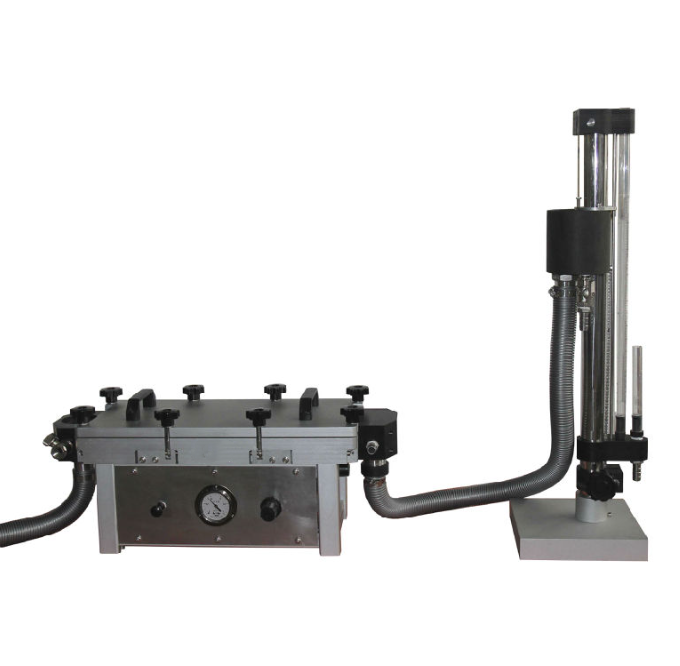
Working Principle and Technical Core
The core principle of the In-Plane Water Flow Capacity Tester for Drainage Boards is to simulate the actual stress conditions encountered in engineering applications. After a drainage board is embedded in soil, it is subjected to lateral compression from the surrounding soil. If the drainage board has insufficient resistance to compressive deformation, its internal drainage channels may become narrower, resulting in a significant reduction in drainage efficiency.
The instrument applies a constant lateral load, or confining pressure, to the test specimen through a rigid pressurization vessel or loading frame. At the same time, a stable hydraulic head difference is established between the two ends of the drainage board. Under these controlled conditions, the instrument accurately measures the volume of water flowing through the drainage board per unit of time and calculates its in-plane water flow capacity.
This testing process minimizes errors caused by manual operation and ensures the objectivity, accuracy, and comparability of the test results. Modern high-end models are typically equipped with intelligent pressure control systems and high-precision flow measurement units, enabling automatic data acquisition and processing while further improving testing efficiency and measurement consistency.
Key Test Items and Application Value of the In-Plane Water Flow Capacity Tester for Drainage Boards
Key Test Items
Focusing on water flow capacity as the core performance indicator, the In-Plane Water Flow Capacity Tester for Drainage Boards can perform the following key tests:
1. Determination of In-Plane Water Flow Capacity
This is the most fundamental and critical test parameter. Under the specified lateral pressure and hydraulic gradient required by the applicable standard, the instrument measures the volume of water passing through the drainage board per unit of time.
This value directly reflects the drainage efficiency of the drainage board and serves as a key indicator for determining whether the material meets the design requirements. The test should continue until the difference between two consecutive water flow measurements meets the specified stability criterion, with the final measurement taken as the test result.
2. Pressure–Water Flow Capacity Relationship Curve
By repeating water flow capacity measurements under different levels of lateral pressure, the instrument can generate a pressure–water flow capacity relationship curve.
This test is designed to analyze how the drainage performance of the board changes with increasing pressure and thereby evaluate its resistance to compressive deformation. For deep soft-soil ground improvement, maintaining adequate water flow capacity under high confining pressure is particularly important. The test can help predict the long-term service stability of drainage materials installed in deep soil layers.
3. Verification of Filter Membrane Permeability and Overall Compatibility
With specific testing procedures, the instrument can also be used to evaluate the permeability of the filter membrane. Under applied pressure, the overall drainage performance of the core drain and surrounding nonwoven geotextile filter membrane can be assessed to determine whether the two components work together effectively.
This helps identify potential drainage failures caused by filter membrane clogging or damage and provides a comprehensive evaluation of the performance of composite drainage boards under complex stress conditions.
Application Value
1. Ensuring Engineering Quality and Safety
Insufficient water flow capacity of plastic drainage boards can prolong the consolidation time of soft foundations and may result in serious engineering problems such as roadbed settlement and pavement cracking.
Strict testing with this instrument enables material quality to be controlled at the source, ensuring that drainage boards delivered to construction sites provide adequate drainage efficiency. This contributes to the long-term safety, stability, and durability of infrastructure projects such as highways, railways, and ports.
2. Providing Objective Evidence for Third-Party Testing
For manufacturers, the instrument serves as an important testing device for factory type testing and batch inspection, helping improve product reliability and market credibility.
For construction companies, supervision organizations, and project owners, it is an important tool for incoming material acceptance and construction quality control.
Third-party testing laboratories can use the instrument to issue independent and impartial test reports, providing scientific evidence for resolving quality disputes between suppliers and purchasers and helping maintain fair market practices.
3. Supporting Design Optimization and Cost Control
Through advanced tests such as the pressure–water flow capacity relationship curve, engineers can obtain a more accurate understanding of the actual performance of different drainage board specifications at different soil depths.
This information can be used to optimize ground improvement designs, avoiding material waste caused by overdesign while reducing potential safety risks resulting from insufficient design. Accurate test data also help construction companies select suitable materials more efficiently and achieve better control of overall project costs.
4. Promoting Industry Standardization
As testing instruments become more accurate and automated, the quantitative evaluation of drainage board performance is becoming increasingly standardized.
This not only supports the development and implementation of relevant national and industry standards but also promotes advances in geosynthetic manufacturing technologies, encouraging manufacturers to develop high-performance drainage products with greater compressive resistance and more stable water flow capacity.
Conclusion
Overall, the In-Plane Water Flow Capacity Tester for Drainage Boards is more than a precision laboratory instrument; it serves as an important link between material performance and engineering safety.Through accurate evaluation of key parameters such as in-plane water flow capacity and pressure-response characteristics, the instrument provides reliable data support for soft-soil ground improvement projects.With the continued development of intelligent monitoring technologies, future drainage board testing systems are expected to offer greater capabilities in real-time data acquisition, remote diagnostics, and full life-cycle quality traceability, further supporting the safe and high-quality development of infrastructure projects.We are committed to providing professional, reliable, and stable testing solutions for customers worldwide. If further information is required regarding the instrument's technical specifications, operating procedures, or application cases, please feel free to contact us. Our professional team will be pleased to provide detailed product information and technical support.
Previous: What is Filter Membrane Pore Analysis Tester?
N e x t : the last page
