





What is a thermal cycling test?
2026/09/02
Share:

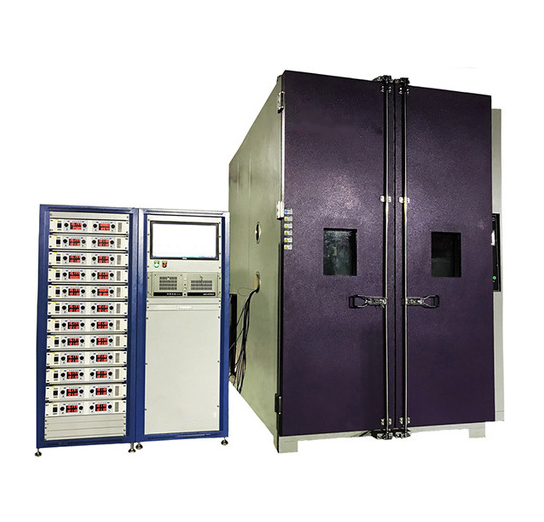
Core Principle: Reproducing the Harsh Tests of Nature
The working principle of the Thermal Cycling, Humidity-Freeze Test Chamber is based on the precise simulation of natural climatic conditions. In nature, day-night temperature fluctuations, seasonal changes, and the alternating occurrence of rain, snow, and frost continuously subject materials to thermal and moisture stresses. By integrating refrigeration, heating, humidification, and dehumidification systems, the equipment can create rapidly alternating environments ranging from extreme cold to high temperatures and from dry to high-humidity conditions within a sealed chamber.
The core lies in “cycling” and “alternation.” Rather than simply maintaining a constant condition, the equipment operates according to a preset program, repeatedly varying temperature and humidity over a wide range. These drastic environmental changes are designed to accelerate the aging process of materials and reveal potential defects that may occur during long-term use, such as structural fatigue caused by thermal mismatch, corrosion caused by moisture penetration, or deterioration of insulation performance.
Technical Construction: A Precision-Integrated System Engineering Solution
To achieve high-precision environmental simulation, the Thermal Cycling, Humidity-Freeze Test Chamber employs a sophisticated mechanical and electrical control system.
Refrigeration and Heating Systems: The equipment typically uses multi-stage cascade refrigeration technology combined with environmentally friendly refrigerants to achieve rapid cooling and reach extremely low temperature limits. The heating system uses high-efficiency electric heating elements to ensure rapid and uniform temperature increases. Under the coordination of an intelligent control system, the two systems work together to achieve smooth temperature transitions and precise temperature stabilization.
Humidity Control Mechanism: Humidity control is another major technical challenge of this equipment. Steam is supplied through methods such as external boiler humidification or ultrasonic humidification, while dehumidification is achieved through refrigeration and condensation. This enables precise adjustment of the relative humidity inside the chamber. This bidirectional control capability ensures accurate testing under various combinations of operating conditions, including high-temperature/high-humidity and low-temperature/low-humidity environments.
Air Circulation and Thermal Insulation Structure: To ensure consistent temperature and humidity at different points within the chamber, a forced air circulation system is installed inside the equipment. A multi-blade centrifugal fan drives air circulation to eliminate localized temperature differences. The chamber itself is constructed with multiple layers of thermal insulation materials and a stainless-steel inner chamber, providing excellent thermal insulation while offering superior corrosion resistance and structural strength.
Application Fields: Comprehensive Coverage from Photovoltaics to Electronics
The Thermal Cycling, Humidity-Freeze Test Chamber has an extremely wide range of applications, with the photovoltaic industry being one of the most typical.
Solar modules are typically exposed to outdoor environments for decades and must withstand repeated exposure to extreme cold, high temperatures, rain, snow, and ice throughout their service life. Humidity-freeze cycle testing with this equipment can effectively evaluate the embrittlement resistance of photovoltaic module backsheets, the corrosion resistance of solder ribbons, and the sealing performance of encapsulation materials, thereby helping predict power generation efficiency and safety throughout the module’s lifecycle.
In addition, the equipment is also indispensable in fields such as electronics and electrical engineering, automotive components, aerospace, and polymer materials. Whether evaluating the moisture resistance of circuit boards, the low-temperature flexibility of rubber seals, or the adhesion of metal coatings, reliability must be verified through rigorous environmental stress screening under such demanding conditions.
Industry Significance and Future Outlook
The core industry significance of the Thermal Cycling, Humidity-Freeze Test Chamber lies in its role as a critical “gatekeeper” for verifying the long-term reliability and safety of photovoltaic and other products before they enter the market. Through accelerated environmental simulation, it can identify potential risks that may emerge during decades of product use in advance, thereby helping safeguard the quality standards of the entire industry.
Ensuring Long-Term Product Service Life and Safety
By simulating repeated exposure to high-temperature/high-humidity conditions and sub-zero temperatures, the equipment specifically challenges the ability of components to withstand harsh climatic conditions. Such testing can effectively reveal weaknesses that may develop during long-term use, such as backsheet embrittlement and solder ribbon corrosion, helping ensure that products can continue to operate reliably after 20 to 30 years of outdoor exposure rather than failing prematurely or creating potential safety hazards.
Establishing Unified Industry Market-Entry Requirements
Thermal cycling and humidity-freeze testing are essential qualification tests that photovoltaic modules must pass before entering the market, with relevant requirements clearly specified in applicable standards. This means that manufacturers are evaluated against the same criteria. Products that fail to meet the required standards may be prevented from entering mainstream markets, helping reduce low-quality and low-price competition within the industry.
Supporting Product R&D and Quality Improvement
During the R&D stage, the equipment helps engineers quickly identify weaknesses in product designs or materials, such as thermal mismatch in encapsulation materials and fatigue stress at soldering points, enabling targeted process optimization. For manufacturers, it is also an important tool for quality sampling and inspection on production lines, allowing batch-related defects to be identified promptly and preventing problems from being discovered only after large quantities of products have entered the market.
Supporting the Credibility of the Renewable Energy Industry
For photovoltaic products to achieve large-scale adoption, the fundamental issue of whether they can operate reliably for 20 years or more must first be addressed. The reliability verification provided by Thermal Cycling, Humidity-Freeze Test Chambers gives the industry confidence in making long-term performance commitments. It also provides an important basis for investment decisions by financial institutions and long-term use by customers, supporting the healthy development of the renewable energy industry as a whole.
At present, leading companies have begun implementing more stringent testing protocols to evaluate product performance under extreme load sequences. In the future, Thermal Cycling, Humidity-Freeze Test Chambers are expected to evolve toward higher precision and greater intelligence. By integrating big-data analysis capabilities, these systems can establish more accurate correlations between accelerated test data and actual failure modes observed in photovoltaic power plants, providing robust data support for full-lifecycle management of photovoltaic products.
In summary, with its precise temperature-control capabilities, stringent compliance requirements, and high testing efficiency, the Thermal Cycling, Humidity-Freeze Test Chamber plays an indispensable role throughout the photovoltaic industry chain. It serves as a fundamental tool for ensuring the long-term safety and reliable operation of green energy infrastructure.
Previous: What is a Plastic Drainage Board Horizontal Water Flow Tester?
N e x t : the last page
