





What is a 20L spherical explosion tester?
2026/09/02
Share:

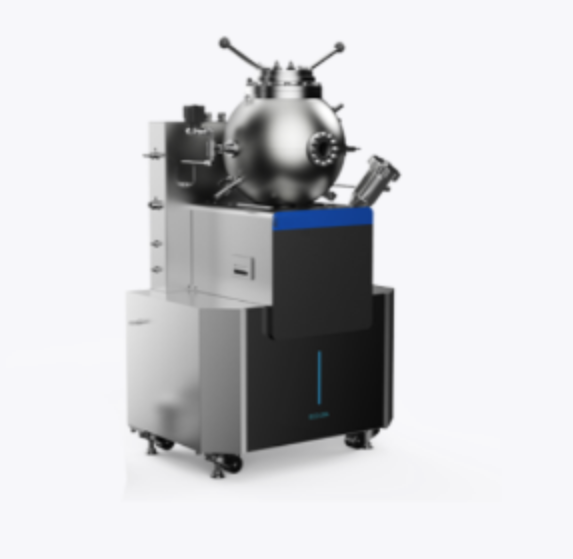
Core Testing Principle of the 20 L Spherical Explosion Tester
The operating principle of the instrument can be summarized as “dispersion – ignition – measurement – analysis”:
Dust Dispersion: Compressed air at a pressure of 2.0 MPa rapidly ejects a measured quantity of dust from a 0.6 L pressure-resistant dispersion vessel. A rebound nozzle is used to achieve uniform distribution of the dust throughout the 20 L spherical explosion chamber, with no residual dust left in the dust storage chamber.
Ignition Triggering: The system supports two ignition methods: chemical ignition and electrostatic ignition. The ignition delay time is fixed at 60 ms, ensuring synchronization between ignition and the formation of the dust cloud.
Data Acquisition: During the explosion, pressure sensors continuously record changes in pressure while temperature sensors simultaneously monitor the ambient temperature. With a data acquisition rate of up to 100 ks/s, the system can fully capture the transient characteristics of the explosion.
Result Calculation: Pmax and (dp/dt)max are extracted from the pressure-time curve, and the explosion index is calculated using standard algorithms to evaluate the explosion severity and destructive potential of the dust.
Main Application Fields of the 20 L Spherical Explosion Tester
The 20 L Spherical Explosion Tester is suitable for explosion risk assessment in scenarios involving the production and processing of combustible dust and can be applied across multiple industries:
Metal Dust: Aluminum powder, zinc powder, iron powder, etc.
Plastic/Organic Dust: Plastic powders, organic pharmaceutical synthesis intermediates, dyes, Bakelite dust, etc.
Food/Agricultural Product Dust: Wheat flour, sugar, sawdust, milk powder, tea powder, tobacco powder, etc.
Mineral/Plant Dust: Coal dust, plant fiber dust, etc.
Based on the test results obtained with this instrument, enterprises can accurately identify dust explosion risks and obtain data support for ventilation system design, explosion-proof equipment selection, and process optimization.
Key Features of the 20 L Spherical Explosion Tester
Multi-System Compatibility: Capable of testing explosion parameters for dust, gases, and solid/gas hybrid systems to meet safety assessment requirements under complex conditions.
Standard and Custom Modes: Incorporates multiple domestic and international standards, supporting both automated testing according to standard parameters and customized test conditions based on specific requirements.
Dual Ignition Methods: Chemical ignition and electrostatic ignition can be selected according to different testing scenarios.
Constant Temperature Environmental Control: The explosion vessel features a water-circulation jacket design, allowing flexible adjustment of the test environment temperature and minimizing the impact of temperature fluctuations on explosion test results.
Fully Automated Operation: After the target concentration is entered, the instrument can automatically complete the entire process of cleaning, vacuuming, gas mixing, dispersion, ignition, and data acquisition, reducing manual intervention and improving testing efficiency.
Real-Time Visualization: The pressure-time curve can be displayed on the computer screen in real time, providing an intuitive representation of pressure changes throughout the explosion process.
Safety Protection: Supports remote wireless control to minimize the need for test personnel to approach the explosion hazard area. The instrument is equipped with a 40 mm diameter armored glass observation window, a 95 mm diameter clamping ring, and a 150 mm diameter cleaning port for convenient observation and routine maintenance.
Practical Applications of the 20 L Spherical Explosion Tester
1. Combustible Dust Explosion Characterization and Risk Assessment
The 20 L Spherical Explosion Tester is a core tool for identifying dust explosion risks. It is primarily used to assess the explosibility of dust in production and processing environments involving aluminum powder, zinc powder, plastic powders, organic pharmaceutical synthesis intermediates, wheat flour, sugar, sawdust, dyes, Bakelite dust, milk powder, tea powder, tobacco powder, coal dust, plant fiber dust, and other combustible materials. By measuring key parameters such as maximum explosion pressure, maximum rate of pressure rise, and explosion index, the explosion severity and destructive potential of dust can be accurately evaluated. The instrument can also support the determination of parameters such as the lower explosion limit and limiting oxygen concentration, helping enterprises identify critical conditions for dust explosions and providing fundamental data for subsequent safety protection design.
2. Optimization of Dust Explosion Protection Measures
Parameters such as Pmax, Kst, and LOC obtained from testing provide important reference data for the design of dust explosion protection systems. For example, Pmax and Kst can be used to calculate the required venting area of pressure-relief devices such as explosion-proof walls and venting valves, ensuring that pressure can be released promptly in the event of an explosion. LOC data can be used to design inert-gas explosion suppression systems, which inhibit explosions by reducing the oxygen concentration in the environment. In addition, test results can help enterprises optimize ventilation systems, reduce airborne dust concentrations, and prevent dust concentrations from reaching the lower explosion limit.
3. Gas/Liquid Mist Explosion Characterization
In addition to dust testing, the 20 L Spherical Explosion Tester can be extended to explosion characteristic studies of gases and liquid mists. For example, parameters such as the explosive limit range, maximum explosion pressure, and rate of pressure rise of gases can be measured to evaluate the explosion risks associated with gas leakage. For methanol spray, its explosion characteristics can be studied under different ambient temperatures (298.15–318.15 K), material temperatures, and spray concentrations, providing theoretical support for explosion prevention and control during methanol fuel production, storage, and transportation.
4. Explosion Suppression Technology and Material Verification
The tester can be used to evaluate the effectiveness of explosion suppression measures such as inert gases and chemical explosion suppressants. For example, different concentrations of suppression gases can be introduced into the explosion vessel, and the Minimum Inerting Concentration (MIC) can be determined to compare the explosion suppression performance of different gases. It can also be used to evaluate the performance of explosion suppression materials, including their ability to inhibit flame propagation and reduce explosion pressure, providing a basis for the selection and optimization of explosion suppression systems in industrial applications.
5. Explosion Research Under Special Conditions and in Multicomponent Systems
The 20 L Spherical Explosion Tester supports explosion parameter measurements under special conditions, such as an initial pressure of 0–1 MPa and an initial temperature ranging from room temperature to 150°C. It can therefore be used to investigate the explosion characteristics of multicomponent mixtures and solid/gas hybrid systems. By measuring parameters such as explosion limits and pressure rise rates, their explosion risks can be evaluated. The tester can also be used to study high-speed explosion temperatures and flame propagation processes, providing data support for explosion safety protection under complex environmental conditions.
Overall, the 20 L Spherical Explosion Tester is not merely a precision analytical instrument for laboratory research, but also a bridge connecting theoretical research with industrial practice. By providing scientific and accurate explosion parameters, it helps enterprises shift from “post-incident response” to “pre-incident prevention,” laying a solid foundation for the development of inherently safe industrial facilities.
Previous: What is a thermal cycling test?
N e x t : the last page
