





How do they test helmets?
2026/09/04
Share:

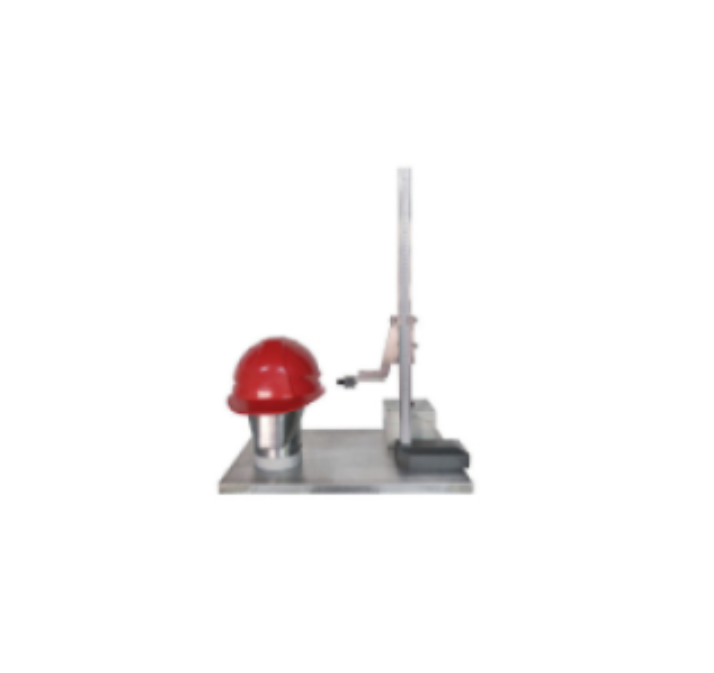
Components and Technical Principles of the Helmet Wearing Height Tester
The Helmet Wearing Height Tester, also known as a Safety Helmet Vertical Clearance and Wearing Height Measuring Instrument, integrates precision mechanical structures with electronic measurement technology. Its core components include:
Standard Headform System: Equipped with No. 1 and No. 2 headforms that comply with the dimensional requirements of national standards. These headforms simulate different head circumferences to ensure representative and comprehensive testing.
High-Precision Measurement Unit: Uses a high-precision horizontal digital caliper, laser displacement sensor, infrared distance sensor, or other measurement devices. These sensors can provide millimeter-level or even 0.01 mm resolution, enabling precise detection of small changes in distance.
Intelligent Data Acquisition and Processing System: Equipped with a built-in microprocessor or PLC control system, it can automatically record measurement data and directly calculate the wearing height and vertical clearance through algorithms, reducing errors caused by manual readings.
Adjustment and Fixing Bracket: Used to securely install the headform while allowing three-dimensional adjustment of the measurement probe to accommodate the structural characteristics of different helmet models.
Its operating principle is based on the relative distance measurement method. First, the standard headform is securely fixed and the reference position is zeroed. The safety helmet is then placed on the headform according to the specified wearing requirements, and the internal suspension system is adjusted to achieve a comfortable and close fit. Finally, sensors are used to measure the distance from the top point of the headform to the inner lining of the helmet shell, or the vertical clearance is calculated in combination with the position of the headband. Some advanced instruments have achieved automated operation by using a vertical linear module to drive a pressing plate against the safety helmet and employing dual infrared sensors for synchronized measurement, significantly improving testing efficiency.
Operating Guide for the Helmet Wearing Height Tester
Measuring helmet wearing height is a key procedure for evaluating the comfort and safety of head protection equipment. The purpose of this test is to determine the vertical position of the helmet on a standard headform, ensuring that it effectively protects the top of the head while maintaining a stable fit. The following is a standardized operating procedure based on professional testing equipment.
I. Preliminary Preparation and Equipment Calibration
Before testing, confirm that a dedicated measuring instrument meeting the applicable standard requirements is being used. The instrument is typically equipped with two standard headforms, No. 1 and No. 2. First, select the appropriate headform according to the estimated helmet wearing height: if the expected wearing height is less than or equal to 85 mm, use the No. 1 headform; if it is greater than 85 mm, use the No. 2 headform.
Secure the high-precision digital measuring scale to the selected headform using the specified mounting hole. After starting the instrument, pull the digital measuring scale to its lowest position and press the “Zero” button to ensure that the initial reading is zero. Then, preliminarily measure the spacing of the headband on the side of the safety helmet and adjust the measuring contact point to an appropriate length for subsequent contact measurement.
II. Helmet Wearing Height Measurement Procedure
The wearing height primarily indicates the distance from the top of the helmet shell to the reference plane at the top of the head when the helmet is worn.
Putting on the Helmet: Place the safety helmet normally on the selected standard headform, ensuring that the helmet is properly positioned without tilting or looseness.
Contact Measurement: Slowly move the digital measuring scale so that the measuring contact point gently touches the headband on the side of the safety helmet. Apply moderate force to avoid deformation caused by excessive pressure.
Reading the Value: Once the measuring contact point is stably in contact with the headband, record the value displayed on the digital measuring scale as A1.
Calculation: According to the specified formula, subtract the A1 reading from the constant 280. The resulting difference is the wearing height of the safety helmet.
III. Vertical Clearance Measurement Procedure (If Required)
Vertical clearance refers to the cushioning space between the helmet shell and the suspension system inside the helmet, which is essential for absorbing impact energy. This procedure should be performed after completing the wearing height measurement.
Measurement with Suspension System: Keep the safety helmet properly positioned on the headform and repeat the contact measurement procedure described above. Record the value displayed when the measuring contact point touches the headband as B1. Calculate 280 minus B1 to obtain X1.
Measurement without Suspension System: Remove the safety helmet from the headform and remove the internal suspension system, leaving only the helmet shell. Place the shell back on the same headform and ensure that its position is consistent with the previous measurement.
Second Reading: Move the digital measuring scale again so that the measuring contact point touches the corresponding position on the inside of the helmet shell, and record the value as B2. Calculate 280 minus B2 to obtain X2.
Difference Calculation: Subtract X1 from X2. The resulting difference is the vertical clearance of the safety helmet.
IV. Precautions
Throughout the testing process, ensure that the contact surfaces of the headform and helmet are clean and free from foreign matter that could interfere with the measurement. The digital measuring scale should be moved smoothly to avoid sudden vibration that may affect reading accuracy. Whenever helmets of different models or batches are tested, it is recommended to recheck the suitability of the selected headform and confirm that the instrument has been properly zeroed to ensure the accuracy and consistency of the test data. A standardized operating procedure can effectively evaluate whether the structural design of the helmet complies with ergonomic and safety standard requirements.
Significance of Helmet Wearing Height Testing
The core significance of helmet wearing height testing is to ensure that a helmet can truly “stay securely in place and provide comprehensive protection,” rather than simply serving as a routine inspection item. It is directly related to the safety and wearing comfort of the user and is one of the key indicators for determining whether a helmet meets the required specifications.
The significance is reflected in the following aspects:
Ensuring an Effective Protection Area: Wearing height reflects the distance between the front edge of the helmet and the top of the head. If this height is inappropriate, the helmet may tilt forward or backward, as described in relevant technical materials, resulting in inadequate protection of critical areas such as the forehead or back of the head. The purpose of the test is to ensure that, when properly worn, the helmet adequately covers the areas of the head that require protection.
Preventing the Helmet from Falling Off: If the wearing height is too small, the headband may easily become detached from the forehead, and the helmet could potentially fly off during an impact, rendering it ineffective as protective equipment. This test helps eliminate such potentially serious hazards at the design stage.
Improving Wearing Comfort: If the height is too large, the front edge of the helmet may press downward and interfere with the eyes or ears, or even affect the use of glasses and other accessories. Testing helps ensure that the helmet remains comfortable during prolonged wear and does not cause physical interference that could distract the wearer or encourage them to remove the helmet.
Overall, with the implementation of new standards, helmet wearing height testers are expected to further integrate multidimensional monitoring functions such as high-speed imaging and force-sensor feedback, enabling a transition from single geometric dimension measurement to comprehensive protective performance evaluation. This represents not only rigorous control of product quality, but also a profound commitment to protecting the safety and dignity of every worker. Through precise data quantification, the Helmet Wearing Height Tester is providing indispensable technical support for creating a safer working environment.
Previous: What Can a Cleveland Open Cup Flash Point Tester Be Used For?
N e x t : What is a high-temperature creep testing machine?
