





What Can a Cleveland Open Cup Flash Point Tester Be Used For?
2026/09/03
Share:

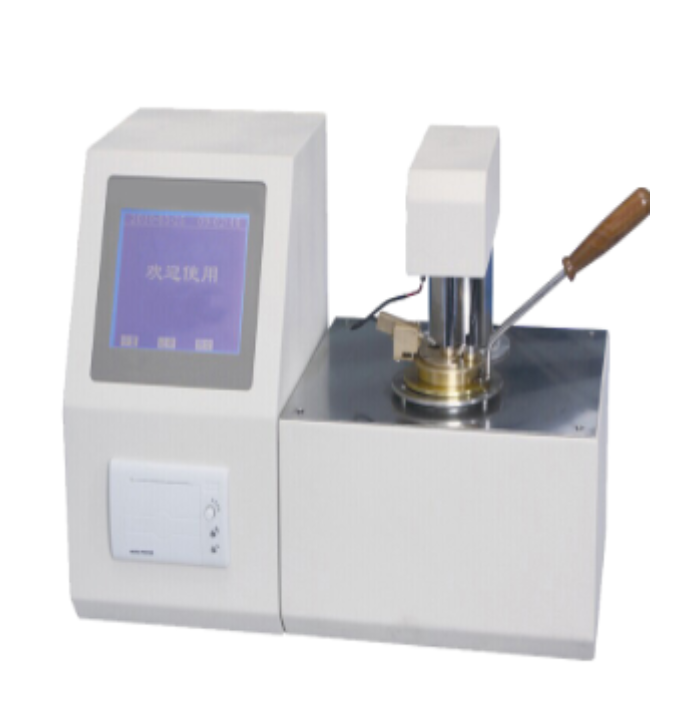
Technical Features of the Automatic Open Cup Flash Point Tester
In the fields of petrochemicals and energy storage, flash point is a key indicator for evaluating the safety of flammable liquids, and flash point testing is a critical part of related safety assessments. With its efficient and precise testing capabilities, the Automatic Open Cup Flash Point Tester has become an important piece of equipment in laboratories and industrial production. It can complete complex safety tests within a short period of time. What technical features make this possible?
I. Automated Processes Improve Testing Efficiency
Traditional flash point testing relies heavily on manual operation, which is not only time-consuming but also susceptible to human factors. The Automatic Open Cup Flash Point Tester uses an intelligent control system to automate the entire process, from heating, ignition, and detection to data recording. It can automatically identify the critical flash point, immediately stop the test, and save the results, significantly reducing testing time. This automated design improves testing efficiency while minimizing errors caused by manual operation, making test results more reliable.
II. Precision Sensing Technology Ensures Accuracy
The instrument is equipped with high-sensitivity temperature sensors and a flame detection system that can capture the precise moment when the flash point occurs in real time. Combined with optimized algorithms, it can effectively distinguish actual flash ignition from environmental interference, ensuring accurate test results. Some models also feature self-calibration functions that can automatically correct measurement deviations at regular intervals, further improving long-term measurement stability.
III. Safety Design Reduces Operational Risks
Flash point testing involves high temperatures and open flames, making safety a top priority. The Automatic Open Cup Flash Point Tester incorporates multiple safety protection features. An automatic fire-extinguishing system can respond rapidly in the event of abnormal conditions; an explosion-proof design helps prevent the accumulation of flammable gases; and an emergency stop button allows the test to be interrupted immediately. These safety features minimize the need for operators to come into close contact with high-temperature components, significantly reducing operational risks during testing.
IV. Intelligent Data Analysis Supports Better Decision-Making
The instrument can not only perform basic testing but also store historical data and generate trend analysis reports. By comparing changes in the flash points of samples from different batches, potential product quality fluctuations can be identified in a timely manner, providing a scientific basis for production process adjustments. Some models also support network connectivity, facilitating remote monitoring and quality management.
Through automated control, precision sensing, safety design, and intelligent data analysis, the Automatic Open Cup Flash Point Tester enables efficient, accurate, and safe testing. It not only improves laboratory work efficiency but also provides reliable support for safety and quality control in industrial production, making it an important testing instrument for the petrochemical industry.
Actual Performance of the Automatic Open Cup Flash Point Tester in Laboratory Applications
To demonstrate the applicability of the Automatic Open Cup Flash Point Tester more intuitively, its performance can be evaluated based on typical daily operating scenarios in oil testing laboratories under actual working conditions.
Scenario 1: Central Control Laboratory in a Lubricant Blending Workshop
The laboratory conducts daily spot checks of base oils and finished lubricants using the open cup flash point method. The samples include internal combustion engine oils, gear oils, and hydraulic oils with different viscosity grades. With traditional manual instruments, operators need to remain present throughout each test. After testing, they must wait for the heating furnace to cool naturally before starting the next batch, resulting in a relatively lengthy process and a high operator workload.
After introducing an Automatic Open Cup Flash Point Tester, the equipment can automatically enter the cooling program after completing the test and recording the data. Combined with the alternating use of multiple sample cups, this effectively reduces sample transfer and waiting time. The standardized one-button operation process also enables night-shift personnel to independently complete testing tasks without relying heavily on experienced staff.
Scenario 2: Petrochemical Laboratory at a Third-Party Testing Institution
The institution handles a large number of externally submitted samples from various sources, including fuel oils, solvent oils, base oils, and various chemical products. Since customers have clear requirements for report turnaround times, the laboratory needs to maximize its daily testing throughput.
After testing, the Automatic Open Cup Flash Point Tester can automatically save complete data curves and directly export reports in PDF or Excel format, reducing manual transcription and the possibility of data entry errors. At the same time, accurate recording of the heating process and ignition time provides solid process data support for testing reports.
Scenario 3: R&D Laboratory for New Energy Materials and Specialty Oils
During the R&D stage, test samples are often limited in quantity and high in value, and some samples may need to be recovered or retained. The Automatic Open Cup Flash Point Tester allows more flexible adjustment of sample volume and heating parameters through its programmable functions. While maintaining data representativeness, it can reduce sample consumption during individual tests. Combined with a large-screen display of real-time curves, R&D personnel can observe changes in sample behavior throughout the heating range and gain a more comprehensive understanding of its thermal stability.
The above scenarios demonstrate that the practical value of the Automatic Open Cup Flash Point Tester is reflected across multiple dimensions, including improved consistency of test data, increased daily testing throughput, reduced operator skill requirements, and lower sample consumption. For laboratory managers, these benefits can be directly quantified and evaluated.
Conclusion
The practical value of the Automatic Open Cup Flash Point Tester has been widely recognized across the industry. Its performance in improving testing efficiency, ensuring operational safety, and optimizing data management is evident. At the same time, its broad applicability continues to provide important value in different testing scenarios and deserves ongoing attention and further exploration. To help users gain a comprehensive understanding of the equipment's performance, technical specifications, and applicable scenarios, further product information can be obtained directly from the supplier to provide more accurate references and support for specific testing requirements.
Previous: Why Is Gas Hazard Characteristics Testing Important for Chemical Safety?
N e x t : How do they test helmets?
