





What is a high-temperature creep testing machine?
2026/09/04
Share:

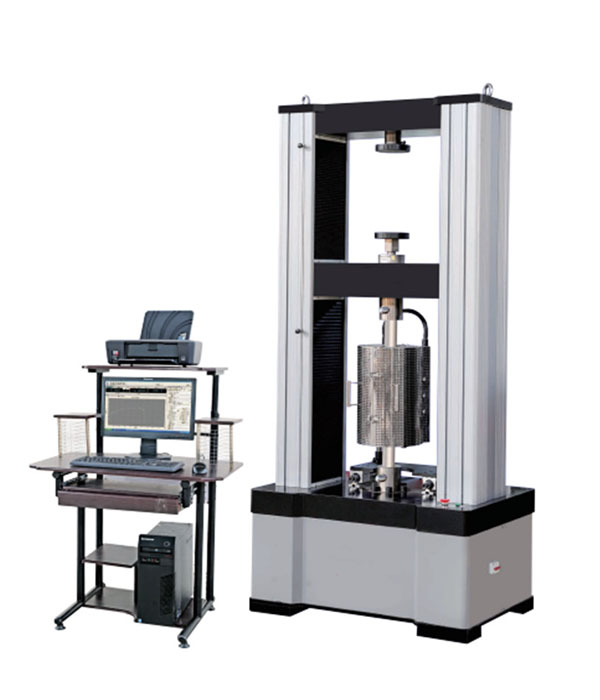
Working Principle of the High Temperature Creep and Stress Rupture Testing Machine
The High Temperature Creep and Stress Rupture Testing Machine mainly consists of a heating system, loading system, measurement system, and control system. During the test, the specimen is first heated to the predetermined temperature. A constant stress or strain rate is then applied, while the measurement system continuously monitors the deformation of the specimen in real time. The control system is responsible for controlling parameters such as temperature, stress, and strain rate throughout the test to ensure the accuracy and reliability of the test results.
Key Technologies of the High Temperature Creep and Stress Rupture Testing Machine
High-Temperature Heating Technology: The High Temperature Creep and Stress Rupture Testing Machine must provide stable heating under high-temperature conditions. Common heating methods currently include resistance heating, induction heating, and radiant heating. Among these, resistance heating is widely used due to its advantages of uniform heating and easy control.
Precision Loading Technology: The loading system is one of the core components of the High Temperature Creep and Stress Rupture Testing Machine. To achieve precise loading control, high-precision actuators such as servo motors and hydraulic cylinders are typically used, combined with sensors and control systems to achieve closed-loop control.
Deformation Measurement Technology: Deformation measurement is a key part of evaluating the creep performance of materials. Common deformation measurement methods include extensometers, displacement sensors, and laser rangefinders. Each method has its own advantages and limitations and should be selected according to specific testing requirements.
Control System Technology: The control system serves as the “brain” of the High Temperature Creep and Stress Rupture Testing Machine and is responsible for controlling various parameters throughout the testing process. An advanced control system should feature high precision, high stability, and ease of operation.
Key Testing Items: Revealing the High-Temperature “Endurance” and “Service Life” of Materials
The High Temperature Creep and Stress Rupture Testing Machine can perform a series of standardized and in-depth testing procedures, mainly including:
Creep Performance Testing: Determine the complete curve of creep deformation versus time for a material under a specified temperature and constant stress, thereby accurately calculating the creep limit, such as the stress corresponding to a specified creep strain, and the minimum steady-state creep rate. These parameters are critical for evaluating the material’s resistance to slow deformation.
Stress Rupture Strength Testing: Determine the time required for a material to fracture under different constant stresses at a given temperature, namely its stress rupture life. Based on these results, a stress–rupture life curve can be established, and the stress rupture strength limit under the target service life can be extrapolated, providing a direct basis for material selection and the design of high-temperature components.
Stress Relaxation Testing (Available on Some Models): Under a constant total strain, monitor the reduction of internal stress in the material over time. This test is suitable for evaluating the ability of fasteners, springs, and other components to maintain preload at high temperatures.
Creep–Fatigue Interaction Testing (Complex Testing): Through programmed control of load and temperature cycles, investigate material behavior under the combined effects of cyclic loading and sustained creep damage. This is particularly important for service-life prediction of components subjected to alternating loads in the aerospace and energy industries.
Applicable Sample Range: Materials for High-End Industries and Cutting-Edge Technologies
The testing machine has an extensive and clearly defined range of test specimens. Its primary purpose is to systematically and accurately evaluate the performance of various engineering materials intended for long-term service under demanding high-temperature conditions. Its testing range covers nearly all major categories of high-temperature-resistant materials of interest to current industry and academia, including but not limited to the following five categories:
Superalloys: These are the core materials in current high-temperature material systems, mainly including nickel-based, cobalt-based, and iron-based superalloys. With their excellent high-temperature strength and creep resistance, these materials are widely used in critical hot-section components of aero engines, such as turbine disks and turbine blades. They also play an indispensable role in the hot-gas-path components of stationary gas turbines, providing an essential material foundation for the safe and stable operation of these critical systems.
Metallic Materials: In addition to superalloys, common metallic materials with representative heat-resistant properties, including heat-resistant steels, stainless steels, titanium alloys, and aluminum alloys, are also important test specimens for this machine. These materials have extensive applications in boilers and steam pipelines in the power industry, high-temperature reactors in the petrochemical industry, and various heat-treatment equipment in the metallurgical industry. High-temperature creep testing of these materials is a key prerequisite for ensuring the long-term safe operation of related industrial facilities.
Advanced Structural Materials: For more cutting-edge technological applications, the testing machine is also suitable for next-generation high-temperature structural materials such as intermetallic compounds and refractory metals, including molybdenum, tungsten, and their alloys. In addition, structural ceramics and ceramic matrix composites, with their unique high-temperature resistance and corrosion resistance, can be used in extreme service environments such as aerospace and nuclear energy. Testing these advanced materials provides essential data support for overcoming existing technological limitations.
Welded Joints and Coatings: In addition to evaluating the overall performance of base materials, the equipment can also perform specialized testing of welded regions and protective coatings. By verifying the performance uniformity of welded joints during long-term high-temperature service and evaluating the reliability of coatings under thermal cycling conditions, it can effectively ensure the service safety and lifespan of complete components and prevent major accidents caused by localized failures.
Specimens for New Material Research and Development: As a key part of the material innovation process, the testing machine provides critical long-term performance data for the formulation development, process optimization, and composition adjustment of various new high-temperature materials. Through in-depth testing of specimens during the research and development stage, researchers can promptly determine material performance under high-temperature creep and stress rupture conditions, thereby accelerating the iterative development of new materials and advancing materials science toward higher performance and more demanding operating conditions.
In conclusion, with the continuous development of materials science and industrial technology, the High Temperature Creep and Stress Rupture Testing Machine will face higher performance requirements and broader application scenarios. In the future, such testing machines will develop toward higher temperatures, greater loads, longer testing durations, and more precise measurements. Meanwhile, with the continuous advancement of intelligent and automated technologies, the operation of High Temperature Creep and Stress Rupture Testing Machines will become simpler, more efficient, and more intelligent.
Previous: How do they test helmets?
N e x t : What is a simulated transport vibration test machine used for?
