





Why Is a Moving Die Rheometer Important for Rubber Vulcanization Testing?
2026/09/18
Share:

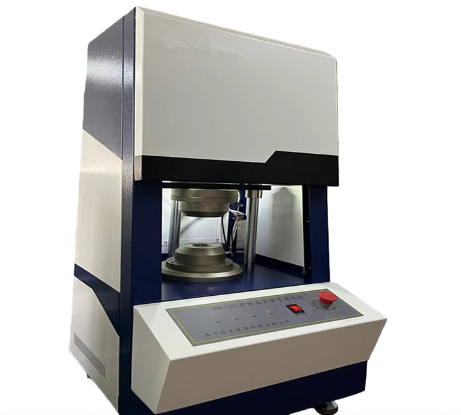
Why Is the Moving Die Rheometer (MDR) Replacing the Rotor Rheometer
Compared with traditional rotor rheometers, the rotorless design of the Moving Die Rheometer (MDR) addresses several long-standing technical challenges:
1. Eliminating Slippage Errors
In rotor rheometers, relative slippage may occur between the rotor and the rubber compound, potentially resulting in measurement inaccuracies. The MDR uses a sealed die cavity and oscillatory shear to ensure accurate strain application and improve measurement reliability.
2. Higher Repeatability and Accuracy
By eliminating the effects of rotor shaft seal friction and rubber compound overflow, the Moving Die Rheometer delivers highly reproducible test data and complies with a variety of major international testing standards.
3. Convenient Operation and Automation
Modern Moving Die Rheometers are typically equipped with dual-control computer systems, offering functions such as automatic die closing, automatic data acquisition, automatic parameter calculation, and report generation. These features significantly improve laboratory efficiency and streamline testing operations.
4. More Precise Temperature Control
Advanced PID-based intelligent temperature control algorithms can maintain die cavity temperature fluctuations within ±0.3°C or even lower, ensuring that the vulcanization reaction takes place under stable temperature conditions and reducing experimental errors caused by temperature fluctuations.
Working Principle: From Microscopic Cross-Linking to Macroscopic Data
The core operating principle of the Moving Die Rheometer (MDR) is based on oscillatory shear technology. During testing, an uncured rubber specimen is placed inside a sealed, temperature-controlled die cavity. The lower section of the die cavity performs sinusoidal oscillatory motion at a fixed frequency (typically 1.7 Hz) and a small amplitude (±0.5° or ±1°), while the upper section remains stationary or is connected to a sensor.
As heating progresses, the rubber molecular chains undergo cross-linking reactions under the action of vulcanizing agents, forming a three-dimensional network structure. This structural change increases the shear modulus of the rubber compound, resulting in a greater reaction torque exerted on the oscillating die cavity.
A highly sensitive torque sensor captures these small torque variations in real time and converts them into electrical signals, which are then transmitted to a computer. Finally, the system generates a curve showing torque as a function of time, commonly known as the “vulcanization curve” or “rheometer curve.”
This curve provides a visual representation of the entire process by which rubber transitions from a viscous material into an elastic solid during vulcanization.
Wide-Ranging Applications: Covering the Entire Life Cycle of Rubber
The applications of the Moving Die Rheometer (MDR) extend across every stage of the rubber industry. From raw material inspection upon arrival at the factory to finished product quality control, this instrument plays an essential role throughout the entire rubber production process.
1. Raw Material Quality Control
The MDR is used to rapidly screen different batches of raw rubber, carbon black, vulcanizing agents, and other raw materials, ensuring consistency in incoming materials. By identifying variations in raw material properties at the source, manufacturers can help prevent potential quality issues and establish a reliable foundation for subsequent production processes.
2. Formulation Development and Optimization
R&D personnel can compare vulcanization curves under different accelerator formulations and vulcanization systems to comprehensively evaluate key indicators such as scorch time, vulcanization rate, and the final degree of vulcanization. By balancing processing safety with vulcanization speed, researchers can develop high-performance new materials while significantly shortening the formulation design cycle.
3. Production Process Monitoring
Mixed rubber compounds can be sampled and tested regularly on the production line to monitor whether parameters such as ML (minimum torque) and T90 (optimum cure time) deviate from established control limits. This helps identify issues such as uneven mixing or incorrect ingredient addition in a timely manner, preventing nonconforming rubber compounds from entering subsequent production stages and minimizing the risk of large-scale quality incidents.
4. Research on Specialty Materials
In addition to conventional rubber materials, the MDR can also be used to evaluate the rheological properties of thermoplastic elastomers, foamed rubber (including the relationship between foaming and vulcanization), and polymer composites. These capabilities provide important experimental support for the development of advanced functional materials.
Maintenance and Care: Ensuring Consistent Testing Accuracy
To maintain the instrument in optimal operating condition, routine maintenance is essential. Proper maintenance practices can effectively extend the service life of the equipment and ensure that test data remains accurate, reliable, and reproducible.
1. Die Cavity Cleaning
After each test, clean the residual rubber compound from the die cavity while it is still warm, using a soft copper brush or a dedicated cleaning agent. The use of hard metal tools for scraping is strictly prohibited, as this may damage the surface of the Cr6WV alloy steel die cavity, affecting its sealing performance and temperature uniformity.
2. Regular Calibration
Regularly perform metrological calibration of the temperature sensor, torque sensor, and oscillation angle to ensure accurate measurement traceability. This helps ensure that every test result accurately reflects the vulcanization characteristics of the rubber compound.
3. Environmental Control
The instrument should be installed in an environment free from strong electromagnetic interference, with good ventilation and stable temperature conditions. This helps ensure the stable operation of electronic components and sensors while preventing signal drift or measurement deviations caused by environmental fluctuations.
Conclusion
With its scientifically rigorous testing methods and intelligent data processing capabilities, the Moving Die Rheometer (MDR) transforms complex chemical reactions during rubber vulcanization into intuitive, quantitative data. It not only improves the consistency and stability of rubber product quality but also provides solid data support for the development of advanced materials.As the rubber industry continues to advance toward higher-end and more refined manufacturing, mastering and effectively applying the Moving Die Rheometer is an important foundation for enterprises seeking to strengthen their core competitiveness and achieve lean manufacturing.
Previous: Why Is Drop Hammer Impact Testing Important for Pipes?
N e x t : the last page
