





What is color fastness to rubbing?
2026/09/29
Share:

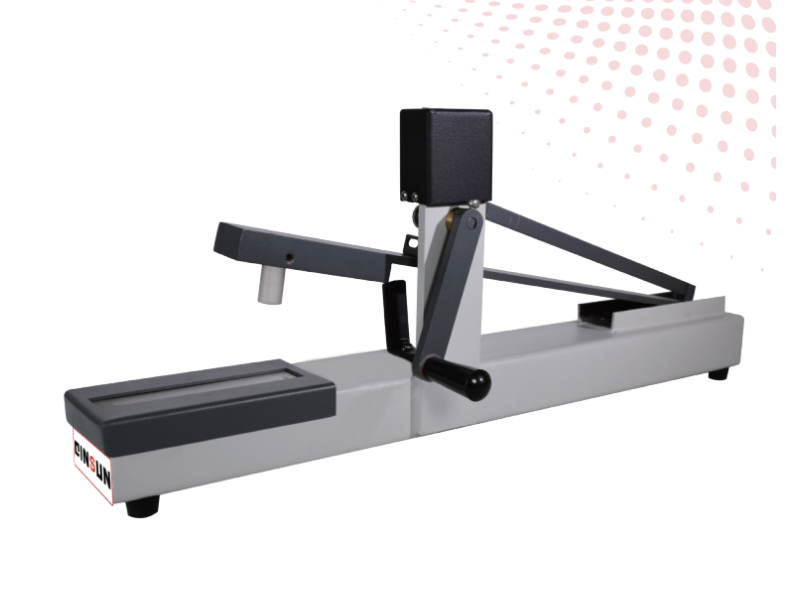
Working Principle of the Manual Crockmeter
The working principle of a Manual Crockmeter is relatively simple yet effective. It simulates the friction that textiles may experience against the skin or other materials during actual use to evaluate their colorfastness to rubbing.
During the test, the textile specimen is rubbed against a standard white rubbing cloth under a specified pressure. The color change or staining of the white cloth before and after rubbing is then evaluated to determine the colorfastness rating of the tested textile.
Structure and Functions of the Manual Crockmeter
A typical Manual Crockmeter consists of a base, rubbing head, pressure-adjustment mechanism, counter or timer, and specimen-clamping device.
Base: Provides a stable platform for conducting the test.
Rubbing head: Simulates the rubbing action encountered during actual use.
Pressure-adjustment mechanism: Allows the rubbing pressure to be adjusted according to the applicable test requirements.
Counter or timer: Controls or records the number or duration of rubbing cycles, depending on the instrument configuration.
Specimen-clamping device: Secures the textile specimen and ensures that it remains properly positioned during testing.
During the test, the textile specimen is first secured to the test platform, and the standard white rubbing cloth is mounted on the rubbing head. The pressure-adjustment mechanism is then set to the specified load, and the rubbing head is moved back and forth across the textile specimen. The counter or timer records the test cycles or duration. Once the specified number of rubbing cycles or test duration has been reached, the rubbing is stopped and the white rubbing cloth is removed. Its degree of staining is then visually evaluated to determine the rubbing colorfastness grade.
Instrument Structure and Key Technical Parameters
The structural design of a Manual Crockmeter emphasizes stability and standardization. The main components typically include the base, rubbing head, pressure-loading system, specimen-clamping device, and counting mechanism.
Rubbing Head and Pressure System:
The rubbing head is typically circular, with a standard diameter of 16 mm or 25 mm, depending on the applicable test standard. The instrument uses a spring-loaded or dead-weight loading mechanism to ensure that the rubbing head applies a constant vertical pressure to the specimen. The commonly specified load is 9 N, with an allowable tolerance of ±10%. Precise control of the applied pressure is essential for ensuring the repeatability and consistency of test results.
Drive and Stroke Control:
A four-bar linkage mechanism or linear guide system is typically used to ensure that the rubbing head moves back and forth in a straight horizontal path. The standard rubbing stroke is generally around 104 mm, with minimal deviation, helping reproduce a consistent and representative rubbing path.
Specimen-Clamping Device:
The specimen-clamping platform must provide sufficient frictional resistance or be equipped with a retaining plate to ensure that the test fabric remains flat, wrinkle-free, and securely positioned throughout the test. Some advanced manual models are equipped with spring clamps, allowing the standard rubbing cloth to be secured more quickly while preventing it from slipping or twisting during the rubbing process.
Counting Mechanism:
A built-in mechanical counter is used to record the number of rubbing cycles. Common test requirements specify 10 cycles for dry rubbing or 10 cycles for wet rubbing. The counter should feature a reset function, allowing the operator to accurately control the test endpoint and maintain consistent testing conditions.
Applications and Advantages
The Manual Crockmeter is widely used in industries such as textiles, dyeing and finishing, leather, automotive interiors, and household products.
Quality Control:
On production lines, quality-control personnel can use the instrument for rapid spot checks of semi-finished or finished products, allowing potential dyeing and finishing defects to be identified promptly.
Research and Development:
During the development of new fabrics, researchers can compare the rubbing colorfastness of different dyes, pigments, or auxiliaries and use the results to optimize material and processing formulations.
Trade Arbitration:
Because the instrument can be used in accordance with multiple international testing standards, its test results can serve as technical evidence in quality disputes between buyers and sellers concerning colorfastness requirements.
Education and Training:
With its simple structure and intuitive operating principle, the Manual Crockmeter is an ideal teaching tool for textile schools and training programs to demonstrate the fundamentals of colorfastness testing.
Compared with motorized instruments, the main advantages of a Manual Crockmeter include its lower cost, simple maintenance, and independence from electrical power, making it particularly suitable for small laboratories and on-site testing. However, its limitation is that test results can be more strongly influenced by the operator's technique. Therefore, for high-volume testing where highly consistent repeatability is required, manual instruments are increasingly supplemented or replaced by automated testing equipment.
Maintenance and Precautions
Proper routine maintenance is essential for extending the service life of the instrument and maintaining testing accuracy.
The rubbing head and specimen platform should be cleaned regularly to prevent dye or fiber residues from affecting subsequent tests. The elasticity or load characteristics of the pressure spring should also be checked periodically to ensure that the applied pressure remains within the specified requirements.
Mechanical transmission components should be lubricated appropriately to maintain smooth and stable movement. In addition, operators should receive proper training and follow standardized operating procedures. Consistent handling techniques can help minimize variations caused by human operation.
Conclusion
Although the Manual Crockmeter is a traditional testing instrument, it continues to play an important role in textile quality-control systems. It serves not only as a link between manufacturing processes and final product quality, but also as a practical tool for implementing standardized testing practices.A proper understanding of the instrument's operating principle, applicable standards, and testing procedures is essential for obtaining reliable results. Correct use of the Manual Crockmeter can help manufacturers improve product quality, support consistent production, and protect the interests of end users.
Previous: Why Does Perforated Leather Start to Fuzz After Just Six Months of Use?
N e x t : the last page
