





Dry microbial penetration resistance tester,ISO 22612
2026/01/19
Share:

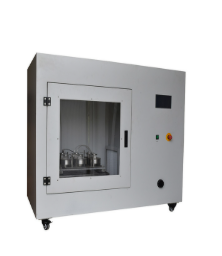
Unlike wet microbial penetration tests, which simulate liquid-borne contamination, dry microbial penetration testing simulates risks from dry particles, such as skin flakes carrying bacteria, and provides a more realistic assessment of protective materials in dry environments.
Principle of Testing
The basic principle of dry microbial penetration testing is as follows:
The test material is secured in a designated test container.
The container is loaded with dry powder carrying specific bacteria, commonly Bacillus subtilis, which is often used in penetration testing standards.
The container is subjected to high-speed vibration using a pneumatic shaker or similar device, causing the bacterial particles in the powder to impact the material.
Any microorganisms that penetrate the material are collected in Petri dishes at the bottom of the container. After incubation, colony counts are used to assess the degree of penetration.
The vibration continuously exposes the dry particles to the material, simulating real-world conditions where particulate matter repeatedly contacts the surface. This allows evaluation of the material’s barrier performance against microbial penetration.
Instrumentation and Structure
A dry microbial penetration tester generally consists of the following main components:
Vibration System
Typically a pneumatic ball-type shaker or equivalent, generating high-frequency vibrations (~20.800 cycles per minute) with a force of ~650 N.
The vibrations drive the impact of bacteria-carrying powder against the material surface, serving as the core testing mechanism.
Test Containers
Made of stainless steel, the containers hold the sample and incorporate a Petri dish at the bottom to collect penetrated particles.
Multiple test positions (e.g., six containers) allow simultaneous testing of multiple samples.
Support Platform
The vibration system and containers are mounted on a stable platform, often made of marble, to ensure consistent and precise vibrations.
Control System and Safety Enclosure
Modern instruments feature touchscreen interfaces for parameter setting and data storage.
Some models include a negative pressure cabinet to enhance safety and filtration efficiency (≥ 99.99%).
Data Recording System
Test parameters such as vibration duration, frequency, and results are recorded for subsequent analysis.
Test Procedure
Although procedures may vary slightly between instruments, the general workflow includes:
Sample Preparation
Cut samples to the required dimensions per standards.
Ensure samples are clean, undamaged, and free of contamination.
Sample Installation
Secure the sample to the opening of each test container.
Ensure the sample is properly tensioned without wrinkles.
Preparation of Bacterial Powder
Place the target bacteria in dry powder form into the container.
Set up control containers without bacterial powder for comparison.
Vibration Testing
Start the vibration system.
Set standard-specified vibration frequency and duration (e.g., 20.800 cycles/min for 30 minutes).
Collection and Incubation
After testing, remove the Petri dishes from the bottom of the containers.
Incubate under appropriate conditions and count colonies.
Compare results with controls to assess material barrier performance.
Applications
Medical Protective Equipment Performance Evaluation
Surgical gowns, drapes, and cleanroom garments rely on blocking bacterial penetration in dry environments.
Medical Device and Material Development
Evaluating bacterial barrier properties is essential in the development of new protective textiles and composite materials.
Quality Control and Compliance Testing
Conducting dry microbial penetration testing during production ensures quality and supports compliance with standards such as EN standards and EU CE requirements.
Comparison with Wet Microbial Penetration Testing
| Feature | Dry Penetration Test | Wet Penetration Test |
|---|---|---|
| Particle State | Dry | Liquid / Suspended |
| Simulated Risk | Dust, dry particle transmission | Droplets, bodily fluid transmission |
| Typical Standards | ISO 22612. YY/T 0506.5 | ISO 22610. YY/T 0506.6 |
| Main Purpose | Dry environment protective evaluation | Liquid-borne microbial protection evaluation |
| Test Medium | Bacteria-carrying powder | Bacteria-containing liquid or moist medium |
Both methods together provide a comprehensive evaluation of microbial barrier performance for different scenarios.
Future Trends
With rising global requirements for medical safety, occupational protection, and epidemic prevention, dry microbial penetration testing is becoming increasingly important. It is not only a performance assessment method but also a key metric for ensuring that medical devices and personal protective equipment meet international standards.
Future developments are expected to focus on automation, high-throughput testing, and intelligent data analysis, providing more scientific support for the design of protective materials and promoting stricter, more precise industry standards.
The dry microbial penetration tester is a critical instrument for evaluating the barrier performance of materials against dry microbial threats. Following standards such as ISO 22612. it simulates particle impact on materials through vibration, enabling assessment of bacterial penetration risks. The test results are crucial for evaluating medical protective equipment, guiding material development, and ensuring quality control in modern protective material evaluation systems.
Previous: What is a Mask Visual Field Tester?
N e x t : Mask Respiratory Resistance Tester,EN 12941
