





What are the methods of filter integrity test?
2026/02/25
Share:

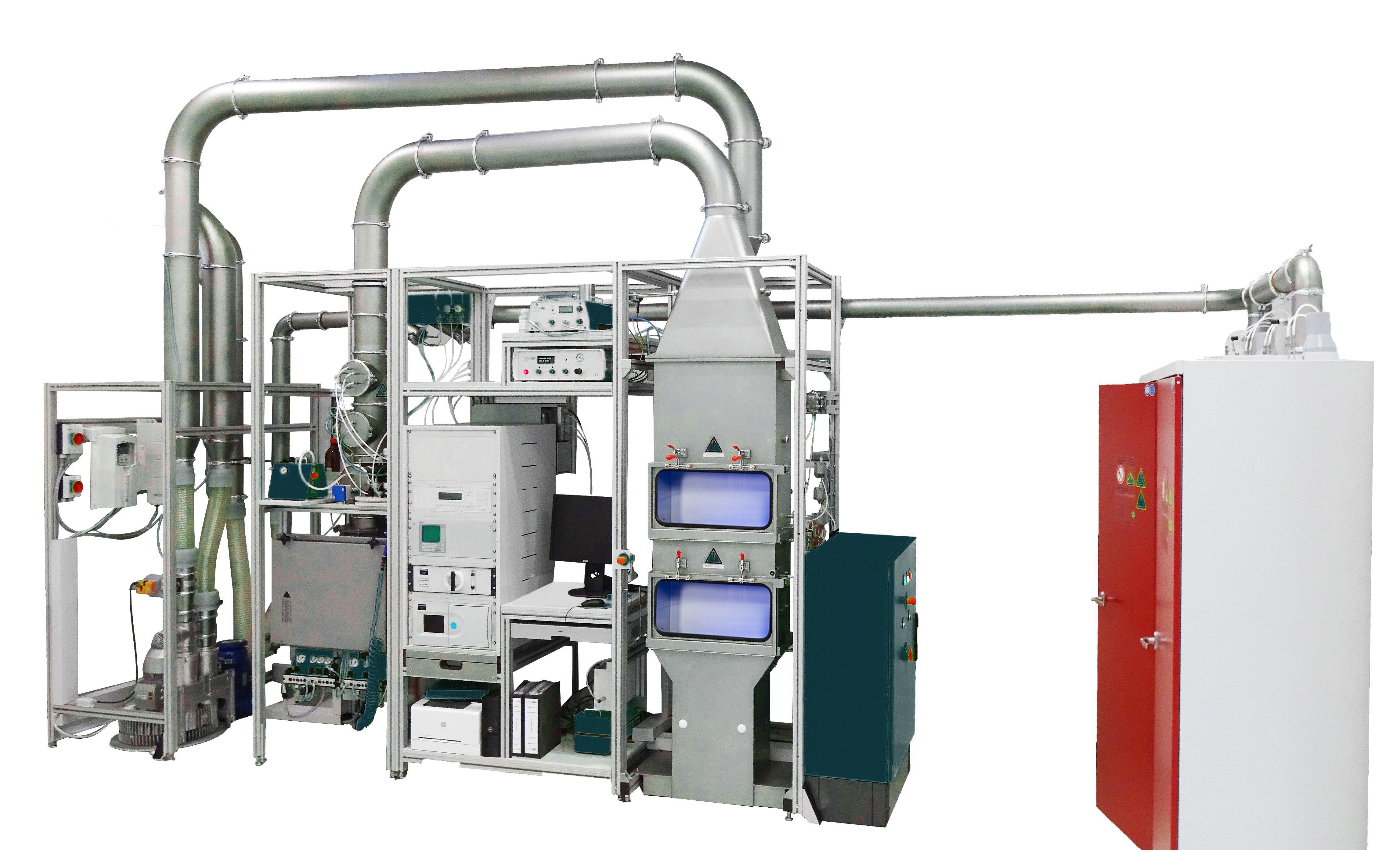
According to publicly available technical documentation, industry standards, and engineering references, filter integrity testing methods can be broadly divided into two main categories: liquid filter integrity testing methods and air/gas filter integrity testing methods. Different types of filters—such as microporous membrane cartridges, sterilizing-grade filters, and HEPA high-efficiency air filters—require different testing approaches. The following sections systematically outline the principles, applicability, advantages, disadvantages, and typical application scenarios of commonly used integrity testing methods.
Basic Principles
The essence of integrity testing is to indirectly verify whether the pore structure of the filter medium remains intact by evaluating physical or gas transmission characteristics. When a membrane is damaged, cracked, or improperly sealed, its gas or liquid transmission behavior changes significantly. Common integrity test methods are based on the following principles:
Capillary pressure theory
Gas diffusion law
Pressure decay principle
Particle penetration detection principle
Water intrusion principle
These methods are generally non-destructive, meaning the filter can continue to be used after testing.
Liquid Filter Integrity Testing Methods
Liquid filters, such as sterilizing-grade membrane filters, are widely used in aseptic pharmaceutical manufacturing processes. For these cartridges, integrity testing is a regulatory requirement and a critical control step.
Bubble Point Test
The Bubble Point Test is one of the earliest and most widely used integrity testing methods. It is based on capillary theory. When the membrane is fully wetted with liquid, gas pressure is gradually applied upstream. As pressure increases, it eventually overcomes the surface tension of the liquid within the largest membrane pores, allowing gas to form continuous bubbles. The pressure at which this occurs is known as the bubble point pressure.
Bubble point pressure is inversely proportional to the maximum pore size of the membrane. If the membrane is damaged or contains enlarged pores, the bubble point pressure will decrease significantly. By measuring the bubble point and comparing it to the specified standard value, filter integrity can be assessed.
Characteristics:
Directly reflects maximum pore size
Sensitive to obvious defects
Simple operation
However, manual observation of bubble formation introduces subjectivity. Modern automated instruments use pressure sensors and flow monitoring systems to determine the bubble point automatically, reducing operator-dependent errors.
Diffusion Flow Test
The Diffusion Test is currently one of the most widely used integrity testing methods in the pharmaceutical industry. It is based on the molecular diffusion of gas through a wetted membrane under differential pressure.
When membrane pores are filled with liquid and pressure is applied below the bubble point, gas does not form continuous bubbles but instead diffuses molecularly through the liquid layer. The diffusion flow rate is related to pore structure, membrane area, and applied pressure.
If defects or larger pores are present, gas will pass through by convective flow rather than diffusion, resulting in a significantly higher flow rate. By measuring gas diffusion flow at a specified pressure and comparing it to a standard limit, filter integrity can be determined.
Characteristics:
High precision
Highly automated
Suitable for in-line testing
Allows quantitative pass/fail determination
This method is widely used for pre-use and post-use integrity confirmation of sterilizing-grade cartridges.
Pressure Hold Test
The Pressure Hold Test, also known as the Pressure Decay Test, involves wetting the membrane and pressurizing it to a specified level, then isolating the gas source and monitoring pressure decay over time.
If the membrane is intact, pressure loss is primarily due to gas diffusion. If leakage or damage is present, pressure will decrease more rapidly.
Advantages:
No direct flow measurement required
Simple operation
Easy to automate
Disadvantages:
Less sensitive to very small defects compared to diffusion testing
Requires high system sealing integrity
In some applications, this method serves as an alternative or supplement to diffusion testing.
Water Intrusion Test
The Water Intrusion Test is primarily used for hydrophobic membranes, such as PTFE membranes. Since hydrophobic membranes are not fully wetted by water, traditional bubble point testing is not applicable.
In this test, pressurized water is applied to the membrane, and the volume of water penetrating through the membrane over a specified time is measured. If the membrane is intact, water intrusion is minimal. If defects are present, intrusion volume increases significantly.
This method is widely used for hydrophobic cartridges in gas filtration systems.
Characteristics:
Suitable for hydrophobic membranes
Does not require organic wetting agents
More environmentally friendly
Air and Gas Filter Integrity Testing Methods
For air filters such as HEPA and ULPA filters, integrity testing is typically based on aerosol challenge and scanning detection.
Aerosol Photometer Scanning Method
The aerosol photometer scanning method is the primary technique for leak detection in high-efficiency air filters. Its principle involves introducing a controlled concentration of challenge aerosol (such as oil-based or saline aerosol) upstream of the filter, then scanning the downstream side point by point using a photometer probe.
If leakage exists at a specific location, downstream aerosol concentration will be significantly higher than in surrounding areas, allowing precise leak localization.
This method is widely used for cleanroom HEPA filter installation verification.
Advantages:
Pinpoints exact leak locations
Reliable and intuitive
Complies with cleanroom validation standards
Disadvantages:
Time-consuming
Requires controlled environmental conditions
Automated scanning systems equipped with mechanical arms have been developed to improve efficiency.
Particle Counting Method
The particle counting method uses particle counters to measure upstream and downstream particle concentrations and calculate filtration efficiency.
If measured efficiency falls below the specified requirement during integrity testing, defects or sealing issues may be suspected.
This method is commonly used for factory acceptance testing or performance verification.
DOP Test
The DOP test is a traditional high-efficiency filter testing method that uses a specific oil-based aerosol as a challenge agent and measures penetration using a photometer.
In modern standards, DOP aerosols are gradually being replaced by more environmentally friendly alternatives, but the testing principle remains essentially the same.
Destructive Testing Methods
In addition to non-destructive methods, certain destructive methods are used in research and quality sampling inspections.
Bacterial Challenge Test
This method uses actual microorganisms to challenge the membrane and verify its sterilizing capability. It is typically applied during sterilizing-grade filter validation.
Advantages:
Direct verification of microbial retention
Disadvantages:
High cost
Complex operation
Not suitable for routine testing
Particle Retention Test
Standardized microspheres or particle suspensions are used to challenge the filter, and penetration is measured. This method is often applied during new product development.
Comparison of Applicability
For liquid filter cartridges:
Pre-use testing: Diffusion flow test
Post-use testing: Diffusion flow or pressure hold test
Hydrophobic cartridges: Water intrusion test
For air filters:
Post-installation verification: Aerosol scanning
Factory testing: Overall efficiency testing
Method selection depends on:
Filter material type
Process requirements
Regulatory compliance
Whether in-line testing is required
Regulatory and Industry Requirements
In pharmaceutical manufacturing, aseptic production regulations require mandatory integrity testing of sterilizing-grade filters, with documented test records retained.
Cleanroom standards require periodic leak testing of high-efficiency air filters.
These regulatory requirements have driven the development of automated, standardized, and traceable integrity testing equipment.
Automation and Future Trends
In recent years, integrity testing equipment has increasingly moved toward automation and intelligent systems, featuring:
Automatic pass/fail determination
Electronic data recording
Compliance with data integrity requirements
Remote monitoring capabilities
Testing methods continue to evolve to improve sensitivity and reduce human error.
Filter integrity testing is a critical step in ensuring the safety and reliability of filtration systems. Depending on filter type and application field, methods such as bubble point testing, diffusion flow testing, pressure hold testing, water intrusion testing, aerosol scanning, and particle counting may be applied.
Liquid filter testing focuses on gas diffusion and pressure characteristics, while air filter testing emphasizes aerosol challenge and leak scanning. Each method has its own applicable scenarios and technical characteristics. Selecting the appropriate method is essential to ensure product quality and regulatory compliance.
With the advancement of industrial automation and increasingly stringent regulatory requirements, filter integrity testing technology will continue to evolve toward higher precision, greater intelligence, and improved data traceability, providing more reliable quality assurance for pharmaceutical, biotechnology, and clean manufacturing industries.
Previous: Automated HEPA/ULPA Filter Scanning Test System, EN 1822-4
N e x t : What is a Vacuum Cleaner Filtration Test System?
