





What is a Vacuum Cleaner Filtration Test System?
2026/02/25
Share:

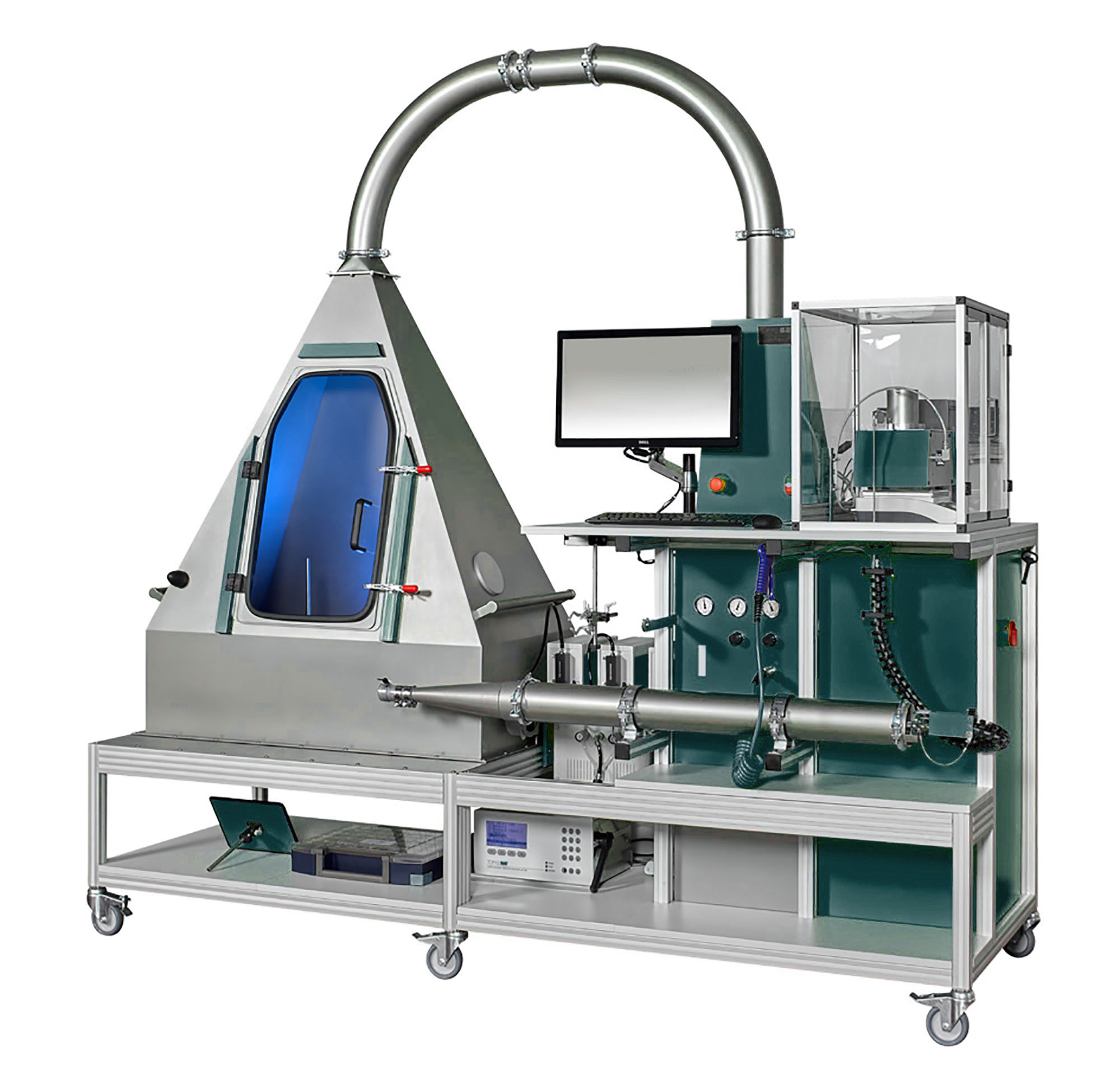
A Vacuum Cleaner Filtration Test System is specialized equipment designed to evaluate the dust retention and exhaust filtration performance of vacuum cleaners. It not only measures the separation efficiency of the filtration system across different particle sizes, but also provides an objective and quantitative assessment of the overall filtration performance of the entire vacuum cleaner system. These systems are typically designed in accordance with international or regional electrical appliance standards and execute standardized testing procedures to provide reliable data for manufacturers, testing laboratories, and research institutions.
Background and Significance
The primary function of a vacuum cleaner is to draw in dust and particulate matter from the air, filter it internally, and release purified air back into the environment. During this process, the performance of the internal filtration system directly affects cleaning efficiency and user health. If filtration efficiency is low, fine particles may penetrate the filter and be discharged back into indoor air, potentially causing respiratory irritation or exacerbating allergies. Therefore, testing the filtration performance of vacuum cleaners is not only central to product quality control, but also an important component of safety and environmental performance evaluation.
Unlike general performance tests, filtration testing focuses on quantifying the ability of a vacuum cleaner’s filtration system to capture particles and control emissions. Compared with traditional manual evaluations, filtration test systems rely on standardized laboratory conditions, controlled particle challenges, and precision measurement instruments to produce more accurate and comparable performance data.
Definition of the Test System
A Vacuum Cleaner Filtration Test System refers to a complete testing apparatus that quantitatively measures, analyzes, and evaluates the filtration performance of vacuum cleaners according to standardized procedures. The system typically consists of an aerosol generation device, a test chamber, particle counting instruments, airflow control devices, and a software control system. These components work together to measure key indicators such as filtration efficiency, emission characteristics, and stage separation performance in accordance with industry standards.
Depending on specific applications, the system can be expanded to test additional capabilities, such as the filtration class efficiency of bagged vacuum cleaners, the separation efficiency of terminal HEPA filters, or the dust retention performance of different filter media. Through this system, users can obtain critical data on filtration grades, particle retention efficiency, and exhaust particle concentration.
Standards and Regulatory Basis
To ensure comparability and scientific validity of test results, Vacuum Cleaner Filtration Test Systems are generally designed and calibrated in accordance with recognized standards. Typical standards include:
ASTM F1977
This standard defines the method for measuring the initial fractional filtration efficiency of a vacuum cleaner system. It calculates efficiency by comparing upstream (intake) and downstream (exhaust) particle counts across different particle size ranges. Testing commonly uses neutralized potassium chloride (KCl) as the challenge aerosol, with particle counters measuring size-segregated concentrations. The method applies to various vacuum cleaner types, including canister, upright, and handheld models, excluding systems that rely solely on water filtration without replaceable dry filter media. The standard specifies testing across multiple particle size intervals to reflect real-world performance.
EN 60312
This European standard provides guidelines for evaluating vacuum cleaner dust separation efficiency and exhaust emissions under defined operating conditions. Systems designed in accordance with this standard can comprehensively assess the filtration mechanisms and separation performance of vacuum cleaners.
The existence of these standards allows filtration test systems to be used not only for internal quality control but also for third-party testing, certification, and regulatory compliance verification.
Core Components
A Vacuum Cleaner Filtration Test System is not a single instrument but a comprehensive testing platform composed of multiple coordinated modules. The main components typically include:
Aerosol Challenge Source
The first task of the system is to provide a controlled particle challenge. An aerosol generator introduces standardized dust or particles of defined size distributions into the test chamber. These particles must exhibit repeatable properties to ensure consistent test results. In some systems, neutralized salt aerosols such as KCl or NaCl are used to simulate airborne particulate matter.
Test Chamber and Connection Assembly
The test chamber is a critical structural component designed to house the vacuum cleaner and create a standardized testing environment. The system connects the vacuum cleaner to the chamber via sealed adapters to prevent external leakage. The chamber configuration enables separate upstream and downstream particle measurements.
Particle Measurement and Analysis Instruments
Particle sensors placed upstream and downstream of the filtration system capture and count particle concentrations. Particle counters can measure multiple size channels—commonly within a range such as 0.2 to 40 µm—allowing calculation of size-specific filtration efficiency. Depending on requirements, detection technologies may include optical light scattering or laser-based particle counting to provide high-resolution measurement data.
Airflow and Flow Control System
To maintain standardized test conditions, the system incorporates controlled airflow components such as fans, flow meters, and pressure sensors. These elements ensure stable and adjustable airflow rates that meet standard-defined operating conditions.
Software Control and Data Analysis Platform
Modern systems are equipped with automated software that controls hardware parameters and collects data in real time. The software executes predefined test sequences, regulates aerosol injection, records particle concentrations, calculates filtration efficiency, and generates test reports. Automation significantly reduces human error and improves repeatability and efficiency.
Working Principle
Understanding the working principle of a Vacuum Cleaner Filtration Test System begins with the testing process itself.
Establishing a Standardized Challenge Environment
A controlled aerosol environment is first created within the test chamber. The aerosol generator introduces uniform dust or particles into the airflow, and the system’s flow control components ensure stable conditions. The particle-laden air is then directed into the vacuum cleaner’s inlet.
Particle Measurement and Filtration Evaluation
As the vacuum cleaner processes the challenge airflow, its internal filtration system captures a portion of the particles. Remaining particles exit through the exhaust stream. Particle counters positioned at both upstream and downstream locations measure concentration differences. By comparing these values, the system calculates the overall and size-specific filtration efficiency of the vacuum cleaner.
Under ASTM F1977. efficiency is evaluated across multiple particle sizes, such as 0.3 µm, 0.5 µm, and 1.0 µm, providing a comprehensive assessment of real-world filtration performance.
Result Analysis and Evaluation
After testing, the system outputs upstream and downstream concentration data, efficiency curves, and overall efficiency percentages. These results can be used to assess compliance with standards, compare products, and validate design performance.
Application Scenarios
The Vacuum Cleaner Filtration Test System is widely used in various stages of product lifecycle management.
Product Development
During the design phase of new vacuum cleaners, filtration performance evaluation helps engineers optimize filter structure, select appropriate materials, and balance suction power with airflow resistance to achieve target performance.
Factory Production Quality Control
In mass production, routine or batch sampling tests can identify deviations in filtration efficiency or assembly defects, ensuring consistent product quality and reliability.
Third-Party Certification and Compliance Testing
Certification bodies often require filtration performance reports to verify compliance with applicable standards. Standardized test systems provide credible and traceable data to support certification.
Market Performance Demonstration
As consumers increasingly prioritize air quality and emission performance, manufacturers can use validated filtration test data to highlight product advantages in competitive markets.
Relationship Between Filtration Performance and User Experience
Filtration testing is not merely a technical metric; it directly impacts user experience. Efficient filtration systems reduce the release of fine particles back into indoor air, contributing positively to respiratory health. In addition, effective filtration influences cleaning performance and maintenance intervals. Well-designed filters may extend replacement cycles, lowering operating costs for users.
Development Trends
With technological progress and growing market demand, Vacuum Cleaner Filtration Test Systems are evolving toward greater automation, intelligence, and precision:
Fully automated testing processes with minimal manual intervention
Multi-channel real-time particle detection for enhanced accuracy
Advanced software for cloud-based data storage, historical comparison, and quality traceability
Capability to simulate various dust types and complex operating environments
These advancements will further standardize and enhance the reliability of filtration performance testing, driving continuous improvement in household cleaning appliance technology.
The Vacuum Cleaner Filtration Test System is an indispensable tool for evaluating vacuum cleaner filtration performance. Through standardized procedures that control challenge particles, measure particle concentrations, and calculate filtration efficiency, it provides precise and reliable performance data. It supports research and development, quality control, and certification processes, while offering manufacturers scientific evidence to improve product design.
Built in accordance with recognized standards such as ASTM F1977 and EN 60312. the system integrates aerosol generation, particle counting, airflow control, and data analysis modules to deliver quantitative performance evaluation. This not only enhances product quality and user experience but also promotes the professional advancement of the household cleaning appliance industry.
Previous: What are the methods of filter integrity test?
N e x t : What is the G506 Mask Automatic Filter Performance Tester?
