





What is the G506 Mask Automatic Filter Performance Tester?
2026/02/25
Share:

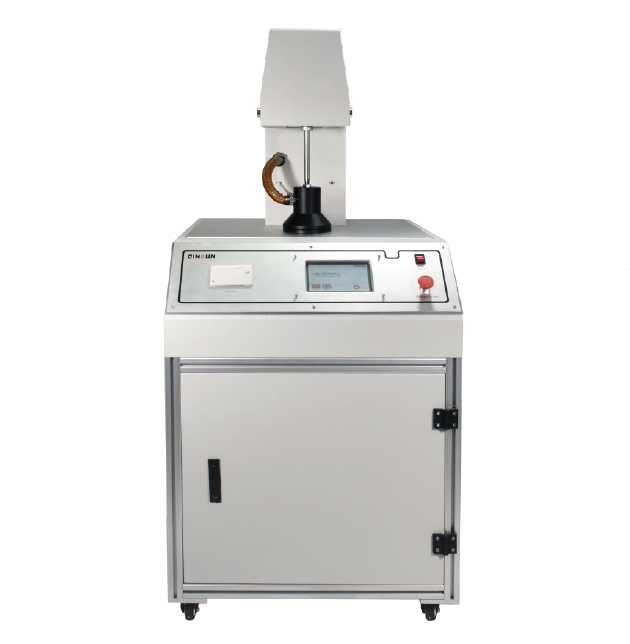
Through standardized aerosol challenge testing, the mask filtration performance tester accurately measures key parameters such as particulate filtration efficiency, resistance, and pressure drop, thereby providing a scientific basis for product research and development, production quality control, and market compliance.
This article focuses on the G506 Mask Automatic Filter Performance Tester as a representative model and provides a comprehensive introduction and analysis of its definition, principles, standard basis, structural components, testing procedures, technical characteristics, application value, and industry significance, with the aim of offering readers an authoritative and complete explanatory overview based on consolidated web information.
Importance of Mask Filtration Performance Testing
In daily life and professional protection scenarios, masks are widely used to prevent airborne particles, dust, and microorganisms from entering the respiratory tract. Different standards impose different requirements on filtration efficiency. For example, under Chinese standards, KN95 indicates a filtration efficiency of 95% or higher, while U.S. NIOSH N95 and European FFP2 classifications have corresponding performance requirements.
Testing mask filtration performance is not only essential for determining whether a product truly provides effective protection, but also a critical step in national and international certification, quality control, and export compliance review.
Traditional filtration performance evaluations often relied on manual operation, experience-based judgment, or limited measurement methods. Such approaches are susceptible to environmental influences and human error, and the results often lack comparability and traceability. Therefore, automated and standardized mask filtration performance testing equipment has become an essential tool in modern protective product evaluation. Automated instruments utilize controlled airflow, aerosol generation, and particle detection technologies to deliver fast, high-precision, and highly repeatable data, providing reliable support for research and development, quality management, production release, and certification.
Definition and Functions
The Automatic Mask Filtration Performance Tester is an automated instrument based on the aerosol challenge principle, specifically designed to measure the particulate filtration capability of masks and respiratory protective materials. It generates a controlled aerosol flow to challenge the test sample while monitoring upstream and downstream particle concentrations and related performance indicators in real time. The system then calculates key parameters such as filtration efficiency and resistance.
The G506 model represents this category of equipment, with a design philosophy focused on achieving fully automated testing procedures, meeting multiple standard requirements, and providing quantitative results for product performance evaluation.
Such testers are primarily used by mask manufacturers, inspection and testing institutions, research organizations, and educational institutions to measure:
Particle Filtration Efficiency (PFE)
Microparticle filtration efficiency (such as N95-level performance)
Pressure drop and breathing resistance
Initial efficiency and loaded efficiency
Among these indicators, particle filtration efficiency is the core parameter, representing the ability of mask materials to prevent particles within a specified size range from penetrating the filter medium.
Standards Basis
The G506 Automatic Mask Filtration Performance Tester is designed to comply with multiple domestic and international testing standards. Different countries and regions define specific requirements for mask filtration performance testing, including test conditions, methods, aerosol characteristics, and calculation formulas.
Common applicable standards include:
ASTM F2100: A U.S. standard specifying performance requirements for medical face masks, including filtration efficiency testing.
EN 149: A European standard defining filtration efficiency and marking requirements for respiratory protective devices.
NIOSH 42 CFR Part 84: A U.S. regulation defining performance requirements for N95. P95. and P100 respirators.
GB/T 2626: A Chinese national standard specifying requirements for non-powered air-purifying particle respirators.
GB/T 32610: A Chinese technical specification for daily protective masks.
EN 143: A European standard specifying testing methods for particle filter performance.
By supporting multiple standard testing modes, the G506 tester can meet both domestic and international market requirements for mask performance verification and certification, assisting manufacturers and laboratories in achieving compliance and product comparison.
Testing Principle
The G506 tester operates based on the aerosol challenge principle. The general testing process is as follows:
Aerosol Generation
The instrument is equipped with a salt or oil aerosol generator, using NaCl (salt aerosol) or DEHS/PAO (oil aerosol) as challenge particle sources. The generated aerosol particles have controlled size distribution and concentration and are carried by compressed air into the testing channel.
Before entering the test path, the aerosol passes through a neutralizer to remove electrostatic charges, minimizing interference from electrostatic effects and ensuring accurate measurement results.
Filtration Challenge
Under specified airflow conditions, the generated aerosol flows sequentially through the upstream sensing region, the mask sample, and the downstream sensing region. The equipment uses differential pressure sensors and flow monitoring devices to control and monitor the entire process.
Particle Monitoring
Upstream and downstream particle concentrations are measured using particle counters or photometers based on light scattering principles. By comparing concentration differences between both sides, filtration efficiency can be calculated. A significantly lower downstream concentration indicates strong particle interception performance.
Data Calculation and Output
The system’s internal control software automatically collects data and calculates filtration efficiency, penetration rate, and other parameters according to standard formulas. The instrument also displays pressure drop and resistance values during testing and supports report generation and data export.
Structural Components and Key Modules
A complete automatic mask filtration performance testing system typically includes:
Aerosol Generation System
Produces measurable particulate aerosols. The G506 can switch between salt and oil aerosol modes to meet various standard requirements.
Sample Fixture
A dedicated holder secures the mask within the test chamber, ensuring airflow passes strictly through the test material and preventing leakage.
Particle Detection System
Typically utilizes laser scattering photometers or particle counters to measure upstream and downstream aerosol concentrations and capture size-specific data.
Differential Pressure and Flow Monitoring Module
Differential pressure sensors measure the pressure drop across the filter material, while flow meters control and verify airflow rates in accordance with standard requirements.
Software Control and Data Management
The instrument is equipped with automated software controlled by a microprocessor or computer. It manages test procedures, records data in real time, generates reports, and provides a user-friendly interface for parameter configuration.
Performance Indicators and Technical Features
According to publicly available information, the G506 model features the following technical characteristics:
Filtration efficiency measurement capability up to 99.999%, meeting high-level protection standards.
Support for both salt and oil aerosol testing to accommodate various standard requirements.
Adjustable airflow range typically between 15–100 L/min, satisfying multiple testing standards.
Median particle size settings around 0.2 µm (oil aerosol) or 0.75 µm (salt aerosol), in accordance with common filtration test standards.
Fully automated testing procedures with an intuitive interface, reducing human error and improving repeatability.
Automatic data generation and report export functions for quality traceability.
Replaceable photometers, customizable test programs, and modular design for easier maintenance and cost efficiency.
Typical Operating Procedure
Although operational details may vary slightly by model, a typical test process includes:
Preparing the mask sample according to the applicable standard (such as GB/T 2626 or EN 149) and checking instrument status.
Setting test parameters, including airflow rate, aerosol type, and test mode.
Loading the sample into the fixture and initiating the test.
Real-time data acquisition of upstream and downstream aerosol concentrations, pressure drop, and airflow.
Automatic calculation of filtration efficiency and report generation.
Completing the test and removing the sample.
This workflow demonstrates the instrument’s fully automated detection capability, improving efficiency while ensuring standardized and repeatable testing.
Application Fields and Industry Value
The G506 Automatic Mask Filtration Performance Tester has broad industry applications, including:
Quality Control and Production Testing
Helping mask manufacturers conduct routine product inspections to ensure consistency and compliance.
Third-Party Testing and Certification
Providing accredited laboratories with equipment capable of conducting standards-compliant performance evaluations.
Research and Development
Supporting the development and optimization of new filter materials, mask structures, and respiratory protective products.
Export Compliance
Enabling manufacturers to test products according to various international standards, ensuring market access.
In summary, the Automatic Mask Filtration Performance Tester is a critical instrument for evaluating mask and respiratory protective product filtration performance. Represented by the G506 model, this automated tester features high automation, support for multiple aerosol types, compliance with various national and international standards, and accurate, reliable results.
Based on standardized aerosol challenge principles, the system integrates controlled airflow, particle detection, and automated data processing modules to deliver a complete testing workflow for filtration efficiency, pressure drop, and related parameters. It serves widely in research, production, quality control, and certification.
As protective demands and testing standards continue to evolve, such systems will play an increasingly important role in personal protective equipment quality assessment and public health assurance.
Previous: What is a Vacuum Cleaner Filtration Test System?
N e x t : What are the methods of filter integrity test?
