





What are the methods of filter integrity test?
2026/02/26
Share:

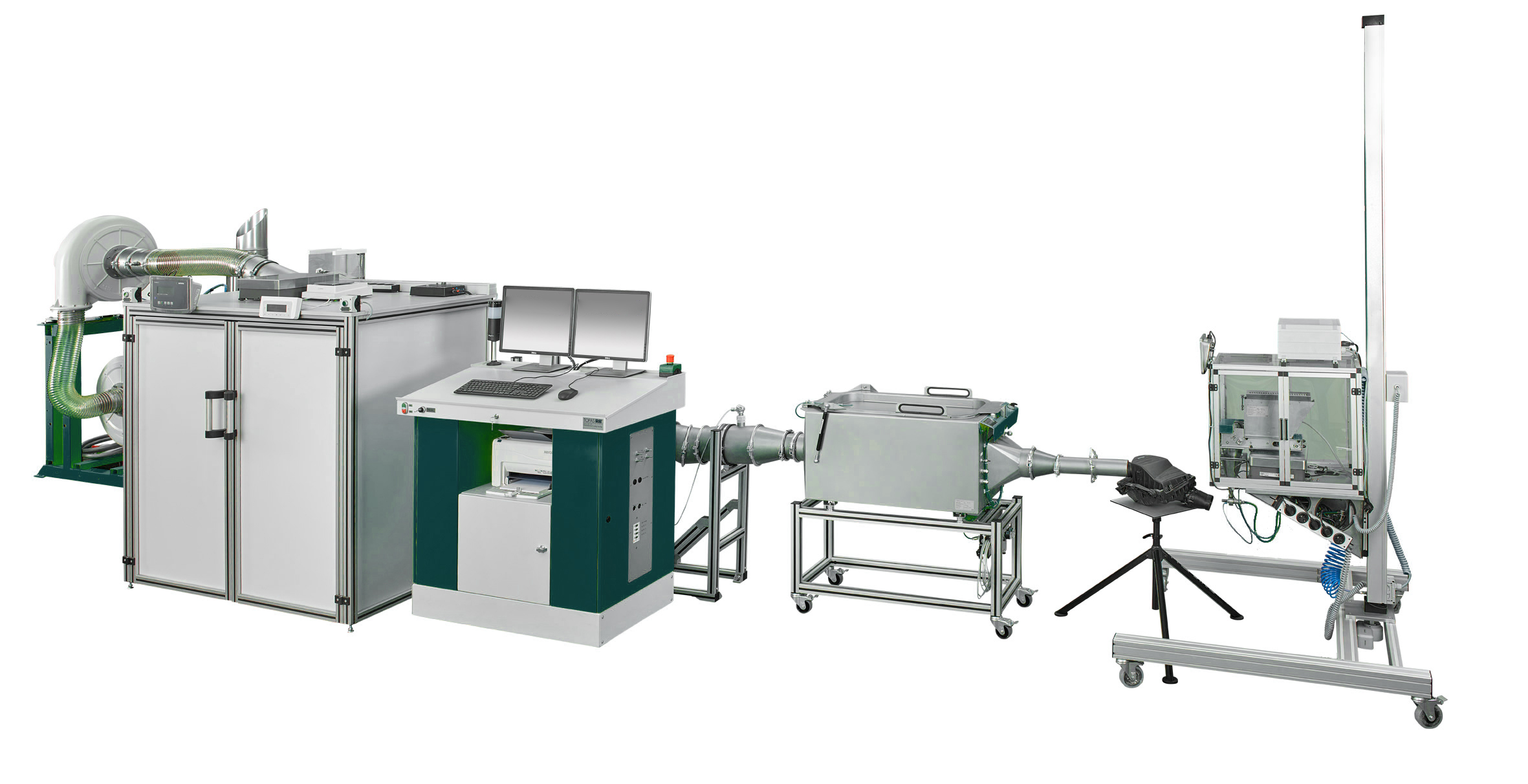
Integrity testing is a comprehensive evaluation of a filter’s structure, materials, installation sealing, and filtration performance. It is used to determine whether there are defects such as damage, pore changes, improper installation, or sealing failures, thereby ensuring that the filtration system consistently maintains the expected high-efficiency performance during operation.
Integrity testing methods vary widely in principle and application, but they can generally be divided into two categories: non-destructive testing and destructive testing. This article provides a comprehensive overview and analysis of these testing methods, including their principles, procedures, and applicable scenarios, to help readers better understand these technologies and their practical applications.
Fundamentals and Classification of Integrity Testing
The ultimate purpose of filter integrity testing is to verify that the filter can achieve the expected filtration performance under specified conditions, particularly the effective retention of particles or microorganisms of defined sizes. Testing methods are primarily divided into:
Non-destructive Integrity Testing:
These methods assess filter performance through physical measurements without damaging the filter structure. They can be conducted either online or offline and allow repeated testing.
Destructive (Challenge) Testing:
These methods involve artificially challenging the filter medium to evaluate its actual retention capability. Since they may cause some degree of damage to the filter material, they are typically used for validation or confirmation purposes rather than routine testing.
In practical applications, non-destructive testing is the primary method for routine integrity verification, while destructive testing is mainly used during validation stages or when establishing performance standards.
Detailed Explanation of Non-Destructive Testing Methods
Bubble Point Test
The bubble point test is one of the most classical and widely used integrity testing methods. Its principle is based on capillary action and gas–liquid interface phenomena. When the membrane pores are fully wetted with a liquid, gas pressure is gradually increased. Once the pressure is sufficient to overcome the surface tension of the liquid in the largest pore, gas penetrates through and forms a continuous stream of bubbles. This pressure is defined as the “bubble point pressure” and is directly related to the maximum pore size of the membrane.
Principle Overview:
In the wetted state, liquid blocks gas from passing through the membrane pores. As gas pressure increases, it eventually forces its way through the widest pore, displacing the liquid and forming continuous bubbles. This critical pressure is the bubble point. The bubble point value is inversely proportional to the maximum pore diameter.
Key Testing Steps:
Wet the membrane pores thoroughly using an appropriate wetting liquid (such as water or a surfactant solution). Hydrophobic membranes may require liquids with lower surface tension to ensure complete wetting.
Apply gas pressure to the upstream side of the filter.
Observe the downstream side for continuous bubble formation.
Record the pressure at which continuous bubbles appear and compare it to specification limits.
If the measured bubble point is significantly lower than the standard value, it may indicate enlarged pores, cracks, or other defects.
Advantages and Limitations:
Advantages: Highly sensitive to pore size changes; directly reflects membrane integrity; non-destructive; suitable for liquid filter testing.
Limitations: Requires proper wetting; hydrophobic membranes need special wetting procedures.
Diffusion Flow / Forward Flow Test
The diffusion flow test, also known as the forward flow or pressure hold test in some contexts, measures the gas flow rate through a wetted membrane under constant pressure and compares it to established standards.
Principle Overview:
Under a set pressure below the bubble point, gas diffuses through the liquid-filled pores of the membrane. An intact filter exhibits very low diffusion flow, whereas damaged membranes or enlarged pores allow significantly higher gas flow rates.
Operational Overview:
Apply a controlled gas pressure (often a percentage of the bubble point pressure, such as 80%).
Measure the gas flow rate passing through the membrane.
Compare the measured value with the acceptable limit.
If the flow rate exceeds the allowable limit, the filter may have integrity issues.
Application and Features:
This method is suitable for both liquid and gas filters and is often used in combination with the bubble point test for comprehensive evaluation. It is also applicable for high-efficiency filter integrity verification.
Pressure Hold / Pressure Decay Test
The pressure hold (or pressure decay) test evaluates filter integrity by monitoring the rate of pressure drop over time after applying a defined pressure to a sealed test system.
Principle:
Once pressurized, the system is isolated from the gas supply. If the filter and sealing system are intact, the pressure will decay slowly. Rapid pressure loss may indicate leakage or structural defects.
Procedure:
Connect the filter to the test device and ensure proper sealing.
Apply a defined pressure to the system.
Isolate the gas source and monitor the pressure decay over a specified period.
Analyze the pressure curve to determine integrity status.
Advantages and Considerations:
This method is relatively simple and effectively reflects system sealing performance. However, it is sensitive to environmental factors such as temperature fluctuations, which may influence pressure readings.
Water Intrusion Test (WIT)
The water intrusion test is commonly used for hydrophobic membranes that are difficult to wet using conventional methods. Instead of relying on gas diffusion through wetted pores, this method measures the rate at which water intrudes into dry hydrophobic pores under low pressure.
Principle:
Under a specified differential pressure, water is forced against the membrane surface. A properly functioning hydrophobic membrane resists water penetration, allowing only minimal intrusion. Excessive water flow indicates enlarged pores or membrane defects.
This method eliminates the need for organic wetting agents and is suitable for specific hydrophobic filter materials.
Destructive Testing: Challenge Testing
Unlike non-destructive tests that focus on pore structure and gas flow characteristics, destructive challenge tests directly assess filtration performance by introducing particles or microorganisms to challenge the filter.
Particle Challenge and Bacterial Challenge Tests
Particle Challenge Testing:
Particles of known size distribution are introduced to the upstream side of the filter, and downstream particle concentration is measured. Significant penetration indicates insufficient filtration performance.
Bacterial Challenge Testing:
A bacterial suspension is used as the challenge medium. Microbiological analysis is performed on both upstream and downstream samples to evaluate the filter’s microbial retention capability. This method is particularly important for sterilizing-grade filters in pharmaceutical applications.
Because these tests may compromise filter integrity, they are typically used during validation, product development, or standard establishment rather than routine operational checks.
Practical Integrity Testing Strategies
In practice, filter integrity testing rarely relies on a single method. Instead, a comprehensive testing strategy is adopted according to the application environment.
For example, in pharmaceutical aseptic production, filter integrity tests are often performed both before and after use to ensure system reliability. Bubble point and diffusion flow tests are commonly combined to assess overall performance.
In cleanroom and air purification systems, high-efficiency filters may be evaluated using particle counting methods to compare upstream and downstream concentrations, indirectly confirming filter integrity and efficiency.
Different filter materials and structures may require tailored testing conditions. Hydrophobic membranes may require mixed wetting solutions or water intrusion testing, while hydrophilic membranes may be tested directly with water.
Filter integrity testing is a fundamental step in ensuring the efficiency and safety of filtration systems. Depending on the filter’s application, various methods can be selected, including:
Bubble Point Test: Directly reflects pore integrity.
Diffusion Flow / Forward Flow Test: Evaluates gas permeability under controlled pressure.
Pressure Hold / Pressure Decay Test: Assesses system sealing performance.
Water Intrusion Test: Suitable for hydrophobic membranes.
Destructive Challenge Testing: Validates actual retention capability.
In practical applications, these methods are often used in combination to form a comprehensive integrity verification system. Only through scientific testing methods aligned with industry standards can filtration systems operate reliably over the long term, meeting stringent cleanliness and sterility requirements while ensuring overall process safety and product quality.
Previous: What is the G506 Mask Automatic Filter Performance Tester?
N e x t : What are the evaluation tests for aerosols?
