





What are the evaluation tests for aerosols?
2026/02/26
Share:

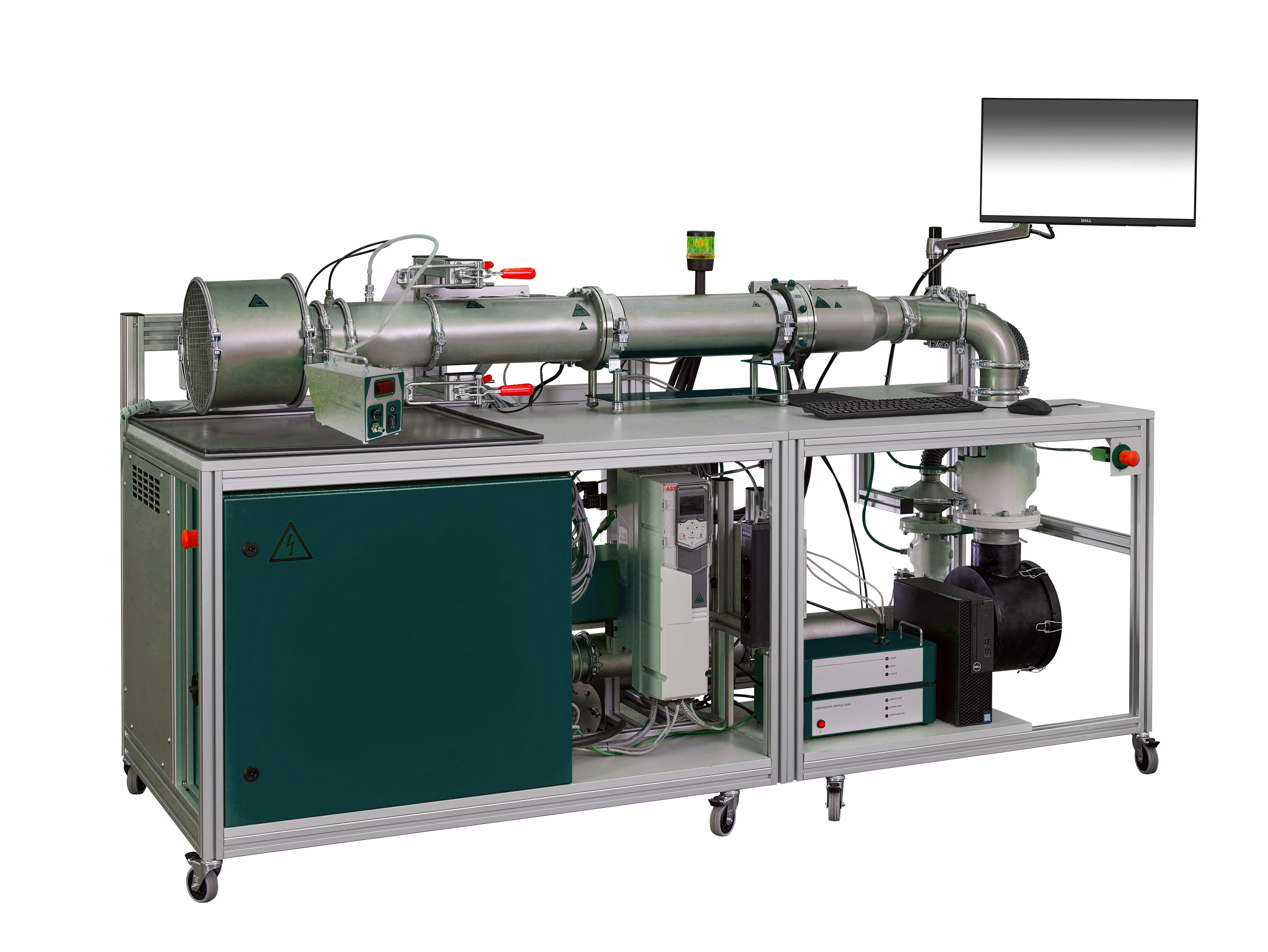
Aerosol evaluation testing mainly focuses on particle size distribution, concentration, chemical composition, optical properties, and morphological characteristics. Different testing methods emphasize different attributes. The results are used not only to describe aerosol characteristics but also as a foundation for climate modeling, air pollution control, spray product performance evaluation, and respiratory protection certification. This article systematically introduces commonly used aerosol evaluation and testing methods, analyzing their principles, applicable ranges, advantages and disadvantages, and related indicators.
Fundamental Characteristics of Aerosols
When conducting aerosol evaluation tests, it is necessary to identify key parameters of interest, including but not limited to the following categories:
Particle Size Distribution
Particle size distribution is one of the core parameters in aerosol evaluation. It describes how particles of different sizes are distributed in terms of number or mass within the overall aerosol population. The distribution across multiple size ranges can influence health risks, deposition behavior, and optical effects.
Particle Concentration
Aerosol concentration can be expressed as number concentration (particles/cm³) or mass concentration (e.g., µg/m³). It is a critical parameter for assessing pollution levels or exposure risks. Concentration reflects the overall aerosol loading in the atmosphere or test environment.
Optical Properties
Optical properties include scattering coefficients, absorption coefficients, and optical depth. These parameters help evaluate how aerosols scatter and absorb sunlight, thereby influencing atmospheric radiative balance.
Chemical Composition and Morphology
The chemical composition of aerosols determines their chemical reactivity and source characteristics, while particle morphology affects environmental behavior and light interaction. Chemical analysis and microscopic imaging are used to understand these physical and chemical properties.
Aerosol Sampling and Pretreatment Methods
Before conducting evaluation tests, obtaining representative samples is essential. Sampling strategies and pretreatment methods vary depending on the testing objectives.
Cascade Impaction Sampling
A cascade impactor uses multiple stages of nozzles and impaction plates to classify aerosol particles according to inertia. Larger particles are collected at earlier stages, while smaller particles pass to subsequent stages, enabling size-segregated particle collection. This method is widely used for particle size distribution analysis and subsequent chemical analysis.
Isokinetic Filtration or Particle Capture Sampling
In this method, aerosol-laden air is drawn through a filter medium, capturing particles for offline analysis. It is suitable for mass determination and chemical composition studies. Although simple and straightforward, filtration methods may be influenced by adsorption efficiency and filtration losses.
Sampling Environment and Pretreatment
Controlling sampling conditions—such as temperature, humidity, and flow rate—is critical to ensure representativeness and comparability. Post-collection procedures such as drying, quantification, or other pretreatments are also important for ensuring the accuracy of subsequent measurements.
Physical Property Evaluation Methods
Physical properties form the foundation of aerosol characterization. Common evaluation methods include:
Particle Size and Size Distribution Measurement Techniques
Scanning Mobility Particle Sizer (SMPS)
The Scanning Mobility Particle Sizer uses an electric field to classify particles according to their electrical mobility and then counts them to determine particle size and number concentration. This technique is particularly suitable for nanoparticle measurement and provides high-resolution size distribution data.
Aerodynamic Particle Sizer (APS)
The Aerodynamic Particle Sizer evaluates particle aerodynamic diameter by measuring inertial behavior in an airflow. It is commonly used for particles in the mid-size range (approximately 0.5 to 20 micrometers) and allows rapid acquisition of size and number data.
Laser Particle Size Analysis
Optical particle size analyzers use laser scattering principles to infer particle size based on scattering intensity and angular distribution. This method supports real-time data acquisition and simultaneous analysis across multiple size intervals.
Combining different particle sizing techniques enables coverage of the full spectrum from nanometer to micrometer particles, improving overall measurement accuracy and scope.
Concentration and Mass Measurement Methods
Real-Time Particle Counters
Real-time particle counters use light scattering or electrical resistance changes to rapidly count and record particles as they pass through a sensing zone. These methods are well suited for dynamic environmental monitoring and emission source evaluation.
Tapered Element Oscillating Microbalance (TEOM)
The Tapered Element Oscillating Microbalance determines particle mass concentration by measuring frequency changes caused by particle accumulation on a sensing element. It is suitable for continuous real-time monitoring and is widely used in environmental air quality assessment.
Optical Absorption Measurement
Instruments capable of measuring light absorption or scattering, such as photometers or aethalometers, are used to determine concentrations of specific aerosol types, such as black carbon. Optical methods typically provide rapid responses to environmental changes.
Optical Property Evaluation Methods
Aerosol optical property evaluation focuses on how particles scatter and absorb incident light, which is essential for radiative transfer studies and climate modeling.
Optical Depth and Scattering Coefficient Measurement
Using multi-wavelength photometers or scattering instruments, researchers measure the attenuation of light passing through an aerosol layer. Optical depth and scattering coefficient measurements are widely applied in atmospheric radiation models and satellite remote sensing calibration.
Multi-Angle Light Scattering
Multi-angle light scattering provides scattering information at different observation angles, allowing more detailed characterization of particle shape and size effects on optical behavior. Although highly informative, this method requires sophisticated optical instrumentation and measurement systems.
Chemical and Composition Evaluation Methods
The chemical composition of aerosols directly affects their toxicity and source identification; therefore, specialized analytical techniques are required.
Electron Microscopy and Energy-Dispersive Spectroscopy
Using scanning electron microscopy (SEM) or transmission electron microscopy (TEM) combined with energy-dispersive X-ray spectroscopy (EDS), researchers can obtain detailed information on particle morphology and elemental composition. This approach enables single-particle analysis and provides insights into particle origin and chemical characteristics.
Mass Spectrometry
Mass spectrometry is an important method for analyzing aerosol chemical composition. In particular, time-of-flight mass spectrometry (TOF-MS) allows real-time analysis of the chemical composition of individual aerosol particles, providing complex chemical fingerprint information.
Standards and Quality Control of Evaluation Results
Aerosol evaluation testing should comply with relevant standards and quality control procedures. For example, atmospheric particulate monitoring must follow environmental protection standards and instrument calibration regulations, while scientific research often adheres to international or national metrological requirements. Cross-validation of different measurement methods and the use of standard reference materials are essential measures to ensure testing accuracy and reliability.
Practical Applications and Case Studies
Aerosol evaluation testing is widely applied not only in research and environmental monitoring but also in industrial and public health contexts.
Environmental Air Quality Assessment
Continuous monitoring of aerosol concentration and particle size distribution enables assessment of atmospheric pollution levels and supports pollution control strategies.
Occupational Health and Safety Evaluation
In industrial environments such as metal cutting and welding, aerosol exposure may affect workers’ health. Real-time particle counting and mass measurement techniques are used to evaluate exposure risks and the effectiveness of protective measures.
Respiratory Protective Equipment Performance Testing
Evaluating the filtration efficiency of masks and respirators requires standardized aerosol challenge tests combined with particle size and penetration measurements. These results form the basis for certification and performance verification.
Aerosol evaluation testing encompasses sampling, particle size analysis, concentration measurement, optical property assessment, and chemical composition analysis. Different testing methods provide complementary data based on their measurement principles and objectives, including:
Particle size and distribution measurement techniques such as SMPS, APS, and laser optical particle analysis;
Concentration and mass measurements such as real-time particle counters and TEOM;
Optical property evaluations including optical depth and multi-angle scattering measurements;
Chemical and compositional analyses using electron microscopy and mass spectrometry.
Together, these methods reveal aerosol characteristics from multiple perspectives, providing a solid data foundation for atmospheric science, environmental management, industrial hygiene, and protective equipment design. In different application scenarios, appropriate testing methods should be selected based on measurement objectives, instrument performance, and regulatory requirements to ensure accurate and reliable evaluation results and to promote the continued advancement of aerosol science and its practical applications.
Previous: What are the methods of filter integrity test?
N e x t : What are the three types of filter systems?
