





What are the requirements for HEPA filter testing?
2026/02/26
Share:

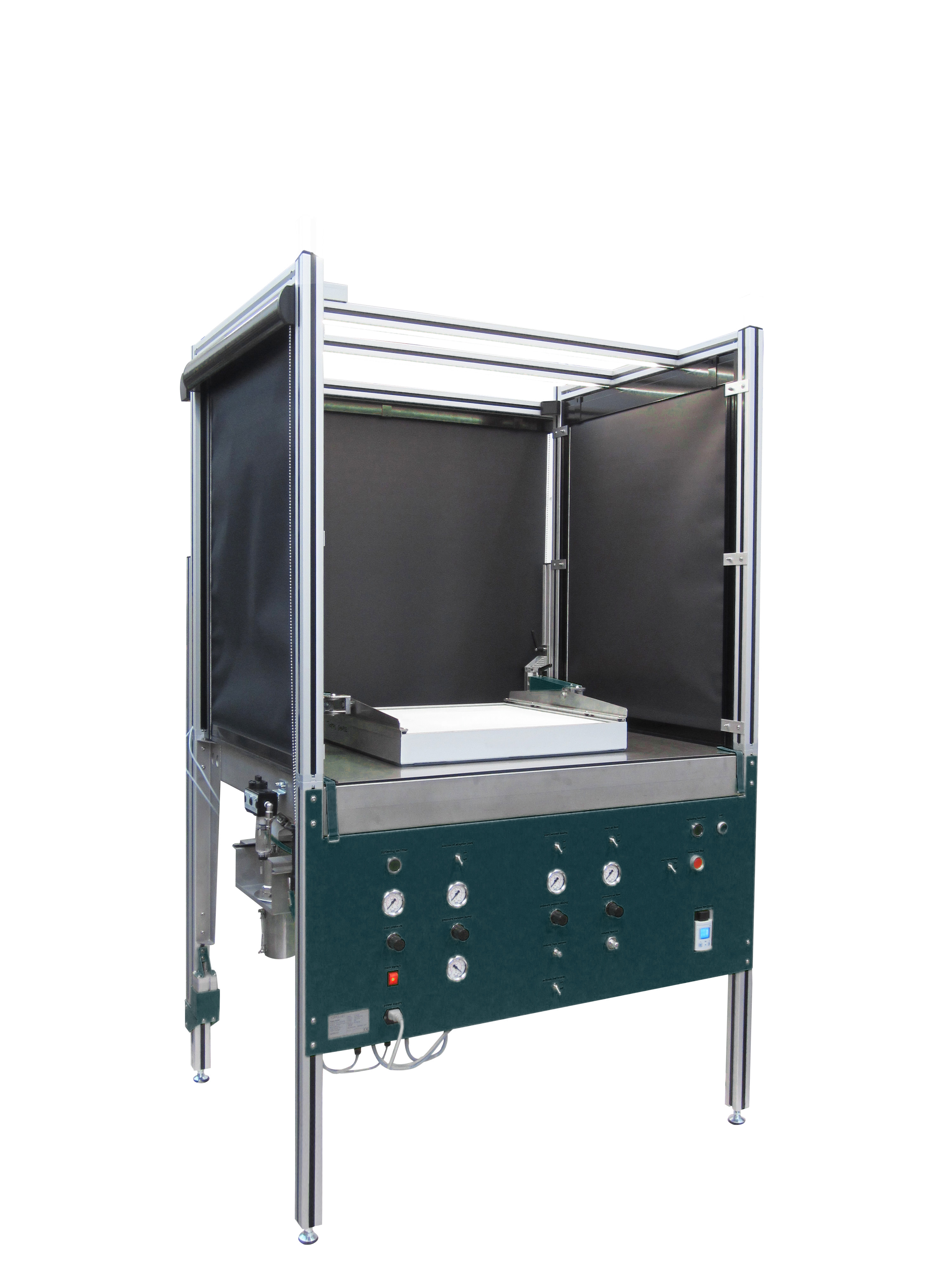
With the continuous development of international standards, testing requirements for HEPA filters have become increasingly detailed and comprehensive, covering efficiency testing, integrity verification, resistance and airflow performance, durability evaluation, and more.
This article systematically reviews the testing requirements that HEPA filters must meet during manufacturing, installation, and operation, providing a clear and comprehensive framework for understanding the subject.
Fundamental Significance and Standard Framework of HEPA Filter Testing
The core objective of HEPA filter testing is to evaluate key performance indicators under actual operating conditions, including particle capture efficiency, leakage presence, airflow resistance, and performance stability under environmental changes. These tests directly affect the reliability and service life of filters in controlled environments.
Commonly used international standards include:
ISO 29463 series: Developed by the International Organization for Standardization, this standard defines classification and testing methods for HEPA and ULPA filters and is widely adopted globally.
EN 1822: A European standard specifying detailed requirements for filtration efficiency and leakage testing, serving as the European counterpart to ISO 29463.
IEST Recommended Practices: Issued by the Institute of Environmental Sciences and Technology, providing detailed testing methodologies and media performance evaluations.
Other industry-specific regulations: Depending on application environments such as cleanrooms, pharmaceutical facilities, or hospital sterile areas, additional validation guidelines may apply for on-site integrity verification.
Together, these standards form the technical foundation for HEPA filter testing requirements.
Filtration Efficiency Testing Requirements
Filtration efficiency is the most fundamental and critical performance indicator of a HEPA filter. It represents the proportion of airborne particles effectively captured after passing through the filter.
Definition and Particle Size
Efficiency testing typically uses specific particle sizes as challenge aerosols to simulate the most penetrating conditions. According to major standards:
Testing focuses on the Most Penetrating Particle Size (MPPS), generally within the range of 0.1 μm to 0.3 μm. This particle size represents the lowest filtration efficiency and therefore the most challenging condition.
ISO 29463 and EN 1822 define HEPA filter grades based on MPPS efficiency. For example, H13 filters must achieve ≥99.95% efficiency, while H14 filters must achieve ≥99.995%.
Testing Requirements
Challenge aerosol generation: The test system must use uniform or monodisperse aerosol sources such as DOP or PAO to ensure sufficient upstream particle concentration.
Upstream and downstream concentration measurement: Particle counters measure particle concentration before and after the filter to calculate efficiency.
Efficiency calculation and classification: Efficiency is typically calculated as
Efficiency = (1 − downstream concentration / upstream concentration) × 100%
The result determines the filter classification.
These procedures ensure that the filter maintains high capture performance at the most penetrating particle size.
Integrity and Leakage Testing Requirements
Beyond overall efficiency, integrity testing ensures that the entire filter media, frame, and installation sealing have no leakage. Even if the filter media itself is highly efficient, poor sealing or installation gaps can allow unfiltered air to bypass the filter.
Integrity Test Content
Scan leak testing: Using photometers or light-scattering probes to scan the surface and frame of the filter to detect potential leakage points.
Leakage limit requirements: Standards specify maximum allowable local penetration rates, often not exceeding 0.01% at any point.
Factory and field testing: Integrity testing is performed both after manufacturing and again after installation to ensure no damage or sealing defects were introduced during installation.
This comprehensive leak detection process ensures reliability throughout the filter’s lifecycle.
Resistance and Airflow Performance Requirements
While capturing particles, HEPA filters inevitably create airflow resistance. This performance parameter is critical because it affects energy consumption, fan load, and overall ventilation efficiency.
Resistance and Airflow Testing
Initial resistance testing: Measures pressure drop at rated airflow conditions to verify compliance with system design requirements.
Final resistance and resistance curve testing: Measures pressure drop at various airflow rates to generate resistance-flow curves, evaluating performance degradation over time.
Face velocity uniformity assessment: Airflow hoods or anemometers measure surface velocity distribution to prevent bypass flow or uneven airflow patterns.
These data are essential for fan selection and energy efficiency assessment in cleanroom systems.
Environmental Durability and Material Performance Testing
In certain applications, HEPA filters must withstand high temperature, high humidity, or corrosive environments.
Durability and Environmental Tests
High temperature and humidity testing: Filters are exposed to elevated temperature and humidity conditions for extended periods, followed by re-evaluation of efficiency and resistance.
Corrosion resistance testing: Materials must maintain structural integrity and filtration efficiency when exposed to corrosive atmospheres.
Mechanical strength and integrity testing: Filters must withstand handling, transportation, and operational stresses without damage or cracking.
These durability tests ensure long-term performance stability under demanding conditions.
On-Site Verification and System Connectivity Testing
HEPA filters are typically installed within systems such as fan filter units (FFUs) or cleanroom ceilings. Individual product testing alone cannot fully verify system-level performance. On-site validation is therefore essential.
Field Verification Includes
Overall system efficiency confirmation: After installation and system startup, aerosol challenges or particle counting verify that the cleanroom meets required cleanliness levels.
Airflow velocity and pattern testing: Ensures proper coordination between supply and exhaust airflow, avoiding turbulence or short-circuiting.
Periodic integrity re-testing: Establishes routine verification schedules to detect aging or leakage over time.
On-site validation ensures that filter performance aligns with real-world operating conditions.
Standard Harmonization and International Comparison
Although HEPA testing requirements vary slightly across regions, core principles remain consistent: ensuring high efficiency, leak-free operation, environmental adaptability, and durability.
ISO and EN standards emphasize MPPS-based classification and scan leak testing.
IEST documents provide additional testing options and media evaluation guidance.
Industry guidelines highlight on-site validation and system connectivity verification.
Understanding the principles behind these standards helps professionals design rational and compliant testing programs.
Trends and Challenges in HEPA Filter Testing
With technological advancement, testing requirements continue to evolve:
Expanded particle size resolution across broader ranges.
Online dynamic testing technologies beyond static laboratory conditions.
Big data and AI-assisted analysis to improve repeatability and accuracy.
Real-time performance monitoring and early warning systems integrated into filtration systems.
These advancements are driving HEPA testing toward smarter, more comprehensive methodologies.
HEPA filter testing is a systematic, standardized, and technically demanding process. Through efficiency evaluation, integrity verification, resistance and airflow performance testing, durability validation, and on-site system assessment, it ensures that HEPA filters not only comply with manufacturing standards but also deliver stable and reliable purification performance in actual operation.
A thorough understanding of testing requirements enables professionals to design more reliable filtration systems, implement effective quality control procedures, and maximize the value of HEPA filters in clean manufacturing, healthcare, and infection control environments.
Previous: What are the three types of filter systems?
N e x t : Blow-By Test Rig,ISO 8178
