





How to perform an air velocity test?
2026/02/27
Share:

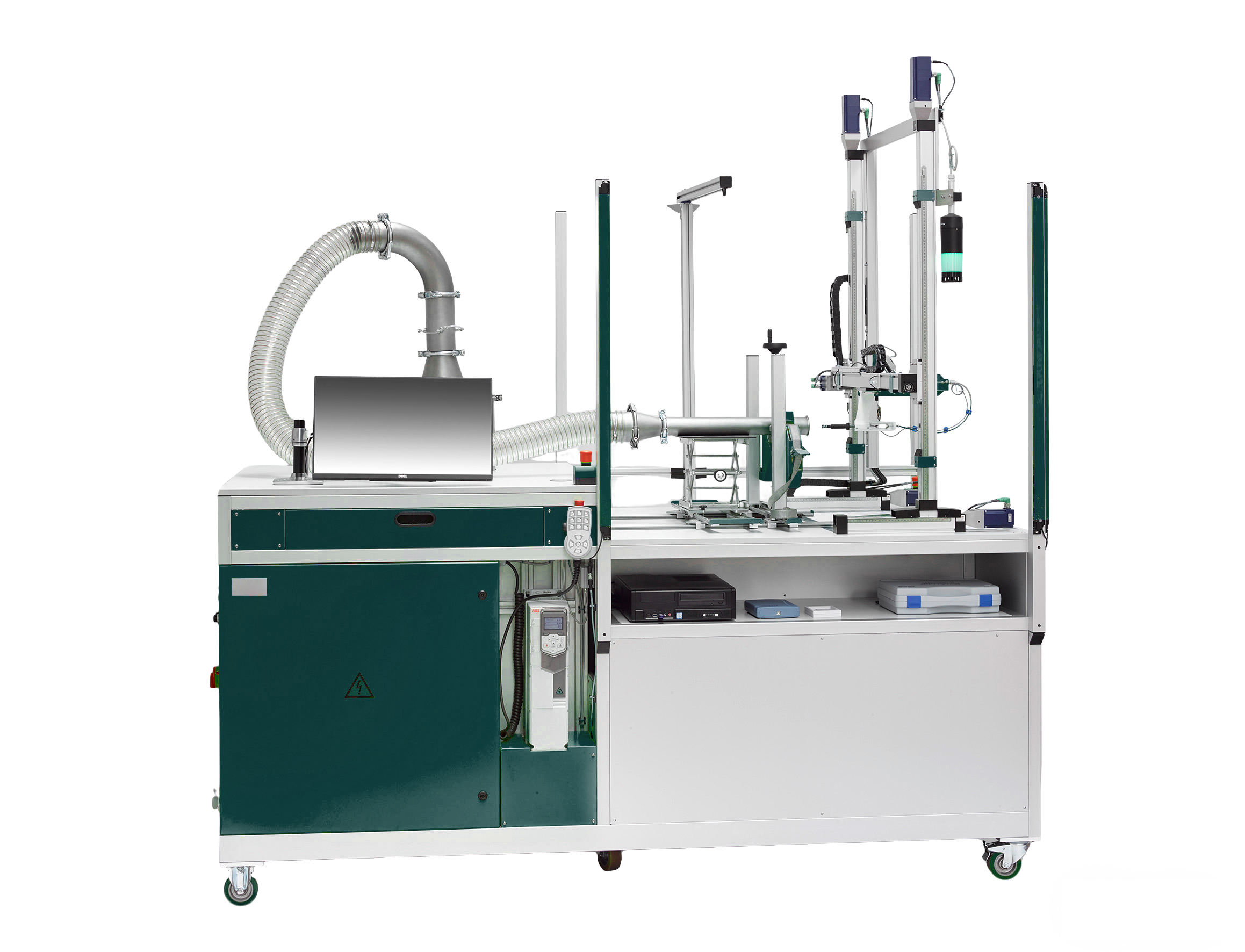
Basic Principles of Air Velocity Testing
Air velocity refers to the rate at which air moves through space per unit time, typically expressed in meters per second (m/s) or feet per minute (ft/min). The essence of velocity measurement is that instruments detect the effect of airflow on sensing elements and convert this physical interaction into velocity data based on physical models.
Different types of air velocity measurement technologies are based on different physical principles:
Vane Anemometer: Measures airflow based on the principle that rotating blades are driven by air movement, and the rotational speed is proportional to wind speed.
Hot-Wire / Thermal Anemometer: Uses a heated fine resistance wire; changes in cooling caused by airflow are used to calculate velocity variations. This method is especially suitable for low-speed airflow measurement.
Pitot Tube: Measures the difference between total pressure and static pressure of the fluid to calculate velocity pressure, which is then converted into velocity using Bernoulli’s principle.
Ultrasonic Anemometer: Calculates instantaneous velocity by measuring the time difference of sound wave propagation in upstream and downstream directions. It offers fast response and no mechanical friction.
Each method has its own application scenarios, advantages, and limitations. However, their core principle is to capture the effect of airflow on the instrument and output velocity data through physical formulas or electronic algorithms.
Common Equipment for Air Velocity Testing and Selection
In practical applications, different testing tools can be selected depending on the airflow environment, required accuracy, and budget considerations.
Anemometer
Anemometers are the most commonly used instruments for air velocity testing and can be classified into vane, thermal, and ultrasonic types.
Vane Anemometer: Simple in structure and easy to operate, suitable for general wind speed measurement. Airflow drives the blades or impeller to rotate, and the rotational speed has a linear relationship with airflow velocity.
Thermal Anemometer: Suitable for measuring low wind speeds or weak airflow. Its sensing element is a heated fine wire, and the proportion of heat removed by airflow is related to velocity.
Ultrasonic Anemometer: Measures airflow based on differences in sound wave propagation. It causes minimal disturbance to the flow field and provides high precision, making it suitable for precise testing environments.
These devices are typically equipped with digital displays or output modules, enabling real-time monitoring, data recording, and subsequent analysis.
Pitot Tube with Differential Pressure Gauge
The combination of a Pitot tube and a differential pressure gauge is also commonly used, especially in ducts, channels, exhaust systems, and other enclosed or semi-enclosed spaces. The Pitot tube directly obtains dynamic and static pressure, which can be converted into airflow velocity through calculation.
Multi-Point Measurement Arrays
In some engineering projects, such as large ducts or cleanroom diffusers, multiple sensors are arranged in arrays to accurately obtain velocity distribution. Data collected from multiple points are averaged or analyzed spatially to reflect the overall velocity profile of the entire cross-section.
Preparations Before Air Velocity Testing
Before conducting air velocity testing, a series of preparations is necessary, as they directly affect data reliability.
Clarify Measurement Objectives and Environmental Conditions
It is essential to determine whether the test is for ventilation system commissioning, airflow calculation, cleanroom compliance verification, or other purposes. Different objectives require different levels of accuracy, sampling quantities, and testing methods.
In addition, the testing environment should be evaluated for vibration, temperature fluctuations, and complex airflow disturbances, as these factors may influence measurement results.
Instrument Calibration and Inspection
Regardless of the selected instrument, calibration and basic inspection must be performed before use. The response characteristics of thermal anemometers, vane anemometers, and Pitot tubes may drift over time. Therefore, calibration under standard conditions is necessary to confirm measurement accuracy.
Test Location Planning
Air velocity at a single point does not represent the velocity condition of the entire area, especially in ducts or semi-enclosed systems where spatial distribution is significant. Measurement positions should be reasonably arranged according to requirements. If necessary, a cross-sectional grid should be established, and multi-point measurements should be conducted based on the equal-area principle.
Typical Implementation Process of Air Velocity Testing
Air velocity testing generally includes instrument setup, data acquisition, data processing, and report generation.
On-Site Instrument Setup
Place the anemometer or Pitot tube probe in the designated test area according to the measurement plan. When testing in ventilation ducts, ensure sufficient straight duct lengths upstream and downstream of the measurement section to minimize flow disturbances caused by bends or obstacles.
The probe must be aligned with the airflow direction. For Pitot tubes in particular, the probe should be inserted perpendicular to the airflow and aligned with the duct centerline.
Multi-Point Data Acquisition
Multi-point measurement across a cross-section typically involves:
Determining the measurement layout: Develop evenly distributed measurement points based on the geometry of the cross-section.
Sequential data collection: Measure each point for a certain duration (e.g., 10–15 seconds) to obtain stable readings.
Recording environmental conditions: Simultaneously record temperature, pressure, and other environmental parameters for potential density corrections or data conversion.
Many standard methods require multiple sampling points across a cross-section, followed by mathematical averaging or weighted averaging to determine the overall average velocity.
Data Conversion and Calculation
Depending on application requirements, measured local velocities may be converted into other parameters such as airflow rate or dynamic pressure. For example, in ventilation system balancing tests, the average velocity is often converted into volumetric flow rate using the formula Q = v × A, where A represents the cross-sectional area.
For dynamic pressure values measured by a Pitot tube, conversion into velocity requires applying physical relationships such as the Bernoulli equation.
Result Analysis and Reporting
After testing, analyze whether the data meet predefined technical requirements, such as:
Whether the ventilation system reaches the design airflow velocity
Whether cleanroom airflow velocity meets standard requirements
Whether exhaust or ventilation systems comply with emission regulations
Multiple measurement results should also be analyzed for uniformity and fluctuation characteristics to provide a basis for subsequent adjustment or optimization.
Technical Key Points and Precautions
Several technical aspects must be carefully considered to ensure scientific accuracy.
Selecting Appropriate Measurement Tools
Tool selection should be based on airflow characteristics and required accuracy. For example:
Thermal anemometers are preferred for low-speed airflow.
Ultrasonic devices are suitable for large-area or high-precision tasks.
Pitot tubes combined with differential pressure gauges are recommended for duct measurements with multi-point profiling.
Minimizing On-Site Disturbances
Environmental disturbances such as equipment startup, personnel movement, and temperature variation can affect measurement data. When possible, stabilize the environment by minimizing such disturbances during testing.
Multi-Point Averaging
Single-point measurements often cannot accurately represent overall airflow distribution. Multi-point measurement and averaging are common and necessary practices in engineering applications.
Instrument Performance and Error Control
It is important to understand the measurement range, response characteristics, and potential sources of error of the instrument. For example, vane anemometers are less sensitive at low velocities, while hot-wire anemometers may be influenced by high temperature environments and may require temperature compensation or recalibration.
Typical Application Scenarios
Air velocity testing is widely applied in engineering and research fields.
Ventilation and HVAC Systems
During HVAC commissioning, measuring air velocity at vents and duct cross-sections helps assess system balancing and ensures that all areas meet design ventilation requirements.
Cleanroom and Controlled Environment Validation
Cleanrooms have strict requirements for airflow velocity and volumetric flow rate. Test results must comply with relevant standards to ensure air cleanliness and contaminant removal efficiency.
Exhaust and Emission System Performance Evaluation
Air velocity testing is used to evaluate the performance of industrial exhaust systems and kitchen ventilation systems, helping determine compliance with emission regulations and environmental standards.
Safety and Research Applications
In laboratories, wind tunnel experiments, and fluid dynamics research, air velocity is a critical physical parameter that must be accurately measured and compared with theoretical models or simulation results.
Air velocity testing is a fundamental measurement activity widely applied in engineering and environmental analysis. By selecting appropriate instruments, arranging measurement points properly, applying scientific measurement methods, and implementing rigorous data processing procedures, reliable air velocity data can be obtained for ventilation commissioning, cleanroom compliance verification, airflow analysis, and other applications. With the continuous development of measurement technology, modern air velocity testing is increasingly digitalized, automated, and intelligent. Proper mastery of these techniques and methods is essential to ensure high-quality testing results.
Previous: Blow-By Test Rig,ISO 8178
N e x t : What are the different types of leakage tests?
