





What are the different types of leakage tests?
2026/02/27
Share:

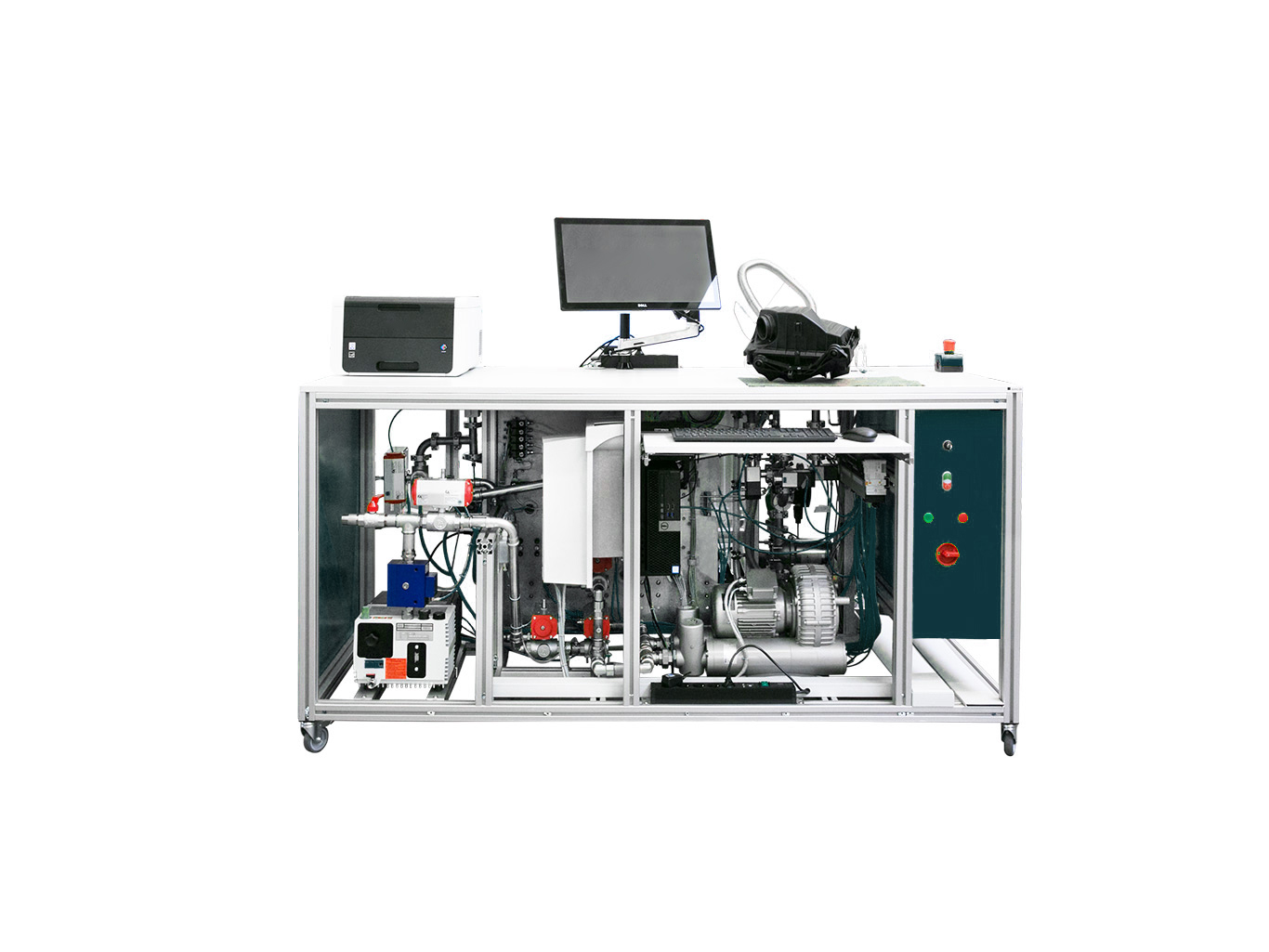
Leak Testing Basic Concept
Before discussing specific types, it is necessary to clarify the fundamental meaning and key indicators of leak testing. Leak testing uses pressure, vacuum, or special tracer media to examine the sealing integrity of a test object without impairing its function. Common leakage indicators include leak rate and leak location. The leak rate is typically expressed as the volume or mass of gas or liquid passing through a leak per unit time. Selecting an appropriate leak testing method requires consideration of detection sensitivity, material properties, operating pressure range, and industry regulations.
Leak testing methods can generally be categorized into visual inspection methods, pressure/vacuum methods, tracer gas methods, and acoustic/ultrasonic methods. Each method has its own unique principles and application scenarios, which are discussed in detail below.
Leak Testing Classification by Principle
Visual Inspection Methods
These methods determine leakage by directly observing visible signs during testing. They are among the most traditional and intuitive approaches.
Bubble Leak Test
Also known as the water immersion method, the bubble test involves pressurizing the test component with gas and immersing it in water. If leakage exists, bubbles will appear at the leak point underwater. Due to its simplicity and low cost, it is one of the earliest leak detection methods and is suitable for detecting relatively large leakage defects.
A variation involves applying soapy water or leak detection spray to the surface of the equipment. Bubbles forming on the surface indicate the leak location. This method is suitable for on-site maintenance and manual inspection and does not require complex equipment.
Advantages:
Simple operation
No complex instruments required
Quick localization of obvious leaks
Disadvantages:
Low sensitivity to micro leaks
Cannot precisely measure leak rate
Requires cleaning and drying after immersion
Liquid Penetrant Method (Dye Penetrant / Fluorescent Dye)
This method applies a colored or fluorescent dye to the test component. After removing excess dye, leakage or surface defects are identified by observing dye penetration. Under ultraviolet light, fluorescent dyes can reveal leakage paths. This method can detect surface cracks and pores and help identify leakage trajectories.
Pressure and Vacuum Testing Methods
Pressure and vacuum methods are among the most widely used leak detection techniques. They determine leakage by monitoring pressure changes in the test object under pressurized or vacuum conditions.
Pressure Decay (Pressure Drop) Test
In pressure decay testing, the test object is pressurized in a sealed environment, and internal pressure is monitored over time. If leakage exists, pressure will decrease. The leak rate can be estimated based on the magnitude and rate of pressure drop. This method is widely used in manufacturing and assembly line inspections.
Advantages:
Quantitative analysis of leakage
Simple operation without complex media
Suitable for automated monitoring
Disadvantages:
Limited sensitivity to very small leaks
Testing time may be long, especially for large volumes
Vacuum Decay Test
Similar to pressure decay testing, vacuum decay testing creates a vacuum environment around the test component. Leakage is determined by monitoring changes in vacuum level. This method is particularly suitable for components that cannot withstand high internal pressure, such as electronic seals and vacuum equipment parts.
Advantages:
Higher sensitivity compared to some pressure methods
Suitable for components that cannot be pressurized
Disadvantages:
Sensitive to liquid evaporation and surface desorption
Not applicable for high-pressure environments
Burst / Hydrostatic Test
This method gradually increases pressure until the component fails. Although primarily used for strength testing, it can also evaluate sealing performance and safety margins before failure. It is commonly applied to pressure vessels, pipelines, and storage tanks.
Tracer Gas Methods
Tracer gas methods use a specific gas medium that passes through leak points and is detected by sensitive instruments. These methods are commonly used for high-sensitivity leak detection.
Helium Leak Testing
Helium leak testing is a highly sensitive non-destructive testing technique that uses helium as a tracer gas. Helium molecules are small, inert, and present in low natural concentrations, making them ideal for detecting extremely small leaks. Detection instruments such as mass spectrometer leak detectors can measure extremely low leak rates. This method is widely used in semiconductor manufacturing, aerospace, and medical device production.
Helium testing can be conducted using various techniques, including vacuum spray methods, vacuum chamber methods, and sniffing methods, depending on the size and structure of the test object.
Advantages:
Extremely high sensitivity for detecting micro leaks
Effective leak localization
Disadvantages:
High equipment cost
Requires specialized training
Hydrogen / Nitrogen Tracer Gas Testing
In addition to helium, hydrogen or nitrogen can be used as tracer gases. Hydrogen molecules are small and penetrate easily, making them suitable for certain test environments. In refrigeration systems, specific gases may be used as tracers to detect refrigerant leaks.
Acoustic and Ultrasonic Methods
These methods detect leakage by capturing acoustic or ultrasonic signals generated when gas flows from a high-pressure area to a low-pressure area. They are especially useful in noisy environments or when direct internal access is not possible.
Ultrasonic Leak Detection
When gas escapes through a leak, it produces high-frequency sound signals. Ultrasonic detectors capture these signals and convert them into visual or audible outputs for leak localization. This method is particularly effective for large facilities, pipelines, or complex structures and does not require water immersion or vacuum conditions.
Advantages:
Can detect leaks while the system is operating
Not limited by material type
Disadvantages:
Requires skilled personnel for acoustic analysis
May have limited sensitivity for extremely small leaks
Leak Testing Classification by Application and Industry
Different industries have different leak testing requirements.
Manufacturing and Assembly Line Testing
In manufacturing, leak testing is mainly used for quality control of valves, pipes, and containers. Pressure decay and vacuum decay methods are widely adopted due to their simplicity and automation capability. For high-requirement systems such as automotive braking and cooling systems, bubble tests and ultrasonic detection may be combined to improve efficiency.
Semiconductor and Precision Equipment Manufacturing
These industries demand extremely low allowable leak rates. Tracer gas methods, especially helium or hydrogen testing, are commonly used due to their high sensitivity. Specialized vacuum systems and mass spectrometry equipment are typically required.
HVAC and Large Facility Leak Detection
For building ventilation systems and large pipeline networks, ultrasonic detection and pressure/vacuum decay testing are common. Ultrasonic detection can locate leaks during operation, while pressure decay testing evaluates overall structural integrity.
Safety and Environmental Monitoring
In systems involving hazardous substances or environmentally sensitive processes, leak detection requires high sensitivity and real-time monitoring capability. Combinations of tracer gas and ultrasonic methods, along with multiple sensor integration, are often applied. In special environments such as vacuum chambers, dedicated hard vacuum testing methods may be required.
Comparison of Leak Testing Methods
Different leak testing methods can be compared in terms of sensitivity, applicability, and cost:
Bubble Test – Low sensitivity; intuitive and low cost; weak for micro leaks
Pressure Decay – Medium sensitivity; easy automation; limited micro leak detection
Vacuum Decay – Medium to high sensitivity; suitable for vacuum conditions; sensitive to environmental factors
Ultrasonic Detection – Medium sensitivity; practical for field detection; requires skilled interpretation
Tracer Gas (Helium/Hydrogen) – High sensitivity; excellent for micro leak detection; higher equipment cost
Precautions in Leak Testing
Regardless of the selected method, the following considerations are essential for accurate results:
Environmental Control: Temperature, humidity, and ambient noise can affect pressure changes and acoustic signals. Environmental influences should be evaluated.
Instrument Calibration: Pressure sensors, mass spectrometers, and ultrasonic devices must be regularly calibrated to ensure measurement accuracy.
Standards and Regulations: Many industries have specific standards for pressure vessels, automotive components, and medical devices. Testing should comply with applicable regulations.
Data Analysis and Evaluation: Leak testing often requires statistical analysis and professional judgment rather than simple observation, especially for micro leak assessment.
Leak testing encompasses multiple technical principles, ranging from traditional bubble and pressure/vacuum methods to modern tracer gas and ultrasonic technologies. Each method has its own advantages and application scenarios. In practice, the selection should consider the properties of the test object, detection requirements, and equipment costs. By choosing appropriate testing methods, the sealing integrity, safety, and operational performance of products and systems can be effectively ensured. With technological advancements, leak testing is expected to achieve higher sensitivity, greater automation, and increased intelligence in the future.
Previous: How to perform an air velocity test?
N e x t : What is the kinematic viscosity test of oil?
