





What is a notching machine used for?
2026/05/12
Share:

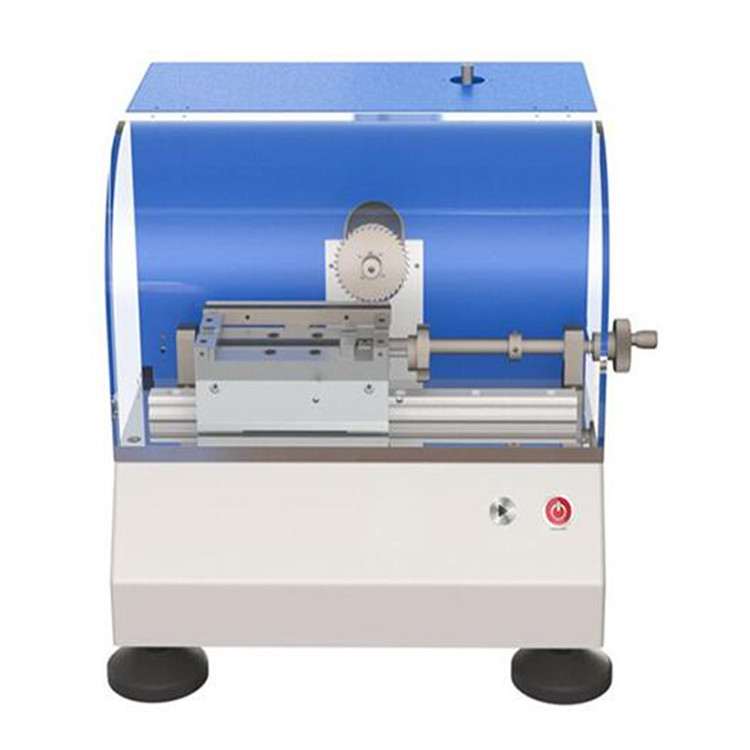
Functions and Applications of a Motorized Notching Machine
A Motorized Notching Machine is an industrial device that uses electric power to perform precise notching, grooving, or shaping operations on materials. Its functions and applications vary depending on the industry and processing requirements, and can mainly be categorized as follows:
Core Functions
Notching and Grooving Processing
The machine is capable of producing V-shaped, U-shaped, square, or other specially designed notches and grooves on materials such as metal, wood, concrete, or food products.
High-Precision Control
Some models are equipped with CNC (Computer Numerical Control) systems, enabling automated processing of complex geometric shapes with high accuracy and consistency.
Automated Operation
The equipment supports continuous and mass production, reducing manual intervention while significantly improving production efficiency.
Strong Material Compatibility
It can process a wide variety of materials, including metals (such as steel and aluminum), wood, concrete, and even food products like broad beans and chestnuts.
Main Application Categories
Metal Processing Industry
Used for creating discontinuous cuts, joints, or notches in steel structures, pipes, and metal sheets to facilitate assembly or connection.
Commonly applied in industries such as automotive manufacturing, shipbuilding, bridge engineering, and HVAC ventilation systems.
Cutting tools are often equipped with tungsten carbide blades to improve wear resistance and extend cutting life.
Woodworking and Furniture Manufacturing
Used for machining tenons and mortises in wood for traditional mortise-and-tenon joint construction.
Widely applied in the production of solid wood furniture, doors and windows, wooden staircases, and musical instruments.
Construction Industry
Used for grooving concrete walls or floors to install concealed electrical conduits, water pipes, and cable channels.
Machines are typically equipped with dual saw blades and dust collection systems, with adjustable cutting depth (20–55 mm) and width (16–45 mm).
Food Processing Industry
Applied for automated cutting or scoring of nuts such as broad beans and chestnuts to facilitate frying, roasting, or shell removal.
Designed with hygienic structures and high cutting efficiency, making them suitable for food-grade production environments.
Overall, the Motorized Notching Machine is an efficient and versatile processing device widely used across multiple industrial sectors. With its advantages of precision, automation, and broad material adaptability, it plays an important role in improving manufacturing quality and production efficiency.
Application Fields of an Electric Notch Sample Cutter
An Electric Notch Sample Cutter is a specialized device used to prepare standardized notched specimens for impact testing of non-metallic materials. It is widely applied in various scientific research and industrial sectors. According to authoritative references, its main application fields include the following:
Core Application Fields
Materials Science Research
It is used to prepare standard notched specimens of non-metallic materials such as plastics, rubber, nylon, fiberglass, and ultra-high-molecular-weight polyethylene (UHMW-PE). These specimens are essential for studying mechanical behaviors such as impact toughness, fracture toughness, and fatigue performance.
Product Quality Control and Testing
In the production of non-metallic materials (such as PP, PE, ABS, PC, and PVC), the machine is used to prepare specimens that comply with international and national standards such as ISO and GB/T. This ensures that the mechanical properties of products meet required specifications.
Higher Education and Vocational Training
It serves as an important experimental teaching device in disciplines such as materials science, polymer engineering, and mechanical engineering. It helps students understand standard specimen preparation methods and impact testing procedures.
Industrial Certification and Safety Evaluation
In industries such as aerospace, automotive manufacturing, and construction materials, it is used to prepare standardized notched specimens required for product certification, supporting safety evaluations of materials under extreme conditions.
Third-Party Testing and R&D Institutions
It is widely used in testing laboratories and research institutes for material performance comparison, new formulation development, and failure analysis.
Overall, the Electric Notch Sample Cutter plays a crucial role in both scientific research and industrial applications. Its high precision and compliance with international standards make it an indispensable tool in material testing and quality assurance systems.
Technical Features of a Motorized Notching Machine
A Motorized Notching Machine is designed with several advanced technical characteristics to ensure precision, efficiency, and safety in specimen preparation:
High-Precision Control
The machine adopts high-precision guide rails and servo motor systems to ensure that the depth, angle, and geometry of the notch fully comply with national and international standards.
Wide Material Compatibility
It can process a variety of materials, including metals, plastics, and rubber, meeting the testing requirements of different industries and applications.
Easy Operation
Most models are equipped with a touchscreen interface or CNC control panel. Users only need to input the required parameters, and the machine will automatically complete the specimen preparation process.
High Safety Performance
The equipment is typically equipped with protective covers and emergency stop functions to prevent accidental injuries during operation, ensuring operator safety.
Application Scenarios
Motorized Notching Machines are widely used in the following fields:
Materials Research
Universities and research institutions use the equipment in material mechanical performance testing to ensure the accuracy and reliability of experimental data.
Quality Control
Manufacturing enterprises use standardized specimen preparation to evaluate the impact resistance of products such as automotive components, pipelines, and building materials.
Third-Party Testing
Testing laboratories and certification bodies require large quantities of standard specimens. The motorized notching machine significantly improves efficiency while reducing human error.
Overall, the Motorized Notching Machine plays an important role in scientific research, industrial production, and quality inspection due to its precision, automation, and reliability.
Basic Principle of an Electric Notch Sample Cutter
An Electric Notch Sample Cutter is mainly used for specimen preparation before mechanical performance testing of materials, especially in impact tests for metals, plastics, and composite materials. Its core function is to machine standardized notches on test specimens, ensuring the comparability and accuracy of test results.
Unlike traditional manual specimen preparation methods, which are inefficient and highly dependent on operator skill—often resulting in inconsistent notch dimensions—the electric notch sample cutter uses a motor-driven cutting system. The cutting tool operates according to preset parameters and automatically completes the notching process.
This automated process significantly reduces human error, improves machining consistency, and enhances the repeatability and reliability of specimen preparation, making it an essential tool in modern material testing workflows.
Operating Procedure of an Electric Notch Sample Cutter
The operating process of an Electric Notch Sample Cutter is designed to ensure accurate, repeatable, and standardized specimen preparation. The steps are as follows:
1. Preparation
Confirm that the power supply is 220V single-phase three-wire system and ensure proper grounding.
Clean the worktable, fixtures, and cutting area to ensure no debris remains.
Select the appropriate template core (profiling die) and notching blade (Type A, B, or C) according to the specimen material and relevant standards such as GB/T or ISO.
2. Blade and Template Installation
Install the selected notching cutter (e.g., Type A blade) into the tool holder and tighten it securely to prevent loosening.
Insert the corresponding template core into the fixture frame and lock it firmly using the clamping mechanism.
3. Specimen Clamping
Place one or multiple specimens (typically 10–20 pieces per batch) into the template.
Secure them using side screws or a clamping frame to ensure the specimens remain stable during machining.
For double-notching machines, ensure proper alignment and balanced clamping force on both sides.
4. Start-up and Machining
Start the motor and allow the cutter to reach the rated speed (typically 240–460 r/min).
Slowly advance the template so that the specimens are in full contact with the upper and lower bearings and the worktable.
Perform a smooth cutting motion from one end to the other to complete the notching process.
For fully automatic models, simply press the start button; the machine will automatically complete feeding, cutting, and return operations.
5. Completion and Cleaning
After machining, disconnect the power supply immediately.
Remove the specimens and inspect notch quality (no burrs, and dimensions must meet standard requirements).
Clean the work surface of debris and, if necessary, wipe the cutting edge with alcohol to maintain sharpness.
Maintenance Guidelines
Proper maintenance extends equipment service life:
Daily: Clean blades and guide rails to prevent material residue from affecting precision.
Weekly: Inspect the motor and transmission components; add lubrication if necessary.
Monthly: Calibrate cutting depth to ensure accuracy of parameters.
If abnormal noise or reduced precision is detected, stop the machine immediately for inspection.
Selection Considerations
When choosing an Electric Notch Sample Cutter, the following factors should be considered:
Type and hardness of specimen materials (blade material must match accordingly).
Size range of test specimens and worktable compatibility.
Safety features such as emergency stop buttons and protective covers.
After-sales service quality, including maintenance response time and spare parts availability.
Overall, following standardized operating procedures and proper maintenance ensures the Electric Notch Sample Cutter delivers high precision, stable performance, and long-term reliability in specimen preparation tasks.
Importance of a Motorized Notching Machine
The importance of a Motorized Notching Machine is mainly reflected in its efficiency, precision, and safety improvements in modern metal processing, construction installation, and automated manufacturing.
Key Importance Highlights
Improved Production Efficiency
Electric drive replaces manual operation, significantly increasing notching and grooving speed. It supports continuous operation and is well-suited for medium to high-volume production requirements.
High Precision and Consistency
With motor-controlled feeding and positioning, human error is greatly reduced. This ensures high consistency in groove shape, depth, and dimensions across multiple workpieces—especially important in industries with strict tolerance requirements such as HVAC systems, steel structures, and PCB manufacturing.
Reduced Labor Intensity and Operational Risk
Automation reduces physical workload for operators. Many models are equipped with safety features such as dual grounding systems, emergency stop switches, and dust removal systems, improving overall operational safety.
Compatibility with Multiple Materials and Complex Processes
The machine can work with various cutting tools (such as tungsten carbide blades) to process steel, aluminum, copper, and composite materials. It supports multiple groove types including V-shaped, U-shaped, and square profiles.
Supports Automation and Flexible Manufacturing
In modular production lines, the motorized notching unit can be integrated with punching, bending, and feeding systems, enabling quick changeovers and supporting small-batch, multi-variety customized production.
Reduced Overall Cost
Although the initial investment is higher, long-term costs are reduced through lower scrap rates, decreased labor dependency, and extended tool life (especially when using carbide tools).
Overall, the Motorized Notching Machine is a highly efficient and precise modern processing equipment widely used in metal sheet and pipe forming applications. Its automated design and stable performance make it a key asset in improving manufacturing quality and productivity in modern industry.
Previous: How to operate a manual tear strength tester?
N e x t : What is a Wire-to-Wire Vibration Abrasion Tester?
