





What are the core advantages of Sock Stretch Tester?
2026/05/13
Share:

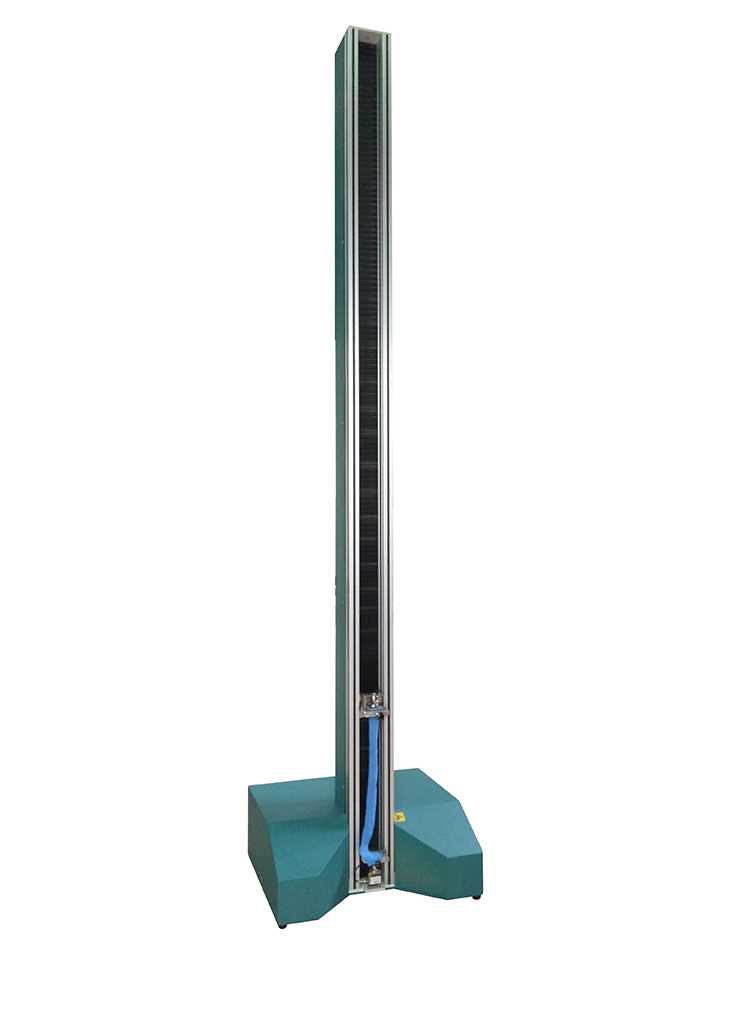
Working Principle of the Sock Stretch Tester
The Sock Stretch Tester is a specialized instrument used to evaluate the elastic properties, elongation, and recovery force of sock products (such as the sock opening and shaft) under both transverse and longitudinal stretching. Its working principle varies slightly depending on whether the system is manual or electronic, as well as the testing direction, but the core mechanism remains the same.
Basic Working Principle
Loading and Stretching
The sock specimen is fixed between the upper and lower clamps. A controlled tensile force or constant stretching speed is applied to deform the sample, simulating real wearing conditions.
Force and Displacement Measurement
During the stretching process, a high-precision load cell and a displacement encoder continuously record force changes and elongation in real time. This allows accurate monitoring of the material’s mechanical response under tension.
Data Output
The system automatically calculates and displays key performance indicators, including:
Elongation rate
Elastic recovery rate
Constant-load elongation
Some advanced models also support printing or exporting force–displacement curves for further analysis and quality documentation.
Functions and Applications of the Sock Stretch Tester
The Sock Stretch Tester is a specialized instrument in textile testing used to evaluate the elastic performance of sock products. Its functions and applications can be summarized as follows:
Core Functions
Measurement of Transverse and Longitudinal Elongation
It measures the deformation behavior of the sock opening and shaft in both width (transverse) and length (longitudinal) directions under tension, providing a comprehensive evaluation of stretch performance.
Evaluation of Elastic Recovery Rate
After releasing the applied load, the tester measures the material’s ability to return to its original shape, reflecting its anti-relaxation and resilience performance.
Determination of Permanent Deformation Rate
It calculates irreversible deformation after stretching, which helps predict potential sagging, loosening, or deformation during actual wear.
Constant Load / Constant Elongation Testing
The device can apply a fixed force to measure elongation, or maintain a fixed elongation to measure the required force, enabling flexible mechanical performance evaluation.
Cyclic Stretching and Fatigue Testing
It simulates repeated wearing and removal cycles to assess long-term elasticity durability and fatigue resistance.
Force–Displacement Curve Generation
The system generates visual force–displacement curves, supporting material R&D analysis and quality assessment.
Main Applications
Quality Control
Widely used by sock manufacturers, e-commerce platforms, and regulatory authorities for incoming material inspection and finished product quality testing, including elastic yarns and knitted fabrics.
Compliance Verification
Ensures products meet national or industry standards, such as Chinese textile standards (e.g., FZ/T series), supporting regulatory compliance.
Product Development
Helps optimize material composition (such as spandex content) and knitting processes to improve comfort, fit, and dimensional stability.
Third-Party Testing
Used by accredited testing institutions to provide objective and traceable test reports, supporting brand credibility and consumer trust.
Technical Features of the Sock Stretch Tester
The Sock Stretch Tester is a precision testing instrument used to evaluate the mechanical properties of socks and elastic knitted textiles. It is widely applied in textile quality control, research and development, and third-party testing laboratories. Its main technical features are as follows:
Core Technical Features
High-Precision Measurement System
The force measurement accuracy can reach ±0.5%, while the elongation resolution is up to 0.1 mm, ensuring high repeatability and reliable test data.
Multi-Axial Testing Capability
The system supports both longitudinal (vertical) and transverse (horizontal) tensile testing, enabling comprehensive evaluation of elastic behavior in areas such as sock cuffs and sock shafts under different stress directions.
Intelligent Control System
Equipped with PLC control systems (such as Siemens) or microcontroller-based systems, the tester features a touchscreen or LCD human–machine interface. It supports parameter setting, real-time data display, and automatic report generation.
Multiple Testing Modes
The instrument supports various test methods, including:
Constant force measurement of elongation
Constant elongation measurement of recovery rate and permanent deformation
Constant Rate of Extension (CRE) testing principle
Cyclic stretching and fatigue testing
Compliance with International Standards
The system is compatible with multiple domestic and international standards, including ISO, ASTM, and EN standards, ensuring global applicability.
Structural Design Optimization
The control panel is positioned at approximately 100 cm height, following ergonomic principles for ease of operation. The vertical tensile structure saves laboratory space and facilitates sample installation.
Clamps support both manual and pneumatic gripping, with adjustable clamping distances to accommodate different specimen sizes.
Data Management and Output
The tester can be connected to dedicated computer software, enabling automatic generation of:
Stress–strain curves
Elongation rate
Elastic recovery rate
Permanent deformation rate
It also supports data printing, storage, and traceability, ensuring reliable documentation for quality control and analysis.
Operating Procedure of the Sock Stretch Tester
I. General Operating Steps
Preparation
Check the power status of the instrument and confirm calibration conditions (electronic models require preheating and zero calibration).
Select appropriate fixtures and test modes according to the testing standard (constant load or constant elongation mode).
Cut or select sock samples, typically from key areas such as the sock cuff or sock shaft, ensuring the specimen is flat and free of wrinkles.
Specimen Installation
Secure the sock specimen between the upper and lower clamps, ensuring firm fixation without damaging fibers, especially elastic fibers such as spandex.
For longitudinal testing, clamp the sample along the length direction of the sock shaft.
For transverse testing, clamp along the circumference direction of the sock cuff or shaft.
Parameter Setting
Constant load mode: Set target force values (commonly 22 N, 25 N, or 33 N).
Constant elongation mode: Set stretching distance or speed (electronic models support stepless speed control from 20–250 mm/s).
Select test type, such as:
Constant elongation → force measurement
Constant load → elongation measurement
Elastic recovery rate test
Starting the Test
Start the instrument to apply tensile force automatically or manually.
The system displays force values and elongation in real time and records the force–displacement curve.
Completion and Data Reading
Once the preset conditions are reached, the instrument automatically stops or returns to the initial position.
Record key data, including:
Elongation (mm)
Elongation rate (%)
Elastic recovery rate (%)
Permanent deformation rate (%)
Some models support printing or exporting data to a computer system.
Repetition and Maintenance
Each sample should be tested at least 3–5 times, and the average value should be taken.
After testing, clean the clamps and turn off the power supply (for electronic models).
II. Types of Instruments and Their Characteristics
Manual Stretch Tester
Relies on manual operation, using gravitational or mechanical force to achieve stretching. Suitable for simple constant-load testing.
Vertical Electronic Stretch Tester
Highly automated, supports multiple testing modes, and provides data printing. It is commonly used in laboratory environments.
Horizontal Electronic Stretch Tester
Compact structure, suitable for limited-space environments, with high precision and easy operation.
III. Precautions
Testing environment must comply with standard conditions (typically 20 ± 2°C temperature and 65 ± 4% humidity).
Fixtures should be regularly checked for anti-slip performance to avoid sample slippage affecting results.
Electronic instruments must be calibrated regularly to ensure force accuracy and measurement reliability.
Importance of the Sock Stretch Tester
The importance of the Sock Stretch Tester is mainly reflected in its critical role in quality control, product development, standard compliance, and optimization of wearing comfort for socks and elastic knitted products. Its core value can be summarized as follows:
I. Ensuring Product Quality and Consistency
Quantitative Evaluation of Elastic Performance
The instrument accurately measures key parameters such as longitudinal (vertical) and transverse elongation, elastic recovery rate, and permanent deformation rate. This ensures that socks maintain their original shape and fit even after repeated wearing or washing.
Early Detection of Defects
It helps identify potential issues before products leave the factory, such as loose sock cuffs or poor structural stability, thereby reducing return rates and customer complaints.
II. Supporting R&D and Material Optimization
Guidance for Formula and Process Adjustment
The tester provides reliable data for R&D teams to optimize parameters such as spandex content and knitting density, improving both comfort and functional performance.
Accelerated Product Development
By simulating real wearing stress conditions, it enables rapid validation of new fabric materials and structural designs, significantly shortening development cycles.
III. Meeting Domestic and International Standard Compliance
The equipment supports testing in accordance with multiple national and international standards, ensuring market access compliance:
Chinese standards: FZ/T series
International standards: ISO, ASTM, EN, BS 3049. etc.
For medical compression socks, it can also support BS medical-grade compression performance testing standards.
IV. Enhancing Wearing Comfort for Consumers
Ensuring Fit and Comfort
Through tests such as constant-load transverse elongation, the instrument quantifies sock tightness and looseness, preventing issues of excessive tightness or slackness.
Durability Verification
Cyclic stretching fatigue tests and stress relaxation tests help predict long-term performance degradation, contributing to improved product lifespan and durability.
V. Supporting Third-Party Testing and Brand Credibility
Third-party testing organizations use the Sock Stretch Tester to issue authoritative reports, providing reliable evidence for e-commerce platforms, regulatory agencies, and consumers.
Brands can leverage these reports to strengthen quality assurance, enhance credibility, and improve market competitiveness.
In summary, the Sock Stretch Tester is not only a fundamental quality inspection instrument for socks but also a key piece of equipment throughout the entire product lifecycle—from research and development to manufacturing and quality assurance.By precisely evaluating elasticity, recovery, and durability, it helps manufacturers optimize material selection and improve production processes, ensuring that final products meet consumers’ expectations for high comfort, durability, and performance.We welcome industry partners to reach out for further discussion. If you are interested in this equipment or have any questions, please feel free to contact us. We are pleased to provide more detailed technical information and customized solutions.
Previous: What is a Wire-to-Wire Vibration Abrasion Tester?
N e x t : What is HD2 Pneumatic Foam Fatigue Tester?
