





What is an Automotive Wire Puncture Tester?
2026/05/19
Share:

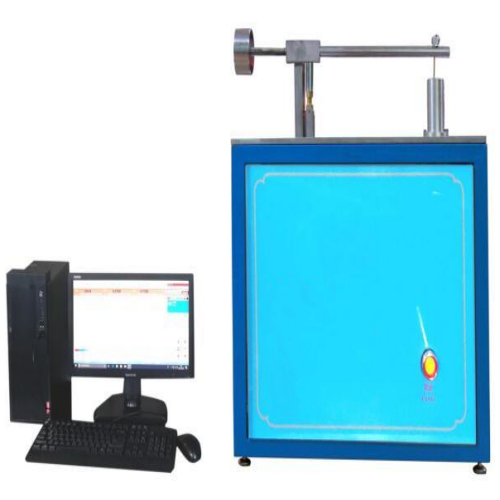
Functions and Applications of the Automotive Wire Continuity Tester
Main Functions
1. Continuity Testing
Verifies the electrical connectivity of conductors within the wire harness and detects issues such as open circuits or poor contact connections.
2. Short Circuit Detection
Identifies abnormal low-resistance connections between circuits that should not be electrically connected.
3. Miswiring Detection
Compares the preset wiring sequence with actual test results to identify connector assembly errors or incorrect wire arrangements.
4. Insulation Resistance Testing (Available on Some Advanced Models)
Evaluates the performance of cable insulation layers to prevent risks such as electrical leakage or insulation breakdown.
5. Withstand Voltage Testing (Available on Some High-Voltage Models)
Applies high voltage to verify the safety performance of wire harnesses under extreme operating conditions.
6. Automatic Point Searching and Voice Number Reporting
Assists operators in quickly locating fault points, improving testing efficiency and reducing troubleshooting time.
7. Data Storage and Report Generation
Supports exporting test results in Excel or PDF formats, facilitating quality traceability and documentation management.
Core Applications
1. Production Quality Control
Ensures that every automotive wire harness meets electrical connection standards during the manufacturing process.
2. After-Sales Maintenance and Diagnostics
Helps maintenance technicians quickly identify wiring faults and significantly reduce troubleshooting time.
3. High-Voltage Harness Safety Testing for New Energy Vehicles
Supports integrated continuity, insulation, and withstand voltage testing under high-voltage conditions such as DC 100V–1000V and AC 750V.
4. R&D and Prototype Validation
Used during new vehicle development to verify the correctness of wire harness designs and the reliability of manufacturing processes.
Industries Applicable to the Automotive Wire Cut-Through Tester
The Automotive Wire Cut-Through Tester is primarily used to evaluate the resistance of automotive wire insulation layers against cut-through or penetration under mechanical pressure. Its core application scenarios are concentrated in industries with high requirements for electrical safety and mechanical reliability of wires and cables. According to publicly available industry information, the main applicable industries include the following:
1. Automotive and Auto Parts Manufacturing
The tester is used to evaluate the insulation strength of wires within automotive wire harnesses, ensuring that the insulation layer is not easily damaged by external forces during assembly or vehicle operation, thereby preventing short circuits or electrical failures.
2. Wire and Cable Manufacturing
As a key inspection device in the production process, the equipment is used to verify whether the insulation performance of automotive wires complies with relevant standards and technical specifications.
3. Aerospace Industry
Wire harness testing equipment is widely used in the aerospace field. As part of insulation performance evaluation, cut-through testing is also suitable for high-reliability aerospace cable testing applications.
4. Electronics and Electrical Appliances
In the manufacturing of electronic products involving precision cable assemblies, it is necessary to ensure that insulation layers maintain integrity under mechanical stress conditions.
5. Rail Transit and Locomotive Industry
There are specialized dynamic cut-through testing machines designed for locomotive wires, indicating that this type of equipment is also suitable for testing railway and rail transit cables.
In summary, the Automotive Wire Cut-Through Tester is mainly applicable to industries such as:Automotive manufacturing、Wire and cable manufacturing、Aerospace、Electronics and electrical appliances、Rail transit and locomotive engineering.It is widely used to ensure the safety and reliability of cable insulation layers under mechanical pressure conditions.
Technical Features of the Automotive Wire Cut-Through Tester
The Automotive Wire Cut-Through Tester is a precision testing device specifically designed to evaluate the resistance of automotive low-voltage wire insulation layers against mechanical damage. By simulating the physical process of sharp objects penetrating or cutting through the insulation layer, the instrument determines whether the insulation breaks down under a specified pressure, causing contact between the conductor and the external environment. This allows verification of the wire’s insulation strength and safety performance.
The following are the main technical features of the equipment:
1. High-Precision Mechanical Sensing and Control Technology
High-Precision Load Sensor
The system uses a high-precision load cell as its core sensing component to ensure accurate force measurement. The accuracy level generally reaches Class 1. with load accuracy controlled within ±1% of the indicated value.
Wide Force Measurement Range
The equipment supports multiple load range configurations. Common ranges include:
12–20 kg (for fine wire harnesses)
1–200 kg (for thick cables or harness assemblies)
This enables testing of automotive wires with different specifications.
Automatic Overload Protection Mechanism
The tester is equipped with a comprehensive overload protection system. When the applied load exceeds 110% of the maximum capacity, the machine automatically stops operation to protect hardware components from damage.
2. Precision Motion Control and Actuation Mechanism
Servo Drive System
The power system typically adopts AC servo motors or variable-speed motors, combined with potentiometer adjustment or computer software control to ensure stable and repeatable loading performance.
Constant Low-Speed Feeding
The cut-through speed is generally set to a low constant rate (such as 10 mm/min or a corresponding linear speed under 2.3 kg/min loading conditions), accurately simulating a slow penetration process while minimizing the influence of dynamic impact on test results.
Standardized Probe Configuration
Standard-diameter steel wires or steel rods are used as penetration tools. Common probe diameters include:
0.45 mm (meeting standards from manufacturers such as Ford)
3 mm
This ensures consistency of testing conditions.
3. Electrical Detection and Evaluation Logic
Low-Voltage Monitoring Circuit
A low DC voltage (typically below 24 V) is applied during testing, ensuring both operator safety and compliance with industry standards.
Microcurrent Threshold Detection
The system determines insulation failure by monitoring leakage current within the circuit. When the current reaches a preset threshold (such as 5 mA), the insulation is considered “cut-through” or “breakdown.”
Automatic Shutdown Function
Once insulation penetration is detected (indicated by a short-circuit signal), the instrument immediately stops applying pressure and records the maximum load value at that moment for analysis of the insulation layer’s critical failure strength.
4. Intelligent Data Management and Software System
Full Computerized Control
Modern cut-through testers are generally equipped with upper-computer control software, enabling automation of parameter setting, process monitoring, data acquisition, and result analysis.
Real-Time Data Report Generation
The system can automatically generate test reports containing key data such as:
Time-force curves
Peak load values
Cut-through occurrence time
The reports support file storage and export for quality traceability and process optimization.
Wide Effective Measurement Range
The effective measurement range typically covers 0.5%–100% of the full-scale capacity, ensuring high measurement resolution under both low-load and high-load conditions.
5. Modular Design and Applicability
Flexible Fixture Configuration
Customized fixture configurations can be provided according to the specific shape and dimensions of the user’s products, ensuring secure fixation and uniform force distribution during testing.
Overall, the Automotive Wire Cut-Through Tester integrates high-precision mechanical loading, microcurrent electrical detection, and intelligent data processing technologies. Its core advantage lies in quantitatively evaluating the ability of wire insulation layers to resist penetration by sharp objects.Through precise control of penetration speed and force, combined with automatic shutdown and data recording functions, the instrument provides automotive wire manufacturers with a reliable quality control solution, effectively ensuring the safety and reliability of vehicle electrical systems.
Automotive Wire Cut-Through Tester Operating Procedure
1. Preparation
Ensure that the vehicle is turned off and the power supply is disconnected to avoid risks of short circuits or electric shock during testing.
Check whether the tester power supply (typically 220V AC) and grounding are functioning properly.
Prepare necessary accessories such as probes, fixtures, and standard sample cables.
2. Connection and Self-Inspection
Connect the cut-through tester to both ends of the wire harness or connector using the dedicated interface.
After powering on, the device will typically perform automatic self-inspection and calibration. Some models support functions such as automatic zero resetting and automatic range switching.
3. Parameter Setting
Set the testing parameters according to the specifications and standards of the cable being tested:
Test voltage:
Typically 24V for continuity testing.
Current threshold:
For example, 5 mA, used to determine whether electrical conduction occurs.
Loading range (if mechanical stress testing is involved):
Common ranges include 12–20 kg or 1–200 kg, suitable for insulation stripping or tensile-related tests.
Test mode:
Select the required mode, such as:
Continuity test
Intermittent disconnection test
Insulation withstand voltage test
4. Test Execution
Comparative Testing (Recommended)
First perform “self-learning sampling” using a known qualified cable and save it as the standard reference sample.
Then test the cable under inspection. The system automatically compares the measured results with the stored standard and outputs a “Pass” or “Fail” result.
Direct Testing
After the test starts, the instrument applies the preset voltage or current and detects whether conduction occurs within the specified time.
For example, if a current of 5 mA passes through the circuit, the system determines that conduction is established.
If the device supports point-searching functions, probes can be used to contact harness terminals point by point for rapid localization of open circuits or incorrect wiring connections.
5. Result Evaluation and Recording
The tester automatically outputs test results such as “OK” or “NG” and may generate corresponding reports.
The system simultaneously records abnormal points, such as:
Non-conductive wires
Insulation breakdown
Miswiring locations
6. Retesting and Cleanup
If abnormalities are detected during the initial test, repairs should be carried out and the cable retested to verify the effectiveness of the corrective action.
After testing is completed:
Turn off the power supply
Remove all connection cables
Organize and store testing tools properly
Importance of the Automotive Wire Cut-Through Tester
The Automotive Wire Cut-Through Tester plays a vital role in the modern automotive industry. As vehicle electrification and electronic integration continue to advance, wire harnesses—often referred to as the “nervous system” of a vehicle—have a direct impact on overall vehicle performance, safety, and reliability. The importance of this instrument is mainly reflected in the following key aspects:
1. Ensuring Driving Safety and Preventing Electrical Accidents
Automotive wire harnesses are responsible for transmitting electrical power and signals, and even minor connection failures may lead to serious consequences.
Preventing Short-Circuit Fires
The tester can accurately detect short circuits within wire harnesses, preventing overheating or even fire hazards caused by unintended low-resistance connections between circuits.
Ensuring Accurate Execution of Control Commands
By detecting open circuits and poor connections, the tester ensures reliable signal transmission for critical safety-related systems such as:
Engine control systems
Braking systems
Airbag systems
This helps prevent loss of vehicle control caused by electrical failures.
High-Voltage Safety Protection
For new energy vehicles, specialized high-voltage harness testers are equipped with high-voltage pulse detection and automatic discharge functions. These systems can quickly interrupt discharge phenomena under high-voltage conditions such as AC 750V or DC 1000V, ensuring the safety of both operators and equipment.
2. Improving Production Efficiency and Replacing Traditional Manual Inspection
Traditional wire harness inspection methods rely on multimeters and buzzers for manual point-by-point testing, which is time-consuming, inefficient, and prone to human error.
Automation and High-Speed Scanning
Modern continuity testers use multiplexed scanning units capable of rapidly scanning thousands or even tens of thousands of test points. Testing speed can reach the millisecond level, fully meeting the high-speed production rhythm of modern manufacturing lines.
Self-Learning and Rapid Deployment
High-end systems feature self-learning capabilities that can quickly identify continuity, short-circuit, and open-circuit relationships in unknown wire harnesses, significantly reducing preparation time for new product testing.
Reduced Labor Costs
Single-machine operation or PC-controlled programming reduces dependence on highly skilled operators while minimizing the probability of missed inspections or incorrect judgments.
3. Improving Product Quality and Enabling Refined Quality Control
The stability of wire harness quality is a cornerstone of overall vehicle quality, and the tester provides comprehensive detection capabilities ranging from qualitative judgment to quantitative analysis.
Multi-Dimensional Defect Identification
In addition to basic continuity testing, the instrument can detect complex defects such as:
Open circuits
Short circuits
Multiple connections
Miswiring
Excessive contact resistance
High-Precision Quantitative Data
Using four-wire resistance measurement technology, the tester provides accurate resistance values, open-circuit voltage measurements, and other quantitative data rather than simple “Pass/Fail” results. This provides a scientific basis for process optimization and quality traceability.
Integrated Insulation and Withstand Voltage Testing
Some advanced systems integrate insulation resistance and withstand voltage testing modules, enabling comprehensive evaluation of wire harness insulation performance under high-voltage conditions and ensuring long-term reliability.
4. Optimizing Maintenance Processes and Reducing After-Sales Costs
In the automotive aftermarket and repair sector, wire harness faults are often difficult to diagnose.
Rapid Fault Localization
The tester can quickly display the faulty wire number and specific fault type, helping technicians accurately locate problems and significantly reduce repair time.
Standardized Spare-Part Verification
The equipment can verify whether replacement wire harnesses meet original factory specifications, ensuring consistency in after-sales repair quality and enhancing customer confidence in vehicle safety.
5. Adapting to Industry Transformation and Supporting Electrification and Intelligence
As vehicles continue evolving toward electrification and intelligent systems, wire harness structures are becoming increasingly complex, placing higher demands on testing technology.
Handling Complex Wire Harness Structures
To accommodate increasingly large and heavy wire harness assemblies, testers adopt modular designs that allow flexible channel expansion (such as 64/128/256/512 channels), meeting the testing requirements of large-scale harness systems.
Supporting Third-Party Certification
As core equipment for third-party testing institutions, these instruments feature excellent repeatability, stability, and anti-interference capability. Their measurement systems are traceable to national and international standards, enabling them to provide authoritative and reliable quality verification reports for OEMs and suppliers.
In summary, the Automotive Wire Cut-Through Tester is not only a quality control tool on the production line, but also a critical infrastructure technology for ensuring automotive electrical system safety, improving manufacturing efficiency, and advancing technological innovation in the automotive industry.Its value in accident prevention, efficiency improvement, quality assurance, and adaptation to emerging automotive technologies is irreplaceable.We sincerely welcome you to leave a message or contact us directly so that we can provide you with more detailed product information.
Previous: How to use the Air Flow Velocity Distribution Test System?
N e x t : What is an Automatic pH Tester?
