





What is creep in geosynthetics?
2026/05/28
Share:

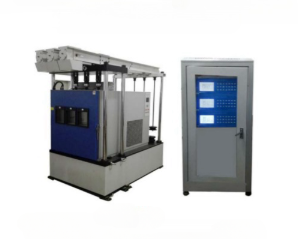
Functions and Applications of the Geosynthetic Creep Tester
The Geosynthetic Creep Tester is used to continuously monitor the deformation behavior of geosynthetic materials—such as geogrids, geotextiles, and geomembranes—under constant tensile or shear loads over an extended period of time, in order to evaluate their long-term mechanical stability in engineering applications.
Functions
Under simulated engineering stress conditions—typically involving uniaxial or biaxial tensile loading in constant temperature and humidity environments—the system continuously applies a preset load over a testing period that may last from several days to several weeks or even longer. The tester precisely measures the creep strain (time-dependent deformation) of the material and generates creep curves showing the logarithmic relationship between strain and time.
Applications
The test results provide critical long-term design parameters for geotechnical structures such as reinforced soil slopes, retaining walls, foundations, and landfill liner systems. The equipment is also used to verify whether materials comply with international creep testing standards such as ASTM and ISO, helping prevent engineering instability and structural failure caused by creep deformation over time.
Applicable Industries of the Geosynthetic Creep Tester
The Geosynthetic Creep Tester is mainly used in the following industries:
Transportation Engineering
Used in highway and railway subgrade reinforcement applications—such as geogrids and geocells—to evaluate the influence of creep deformation under long-term loading on the stability of slopes and embankments.
Hydraulic and Water Conservancy Engineering
Applied in dams, canals, and reservoir bank protection projects to verify the long-term strength and deformation behavior of geosynthetic materials, including geotextiles and composite drainage nets.
Geotechnical and Underground Engineering
Used for the design verification and durability evaluation of reinforced structures such as retaining walls, anchoring systems, and tunnel support systems.
Solid Waste Disposal and Environmental Engineering
Utilized for creep performance testing of landfill liner systems, including GCLs (Geosynthetic Clay Liners), HDPE geomembranes, and geotextile composite systems, ensuring the long-term safety and integrity of anti-seepage structures.
Material Research, Development, and Quality Inspection
Widely used by manufacturers of geosynthetic materials—such as PP, HDPE, and PET products—as well as third-party testing laboratories to conduct creep tests in compliance with standards such as ASTM, ISO, and JTGE.
Energy and Mining Industry
Applied in the monitoring and verification of long-term performance and design parameters of reinforcement materials used in mine slopes and tailings dam stabilization systems.
Technical Features of the Geosynthetic Creep Tester
The core technical features of the Geosynthetic Creep Tester include constant-load control, high-precision displacement and strain measurement, long-term operational stability (with testing durations reaching thousands of hours), temperature-controlled environmental adaptability, and accelerated creep as well as creep rupture testing capabilities compliant with ASTM and ISO standards.
Constant Tensile Load Control
The system maintains a constant tensile load over extended periods—typically ranging from 20% to 80% of the material’s short-term tensile strength—to simulate the continuous loading conditions experienced by geosynthetic materials such as geogrids and geotextiles in actual engineering applications.
High-resolution Displacement Measurement
The tester adopts laser sensors or LVDT (Linear Variable Differential Transformer) sensors with resolutions as high as 0.1–1 μm, enabling precise detection of small time-dependent deformations (creep strain). Some advanced models support displacement control accuracy as fine as 0.00001 mm/min.
Multi-channel Data Acquisition and Automatic Recording
The system simultaneously acquires and records load, displacement, time, temperature, and humidity data. The sampling frequency is adjustable, typically ranging from 0.1 to 10 Hz. It automatically generates complete creep curves covering instantaneous deformation, primary creep, steady-state creep, and accelerated creep stages.
Accelerated Creep Testing Capability
Based on the time–temperature superposition principle (such as ASTM D6992), the system shortens testing cycles by gradually increasing the temperature (for example, from 40°C to 80°C). This allows tests that would normally require several months to be completed within weeks, enabling prediction of long-term creep performance over periods ranging from 10 to 120 years.
Controlled Environmental Conditions
High-end models integrate constant temperature and humidity chambers with temperature control accuracy of ±0.5°C and temperature ranges from 20°C to 100°C. This minimizes the influence of environmental fluctuations on the viscoelastic behavior of polymer materials such as polyester and polypropylene.
Compliance with International Standards
The equipment strictly complies with international standards including ASTM accelerated creep testing standards, ASTM steady-state creep testing standards, and ISO standards for creep and creep rupture testing. Some models also support compression or shear creep testing with dedicated fixtures.
Automation and Software Analysis
Integrated control software automatically performs loading, load holding, data acquisition, curve fitting, and lifetime prediction using models such as power-law or exponential models. The system also supports one-click report generation and export of data files in Excel or CSV formats.
Operating Procedure of the Geosynthetic Creep Tester
1. Specimen Preparation
Prepare geosynthetic material specimens according to standards such as ASTM D6992. Typical specimen dimensions are 50–100 mm in width and 200–300 mm in length. Mark the gauge length and measure the initial width and thickness of the specimen. Ensure that the specimen is undamaged, flat, and dry before testing.
2. Fixture Installation
Symmetrically clamp both ends of the specimen into the upper and lower grips of the creep testing machine to prevent slippage or stress concentration. Install a non-contact extensometer (such as a video extensometer) or a contact displacement sensor to measure strain during the test.
3. Environmental Setting
If simulation of actual service conditions is required, set the environmental chamber parameters accordingly, such as 23°C ±2°C and relative humidity of 50% ±5%. For high-temperature or high-humidity testing, the system should be stabilized in advance before starting the test.
4. Preloading and Zero Adjustment
Apply a preload equivalent to 1–5% of the estimated breaking load to ensure the specimen is straightened and the grips are properly aligned. Afterward, reset the displacement and strain readings to zero and allow the system to stabilize for 1–5 minutes.
5. Applying Constant Load
Apply the target stress level rapidly according to the testing requirement—typically 20%–80% of the material’s short-term tensile strength, depending on standards or project specifications. Then switch the system to constant load mode (force control) or constant strain rate mode (supported by some models). The loading rate is generally required to be less than 1% of the gauge length per minute.
6. Data Acquisition
Continuously record strain variation over time. Typical sampling intervals may include 0.1 s, 1 s, 10 s, and 1 min, extending until the test reaches 1000 hours or until strain stabilizes. During the initial testing stage, data is usually recorded automatically every 1–10 minutes, while the recording interval may be extended during later stages.
7. Termination Conditions
The test should be terminated when one of the following conditions is met:
The preset testing duration is reached (e.g., 1000 hours)
Obvious accelerated creep (third-stage creep) occurs
Strain exceeds the specified limit (such as 10%)
Overloading or restarting the test after interruption is strictly prohibited.
8. Unloading and Cleaning
Gradually reduce the load to zero, remove the specimen, and record the failure mode or deformation condition. Clean the grips and sensors thoroughly and perform equipment calibration checks after the test is completed.
Scientific Maintenance Guide for the Geosynthetic Creep Testing System
The Geosynthetic Creep Testing System is a core piece of equipment used to evaluate the long-term mechanical performance of geosynthetic materials. Its operational stability directly affects the reliability of test data. To ensure long-term precision and stable operation, a systematic maintenance program should be established from two key aspects: standardized operating procedures and environmental management.
I. Standardized Operating Procedures to Reduce Human-induced Wear
1. Standardized Pre-test Preparation
Before testing, the fixture clamping force must be checked to ensure that the full width of the specimen is securely clamped without any risk of slippage. The loading system should undergo a no-load verification test to confirm that load accuracy meets the ±1% requirement. The deformation measurement system must calibrate the extensometer to ensure that the displacement measurement error of the gauge marks does not exceed 0.03 mm.
For example, a hydraulic engineering laboratory once failed to calibrate its displacement sensor, resulting in abnormal fluctuations in geogrid creep curves. Accurate test data was restored only after recalibration.
2. Dynamic Monitoring During Testing
The preset load should be applied within 60 seconds during the loading stage to avoid pre-deformation caused by excessively slow loading. Test operators should not leave the site and must continuously monitor load fluctuations in real time.
In one transportation engineering laboratory, an operator left the testing area during a long-term experiment. As a result, a geomembrane specimen fractured after 300 hours due to a sudden load variation, and the critical failure data was not recorded in time.
3. Standardized Post-test Cleaning
After each test, fixture surfaces should be cleaned with non-corrosive detergents to prevent residual soil particles from affecting subsequent tests. For specimens exposed to chemical solutions, the loading frame should be rinsed with deionized water to eliminate corrosive residues.
An environmental engineering laboratory once failed to clean equipment promptly after salt spray testing, resulting in severe corrosion of metal components and maintenance costs increasing by tens of thousands of yuan.
II. Strict Environmental Control to Ensure Equipment Stability
1. Dynamic Temperature and Humidity Control
The equipment should be installed in a constant temperature and humidity laboratory. Temperature fluctuations should be controlled within ±2°C, while relative humidity should be maintained at 60% ±10%.
For example, a geotechnical engineering laboratory failed to operate air conditioning during summer, causing the ambient temperature to rise to 35°C. As a result, the measured creep rate of geotextiles deviated from the actual value by 18%. After environmental improvements were implemented, test accuracy was significantly enhanced.
2. Dust-proof and Corrosion-resistant Management
Dust covers should be installed around the equipment, and ventilation openings should be cleaned regularly using a vacuum cleaner to remove accumulated dust.
For laboratories located in coastal areas, moisture-proof trays should be installed beneath the equipment to prevent salt spray corrosion of electronic circuit boards. A port engineering laboratory once neglected moisture protection measures, leading to frequent failures of the control module during the rainy season. After replacing the module and establishing a regular dehumidification system, the equipment failure rate decreased by 90%.
Importance of the Geosynthetic Creep Tester
The core value of the Geosynthetic Creep Tester lies in its ability to quantify the time-dependent deformation (creep) of geosynthetic materials under long-term loading conditions. This is directly related to the long-term stability and safe design of engineering structures such as reinforced soil slopes, retaining walls, embankments, and foundations.
Revealing Long-term Material Performance
Geosynthetic materials—especially polypropylene (PP) and high-density polyethylene (HDPE)—can undergo irreversible creep deformation under sustained stress. Without creep testing, such long-term behavior may remain undetected, potentially leading to premature structural failures such as pavement settlement or slope instability. Conventional short-term tensile tests cannot accurately reflect these long-term deformation characteristics.
Supporting Engineering Design Standards
The test results are used to determine creep reduction factors, which are essential for converting short-term laboratory tensile strength into allowable long-term design strength. For example, polyester materials generally exhibit lower creep deformation, while polypropylene and HDPE materials typically require larger reduction factors in engineering design.
Verifying Material Suitability
Different polymer materials—such as polypropylene, polyester, and HDPE—as well as different manufacturing processes, exhibit significant differences in creep resistance. The Geosynthetic Creep Tester enables comparative evaluation and material selection, helping prevent engineering failures caused by inappropriate material choices.
Simulating Real Engineering Stress Conditions
Modern biaxial or environmentally controlled creep testing systems can more accurately simulate multidirectional loading and actual service environments, including temperature and humidity conditions. This greatly improves the reliability of long-term performance prediction.
Meeting Standards and Service Life Evaluation Requirements
International standards such as ASTM and ISO require creep testing for the long-term performance certification of geosynthetic materials. This testing is particularly critical for permanent infrastructure applications such as landfill cover systems and railway subgrades, where long-term durability and stability are essential.
Overall, the Geosynthetic Creep Tester is a key piece of equipment for evaluating the deformation characteristics of materials under long-term loading conditions. It plays an indispensable role in engineering safety assessment and material durability analysis and therefore deserves significant attention in both research and industrial applications.If you would like to learn more about the technical specifications, operating principles, application fields, or other detailed information regarding this equipment, please feel free to leave a message or contact us directly. We will be pleased to provide you with more comprehensive product information and professional technical support services.
Previous: Are Burning Mannikins still used today?
N e x t : How does the Down Feather Filling Power Tester work?
