





What is the Filter Flow Resistance Test Bench?
2026/06/30
Share:

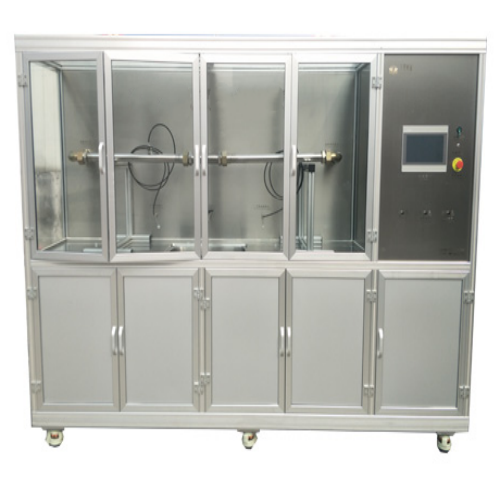
Structural Design of the Filter Flow Resistance Test Bench
The Filter Flow Resistance Test Bench is designed with a robust structure and an intelligent control system to ensure accurate, stable, and repeatable flow resistance testing for various types of filters.
1. Robust Mechanical Structure and Fluid Circulation System
The test bench adopts a high-strength steel frame that provides excellent rigidity, stability, and vibration resistance. The internal piping is manufactured from high-pressure and corrosion-resistant materials, with an optimized layout that ensures smooth fluid flow while minimizing additional resistance generated by the piping itself, thereby improving measurement accuracy.
The piping system is clearly divided into three functional modules:
Main circulation circuit
Flow regulation circuit
Pressure relief circuit
Different fluid supply systems are configured according to the testing medium:
Air flow testing: Equipped with a variable-frequency centrifugal blower or Roots blower to provide stable, high-volume airflow.
Oil flow testing: Equipped with a positive displacement oil pump, combined with an oil heating and cooling unit to precisely control the temperature and viscosity of the test medium, making it suitable for engine oil, fuel, and other liquid media.
2. Precision Flow Control and Measurement System
The test bench integrates components including motorized throttling valves, manual regulating valves, pressure stabilizing tanks, and bypass pipelines, enabling stepless flow regulation and stable pressure control.
Users can accurately set the required flow rate and test duration to satisfy different testing standards and filter specifications.
The system is equipped with high-precision measuring instruments, including:
Flow sensors
Differential pressure transmitters
Temperature sensors
These sensors feature a wide measuring range, fast response time, and high accuracy. They continuously monitor flow parameters inside the pipeline and convert physical signals into electrical signals for transmission to the control system, serving as the core data acquisition components of the test bench.
3. Quick-Change Filter Fixture System
To accommodate filters with different shapes and connection types, the equipment is equipped with quick-sealing fixtures that provide convenient installation and reliable sealing performance.
The fixture system allows rapid replacement of various filter types, including:
Air filters
Oil filters
Fuel filters
Its versatile design combines excellent sealing performance with broad compatibility, making it ideal for high-volume production testing and laboratory applications.
4. Intelligent Control and Safety Protection System
The control system consists of an industrial touchscreen, PLC controller, and dedicated testing software.
It offers comprehensive testing functions, including:
Test program selection
Parameter configuration
Fully automatic testing
Real-time curve plotting
Data storage
Test report generation and printing
The intuitive interface is easy to operate and supports multiple preset testing programs, making it suitable for continuous industrial testing.
To ensure safe operation, the equipment is equipped with comprehensive protection functions, including:
Overpressure protection
Overload shutdown
Emergency pressure relief
Leakage protection
Audible and visual alarm system
When abnormal conditions such as excessive pipeline pressure, abnormal flow rate, or equipment malfunction are detected, the system automatically stops operation and activates protective measures. This effectively prevents hazards such as pipeline rupture and fluid leakage while ensuring the safety of both the equipment and operating personnel.
Features of the Filter Flow Resistance Test Bench
1. Realistic Simulation of Actual Operating Conditions
The primary function of the Filter Flow Resistance Test Bench is to accurately replicate the airflow or liquid flow conditions that filters experience during real-world operation.
Depending on the testing medium, the equipment is available in two configurations:
Air Flow Resistance Test Bench for air filter testing
Hydraulic Flow Resistance Test Bench for oil and liquid filter testing
Both systems are designed to simulate actual operating conditions, ensuring reliable and repeatable performance evaluation.
2. High-Precision Hydraulic Testing System
For hydraulic filter testing, the bench is equipped with a high-performance gear pump or plunger pump as the power source, together with a large-capacity stainless steel oil tank and a high-precision flow meter.
The system precisely controls the temperature of the test oil while eliminating flow dead zones within the pipeline. This ensures that the oil remains in a turbulent flow state, allowing accurate measurement of the pressure drop across the filter element at various flow rates.
3. High-Accuracy Differential Pressure Measurement
Whether measuring pressure loss in Pascals (Pa) for air filters or pressure differential in bar for liquid filters, the system provides highly accurate and repeatable measurements.
Modern test benches are equipped with high-sensitivity differential pressure sensors offering measurement accuracy of ±1 Pa or better.
During testing, the sensors continuously monitor the static pressure difference between the upstream and downstream sides of the filter, providing precise real-time pressure drop data.
4. Intelligent Data Acquisition and Automatic Curve Generation
The advanced electrical control system instantly converts analog sensor signals into digital data and automatically compensates for environmental factors such as temperature, humidity, and atmospheric pressure.
By integrating intelligent hardware with dedicated testing software, the system automatically generates Flow Rate–Pressure Drop Characteristic Curves, providing a clear visualization of the filter's flow performance across its entire operating range.
This intelligent data processing capability greatly improves testing efficiency, repeatability, and analysis accuracy, making the equipment an indispensable tool for filter development, quality inspection, and performance certification.
Practical Applications of the Filter Flow Resistance Test Bench
The Filter Flow Resistance Test Bench is widely used throughout the entire lifecycle of filter products, from research and development to production, quality control, certification, and academic research.
1. Product Design and Development
During the new product development stage, engineers use the test bench to compare the flow resistance performance of different filter paper materials, pleat densities, filter chamber structures, and flow guide designs.
By analyzing the flow rate–pressure drop characteristic curves, designers can optimize the number of filter paper pleats, air inlet configurations, and internal flow channel layouts. This helps reduce flow resistance while maintaining filtration efficiency, achieving an optimal balance between filtration performance and flow capacity and ultimately shortening product development cycles.
2. Raw Material Evaluation and Production Quality Control
Filter media are the primary factor affecting flow resistance. Manufacturers use the test bench to evaluate the pressure drop characteristics of filter papers, nonwoven fabrics, wire meshes, and other filtration materials from different suppliers and specifications.
This enables manufacturers to:
Select filter materials with superior flow performance and long-term stability.
Establish raw material qualification standards.
Control flow resistance specifications from the source.
Maintain consistent product quality.
During mass production, the test bench serves as a routine quality inspection system for batch sampling of finished filters. It verifies whether the flow resistance of each production batch meets specified requirements and quickly identifies products with excessive pressure drop caused by assembly errors, filter media deformation, or improper sealing, preventing defective products from entering the market.
3. OEM Supplier Qualification
Original Equipment Manufacturers (OEMs) in industries such as automotive, construction machinery, and power generation regard flow resistance testing as a mandatory qualification requirement for filter suppliers.
The test bench verifies whether a filter is properly matched to the air intake or fuel supply system of the equipment. This helps prevent excessive flow resistance that could reduce engine performance, increase fuel consumption, or affect overall system efficiency, ensuring reliable operation of the complete machine.
4. Industrial Equipment Performance Evaluation
Industrial filters used in hydraulic systems, pneumatic systems, air compressors, and construction machinery also require flow resistance evaluation.
The test bench can simulate actual industrial pipeline operating conditions to assess the long-term flow performance of industrial filters. This helps maintain stable pressure output, improve system efficiency, reduce energy consumption, and enhance equipment reliability.
5. Certification Testing, Scientific Research, and Education
Professional testing organizations use the Filter Flow Resistance Test Bench to perform type testing, commissioned testing, and quality supervision inspections in accordance with national and international standards.
The resulting test reports provide legally recognized evidence for:
Product certification
Market access approval
Export compliance
Tender qualification
Quality dispute arbitration
In addition, research institutes and universities use the equipment for experiments and research related to fluid mechanics and filtration technology. By studying the interaction between fluids and porous media, the test bench supports technological innovation, contributes to the development of industry standards, and provides practical training for future engineering professionals.
What Is the Function of the Filter Flow Resistance Test Bench
The Filter Flow Resistance Test Bench is an essential instrument for evaluating the flow characteristics and pressure loss performance of filters. It provides reliable engineering data for product development, quality assurance, performance optimization, and industry certification.
1. Evaluate Filter Performance Through Flow Resistance Characteristic Curves
By performing multi-stage flow rate tests on both new filter elements and dust-loaded filter elements, the test bench generates a complete flow rate–pressure drop characteristic curve. This curve serves as the industry benchmark for evaluating filter design performance.
In automotive engine applications, engineers use these curves to determine whether an air filter will create excessive intake resistance during full-load operation, which could reduce engine power output and fuel efficiency. In hydraulic systems, designers use pressure drop data to properly match pump capacity and prevent problems such as cavitation or air suction caused by excessive filter resistance.
2. Improve System Efficiency and Reduce Operating Costs
The flow resistance of a filter has a direct impact on the efficiency and operating cost of the entire system.
For internal combustion engines, increased intake resistance results in higher pumping losses, leading to greater fuel consumption and reduced engine performance. By accurately measuring intake resistance, the Flow Resistance Test Bench ensures that every air filter delivers effective dust filtration while minimizing airflow restriction, allowing the engine to operate with maximum breathing efficiency.
Similarly, in hydraulic systems, low-resistance filter elements reduce system heat generation and energy loss while extending hydraulic oil service life, helping users significantly reduce long-term operating and maintenance costs.
3. Support Product Research and Development
During the development of innovative filter structures, new pleat designs, high-permeability filter media, or advanced nanofiber materials, engineers use the test bench to compare the pressure drop performance of different prototypes under identical flow conditions.
By analyzing the sources of flow resistance, R&D teams can optimize filter geometry and material formulations while maintaining the required filtration efficiency. This enables manufacturers to develop filters with lower pressure loss and stronger market competitiveness.
4. Ensure Compliance with International Standards and Market Requirements
Across the global automotive, construction machinery, and hydraulic equipment industries, flow resistance testing is a mandatory requirement for supplier qualification and product certification.
Whether complying with Chinese QC/T standards, international ISO and SAE specifications, or OEM-specific technical requirements, authoritative test reports generated by the Filter Flow Resistance Test Bench provide reliable evidence that products meet quality and performance standards.
These reports support:
Product certification
Supplier qualification
Export compliance
Market access
International trade
Quality dispute resolution
Third-party testing laboratories also rely on this equipment to provide independent, objective, and legally recognized performance verification services.
Conclusion
As global industries place increasing emphasis on energy efficiency, emission reduction, and equipment performance, controlling fluid flow resistance has become more important than ever.The Filter Flow Resistance Test Bench creates a standardized and controllable laboratory environment that transforms the abstract concept of flow performance into precise, quantifiable engineering data. This enables manufacturers to continuously improve filter materials, structural design, and manufacturing processes throughout the entire filtration industry.Looking ahead, with the integration of IoT-enabled sensors, intelligent automation, and artificial intelligence algorithms, future Filter Flow Resistance Test Benches will become even more accurate, efficient, and intelligent. They will continue to play a vital role in advancing quality assurance across the global machinery manufacturing, automotive, hydraulic, and fluid filtration industries, supporting the development of more efficient, reliable, and sustainable industrial technologies.
Previous: What is the ICI pilling method?
N e x t : What is the Manikin Coughing System?
