





What is a geomembrane stress crack resistance tester?
2026/07/10
Share:

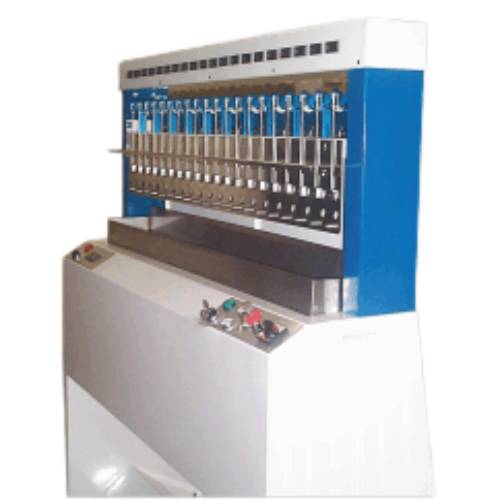
Working Principle of the Geomembrane Stress Crack Resistance Tester
The Geomembrane Stress Crack Resistance Tester operates based on the Notched Constant Tensile Load (NCTL) method. In this test, a notched specimen is subjected to a constant tensile load while immersed in a high-temperature surfactant solution. The combined action of sustained stress and the chemical environment accelerates the initiation and propagation of environmental stress cracks. The material's resistance to stress cracking is then evaluated by measuring the time required for the specimen to fracture.
1. Core Testing Mechanism
Specimen Preparation
Polyolefin geomembrane materials, such as high-density polyethylene (HDPE), are machined into standardized dumbbell-shaped specimens. A notch with a specified depth is introduced at the center of each specimen to serve as a stress concentration point.
Constant Load Application
A constant tensile load is applied to the specimen through a lever-and-weight loading system. The applied load is typically a specified percentage of the material's yield strength and remains constant throughout the entire test.
Accelerated Test Environment
The loaded specimen is completely immersed in a temperature-controlled surfactant solution, typically maintained at 50°C. The surfactant penetrates the material and accelerates the initiation and propagation of microscopic cracks, significantly shortening the time required to evaluate long-term stress crack resistance.
Failure Determination
The elapsed time from the application of the load until complete specimen fracture is automatically recorded. The failure time serves as a direct indicator of the material's resistance to environmental stress cracking (ESC).
2. Key System Components
Mechanical Loading System
A precision lever mechanism combined with a movable weight assembly applies a constant and accurate tensile load throughout the entire testing process.
Environmental Simulation System
A stainless steel immersion bath, integrated with a solid-state temperature control module and a circulation pump, maintains a uniform temperature and consistent surfactant concentration, providing a stable and accelerated aging environment.
Automatic Timing System
Each specimen position is equipped with an independent timer and a microswitch. When the specimen fractures, the timing automatically stops, ensuring accurate measurement of the failure time for each specimen.
Unlike the hydrostatic pressure test, which evaluates resistance to water penetration under pressure, the Geomembrane Stress Crack Resistance Tester is specifically designed to assess the risk of brittle failure caused by the combined effects of long-term tensile stress and aggressive chemical environments.
Technical Features of the Geomembrane Stress Crack Resistance Tester
The Geomembrane Stress Crack Resistance Tester is specifically designed to evaluate the environmental stress crack resistance (ESCR) of geomembranes, particularly high-density polyethylene (HDPE) geomembranes, under accelerated testing conditions. Its key features include a temperature-controlled surfactant bath, a constant-load lever loading system, multi-specimen simultaneous testing, and automatic timing and data recording.
1. Core Functional Features
Simultaneous Multi-Specimen Testing
The instrument supports the simultaneous testing of multiple notched dumbbell-shaped specimens (typically up to 20 specimens), significantly improving testing efficiency and laboratory throughput.
Temperature-Controlled Circulating Bath
The stainless steel immersion bath is equipped with a solid-state temperature controller and a circulation pump to maintain a uniform and stable surfactant solution temperature while minimizing the effects of evaporation throughout the test.
Constant-Load Lever Loading System
A precision lever-and-weight loading mechanism applies an accurate and continuous constant tensile load to each notched specimen, ensuring reliable and repeatable test conditions.
Automatic Timing and Safety Protection
Each specimen position is equipped with an independent digital timer that automatically stops when specimen failure occurs. The system also incorporates low-liquid-level power-off protection and a motor-driven lifting mechanism to enhance operational safety and ensure accurate test results.
Compliance with International Standards
The instrument is specifically designed for the Notched Constant Tensile Load (NCTL) test specified in standards such as ASTM D5397. accurately simulating the failure behavior of geomembrane materials under severe environmental conditions.
2. Structural and Operational Features
Precision Specimen Preparation
The tester is typically supplied with a dedicated notching device to ensure that the depth and location of each notch fully comply with relevant testing standards, improving test consistency and repeatability.
User-Friendly Operation
Modern models are equipped with a touchscreen interface and a PLC control system, providing intuitive operation, simplified parameter settings, and accurate automatic data recording.
Corrosion-Resistant Construction
Key components, including the immersion bath and specimen fixtures, are manufactured from high-quality stainless steel to provide excellent chemical corrosion resistance and long-term durability in surfactant solutions.
Comprehensive Safety Design
The system incorporates multiple safety features, including liquid-level monitoring, over-temperature protection, and dry-run prevention, effectively protecting both the equipment and the integrity of the testing process.
Operating Procedures of the Geomembrane Stress Crack Resistance Tester
The core procedure of the geomembrane stress crack resistance test consists of four main stages: specimen preparation and notching → constant load application → immersion in hot surfactant solution → timing and observation until fracture.
1. Testing Procedure
Specimen Preparation
Prepare dumbbell-shaped specimens according to the specified dimensions. A pre-cut notch is introduced at the center of the gauge section according to the standard requirements (typically around 20% of the specimen thickness). The notch must be smooth and uniform without causing additional damage to the specimen.
Instrument Preheating and Solution Filling
Turn on the temperature control system and fill the stainless steel bath with a surfactant solution at the specified concentration. Heat the solution to the required test temperature and allow it to stabilize. Start the circulation pump to ensure uniform temperature distribution and consistent solution conditions throughout the bath.
Specimen Installation and Load Application
Install the notched specimens into the designated fixtures and apply the preset constant tensile load. The lever mechanism or weight loading assembly ensures that the applied stress remains stable throughout the entire testing process.
Immersion Testing
The lifting mechanism lowers the loaded specimens completely into the heated surfactant solution. At the same time, the independent timing system is activated to begin recording the test duration.
Observation and Test Completion
Continuously monitor the condition of the specimens until complete fracture occurs at the notch location. Record the fracture time and stop the corresponding timer. For multi-station equipment, repeat the same procedure to complete testing of all remaining specimens.
Post-Test Cleaning
After testing, remove the applied loads, take out the fractured specimens, drain and clean the bath, rinse relevant components, and switch off the power supply.
2. Key Operating Precautions
Environmental Condition Control
The temperature of the surfactant bath and the concentration of the solution must be strictly maintained throughout the test. Stable environmental conditions are essential for ensuring the accuracy and reliability of accelerated stress crack resistance evaluation.
Load Calibration
Before testing, verify that the weights or load sensors are accurately calibrated. Ensure that the applied condition is a true constant load rather than a constant displacement condition.
Safety Protection
Proper protective measures must be taken when handling high-temperature liquids to prevent burns. The equipment is typically equipped with low-liquid-level automatic power-off protection, and dry operation without sufficient solution is strictly prohibited.
Importance of the Geomembrane Stress Crack Resistance Tester
As a critical instrument for evaluating the mechanical performance of geosynthetic barrier materials, the Geomembrane Stress Crack Resistance Tester plays an essential role in three key areas: ensuring engineering safety, optimizing design decisions, and improving quality control throughout the product lifecycle.
First, the instrument serves as a technological foundation for building environmental safety protection systems. Geomembranes are widely used in applications such as landfill sites, hazardous waste treatment facilities, and water conservation projects, where they play a vital role in preventing pollutant leakage and protecting groundwater resources. Stress crack resistance testing can simulate material performance under extreme loading conditions and accurately identify the failure threshold of materials subjected to high pressure or complex stress conditions. By detecting potential structural weaknesses in advance, the risk of leakage accidents caused by material failure can be effectively minimized, helping to protect the environment through proactive risk prevention.
Second, the tester provides scientific data support for engineering design and material selection. In practical applications, geomembranes are required to withstand various stresses, including the weight of cover layers, foundation settlement, and external mechanical loads. The mechanical response data obtained from stress crack testing enables engineers to accurately evaluate the load-bearing capacity and deformation characteristics of materials, allowing for the optimized selection of material specifications and installation methods. This data-driven approach avoids potential safety risks caused by experience-based design and ensures the stability and reliability of engineering systems throughout their service life.
Finally, the instrument strengthens comprehensive quality control from manufacturing to construction. By performing strict stress crack resistance evaluations on raw materials and finished geomembrane rolls, manufacturers can identify potential defects such as uneven thickness, internal impurities, or microscopic cracks at an early stage. During installation, combined with integrity testing, stress crack evaluation helps verify the strength consistency of welded joints and surrounding areas, ensuring the overall reliability of the impermeable barrier system. This not only improves the scientific accuracy of project acceptance but also promotes the standardization and regulation of the industry, providing strong support for the safe operation of major infrastructure projects.
In summary, the Geomembrane Stress Crack Resistance Tester is an essential instrument for ensuring the long-term service performance of geosynthetic materials. It not only provides accurate evaluation of a material’s resistance to environmental stress cracking but also offers scientific support for material selection, quality assurance, and long-term engineering safety.We sincerely welcome inquiries regarding the technical specifications, application fields, or purchasing requirements of this instrument. Our team is ready to provide detailed product information, operating instructions, application examples, and professional technical consultation.
Previous: What is a heat transfer device?
N e x t : the last page
