





What Is a Small Solar Simulator and How Does It Work?
2026/07/16
Share:

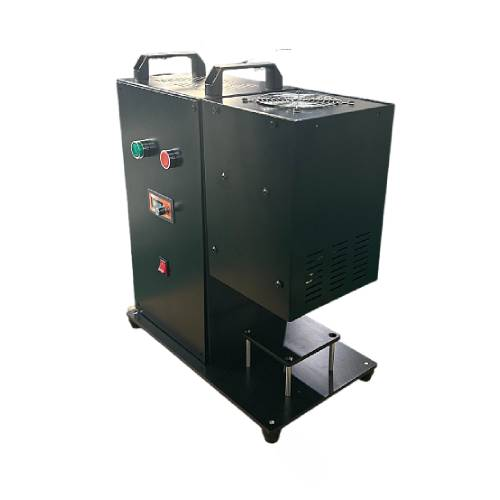
Components of Small Solar Simulator
The core light-emitting unit consists of a short-arc xenon lamp, high-frequency regulated power supply, and igniter. The igniter generates an instantaneous high voltage to ignite the xenon lamp, while the regulated power supply continuously provides stable power to ensure consistent light output. It is the key component responsible for generating broadband solar-spectrum light.
The optical module consists of an AM1.5 filter, infrared filter, UV correction lens, and concentrating/homogenizing lenses. After precision adjustment and calibration, the entire optical module is fixed inside the optical path chamber to achieve accurate spectral correction and uniform light spot distribution.
The auxiliary system includes water-cooling pipelines, cooling fans, temperature sensors, and temperature control boards. These components continuously remove heat generated by the lamp, control temperature fluctuations in the irradiation area, and prevent thermal effects from interfering with specimen test results.
A high-precision silicon-based irradiance probe continuously collects the light intensity of the illuminated area and feeds the signal back to the main control system to achieve closed-loop light intensity adjustment. The touchscreen display is used for parameter setting, program editing, and data viewing.
The adjustable specimen platform supports height adjustment and position fine-tuning to accommodate samples of different sizes. The equipment body is equipped with over-temperature, over-current, and leakage protection functions. In the event of abnormal high temperatures, the system automatically cuts off power and stops operation, improving equipment safety and reliability.
Working Principle of Small Solar Simulator
1. Light Emission Principle of Xenon Lamp Source
The main light source of the equipment is a short-arc xenon lamp. The lamp tube is filled with high-pressure, high-purity xenon gas. When a high-voltage pulse is applied between the electrodes, the xenon gas is electrically broken down, forming a plasma arc discharge. The arc emits continuous broadband light ranging from ultraviolet, visible light, to near-infrared wavelengths. The spectral range covers 280 nm to 2500 nm, and its spectral distribution is highly similar to the original spectrum of natural sunlight, making it an ideal light source for solar simulation.
A voltage and current stabilization module is used to provide constant current output, eliminating brightness fluctuations caused by voltage variations and ensuring long-term stability of the irradiation intensity.
2. Spectral Filtering and Solar Spectrum Matching Principle
The original spectrum of a xenon lamp has certain limitations, such as excessive infrared peaks and deviations in some ultraviolet wavelength regions compared with natural sunlight. The equipment relies on a multi-layer optical filter system to achieve spectral correction.
The filtering system consists of an infrared cutoff filter, ultraviolet correction filter, and AM1.5G atmospheric filter. It removes excessive infrared radiation and stray light, simulates the standard AM1.5 solar spectrum after sunlight passes through the atmosphere, and achieves spectral matching with terrestrial natural sunlight.
This enables the simulator to meet Class A/B/C solar simulation standards, ensuring that the specimen receives a spectrum consistent with outdoor sunlight exposure conditions and preventing inaccurate test results caused by spectral deviations.
3. Irradiance Uniformity and Optical Collimation Principle
The light emitted from the source passes through a concave concentrating mirror and a homogenizing lens array for optical optimization. The divergent light beam is adjusted into parallel light, and then processed by an optical integrator for diffusion and reconstruction, ensuring that the irradiance uniformity within the effective illumination area meets testing requirements.
A precision irradiance sensor continuously measures the irradiance level of the illuminated area and forms a closed-loop feedback control system. The system automatically adjusts the lamp output power in real time to compensate for light attenuation caused by lamp aging, maintaining constant and controllable irradiance.
This ensures uniform light exposure across the entire specimen surface and improves test repeatability and accuracy.
4. Temperature Control and Thermal Isolation Principle
During operation, the xenon lamp generates a large amount of infrared thermal energy. Excessive temperature may cause thermal aging of specimens and interfere with the results of photodegradation tests.
The equipment adopts a combined air-cooling and water-cooling heat dissipation structure. On one hand, the air circulation system removes excess heat from the lamp assembly; on the other hand, the infrared filter blocks most thermal radiation. Combined with the temperature control system inside the test chamber, the equipment regulates the test area temperature.
This design separates the effects of light aging and thermal aging, allowing independent evaluation of performance changes caused by light exposure while reproducing the natural sunlight environment where heat and light effects coexist but remain independently controllable.
5. Intelligent Sequence Control Principle
The entire system is controlled by an integrated PLC and touchscreen control system, allowing users to customize irradiation intensity, cumulative exposure time, and intermittent operation programs.
The system automatically calculates the accumulated irradiation dose and stops operation once the preset total irradiation value is reached. The equipment is equipped with built-in standard test programs, enabling one-touch selection of parameters according to national and international standards.
Test data is automatically stored and recorded, facilitating data traceability and the generation of standardized test reports.
Practical Applications of Small Solar Simulator
1. Application of Small Solar Simulator in Plant Growth
Plants require sufficient sunlight for healthy growth, and the Small Solar Simulator is designed to meet this requirement. By simulating the spectral characteristics of natural sunlight, this equipment can effectively promote plant photosynthesis and support plant growth.
In laboratory environments, researchers can use small solar simulators to conduct controlled lighting experiments on different plant species and observe plant growth performance under various light conditions. This ability to precisely control illumination parameters enables researchers to gain deeper insights into plant growth mechanisms and provides scientific support for agricultural production.
Small solar simulators can also be applied in urban agriculture and indoor cultivation. With the acceleration of urbanization, traditional agriculture faces many challenges, while small solar simulators provide urban residents with the possibility of growing plants in limited spaces. By simulating sunlight conditions, people can cultivate fresh vegetables and flowers in small areas such as balconies and windowsills, creating a greener lifestyle.
2. Application of Small Solar Simulator in Material Testing
In addition to supporting plant growth research, the Small Solar Simulator also plays an important role in the field of material testing. The performance of many materials under sunlight directly affects their durability and stability, making solar simulation testing particularly important.
In materials science research, researchers can use small solar simulators to conduct light aging tests on newly developed materials. By simulating long-term sunlight exposure, researchers can observe various changes in materials caused by light irradiation, such as color fading, reduction in physical properties, and other degradation phenomena. This testing method provides valuable references for the development and application of new materials.
Industries including construction, automotive, electronics, and other fields need to evaluate the light stability of materials. The widespread application of small solar simulators enables more standardized and efficient material testing processes, promoting technological advancement in related industries.
Functions and Advantages of Small Solar Simulator
1. Main Functions
Illumination Function:
The Small Solar Simulator can provide light suitable for plant growth or human health applications and can also be directly used as a lighting device. It supports brightness adjustment, allowing users to set the appropriate illumination level according to different requirements and meet the lighting needs of various application scenarios.
Beauty and Skincare Function:
Sunlight plays an important role in skin health. Since the Small Solar Simulator can reproduce the spectral characteristics of sunlight, it can be used for light therapy applications related to skincare. Phototherapy using a small solar simulator can help improve skin condition, promote collagen production, and enhance skin elasticity and radiance.
Artistic Lighting Function:
The light produced by the Small Solar Simulator is soft and warm, making it highly suitable for artistic lighting applications. It can provide high-quality illumination for galleries, art exhibitions, and other venues, allowing artworks to display more realistic and vivid colors.
2. Core Advantages
Compared with traditional light sources, the Small Solar Simulator offers numerous advantages. It can provide stable and controllable illumination conditions, eliminating the uncertainty caused by fluctuations in natural sunlight. This feature is particularly important for scientific experiments and industrial applications.
The Small Solar Simulator features high energy efficiency and a long service life. Compared with traditional lighting equipment, its LED light source consumes less power and generates less heat, reducing cooling requirements and lowering operating costs.
The Small Solar Simulator has a compact structure and is easy to transport, making it suitable for various laboratory and research environments. Whether used in university laboratories or outdoor research projects, users can conveniently carry and flexibly operate this equipment.
Future Development Trends of Small Solar Simulator
With the continuous advancement of science and technology, the Small Solar Simulator has a broad development prospect. Intelligent technology will become an important direction for its future development. More and more devices will be equipped with intelligent control systems, supporting remote operation through mobile applications or computers, enabling more efficient experimental management.
Continuous innovation in light source technology will also drive the upgrading of small solar simulators. In the future, more efficient and environmentally friendly light source technologies are expected to emerge, providing users with higher-quality illumination experiences.
As global attention toward sustainable development continues to increase, the application of Small Solar Simulators in fields such as urban agriculture and indoor cultivation will become increasingly widespread. It not only provides greater convenience for scientific research but also offers more environmentally friendly and sustainable choices for daily life.
In summary, the Small Solar Simulator, with its compact design, flexible application scenarios, and precise solar illumination simulation capabilities, is gradually transforming the way people live and work by leveraging its unique advantages and broad application potential. It provides stable and reliable lighting conditions for scientific experiments and demonstrates significant potential in fields including urban agriculture, indoor cultivation, material testing, and health-related lighting applications.As a remarkable symbol of technological progress and innovation, the small solar simulator continues to expand its role across various industries. We sincerely welcome your inquiries or direct contact with us. We will provide more detailed product information, technical consultation, and customized solutions according to your specific requirements.
Previous: How Can the Bubble Leak Tester Detect False Sealing and Pinholes?
N e x t : the last page
