





How does the Mask Respiratory Resistance Tester work?
2026/08/21
Share:

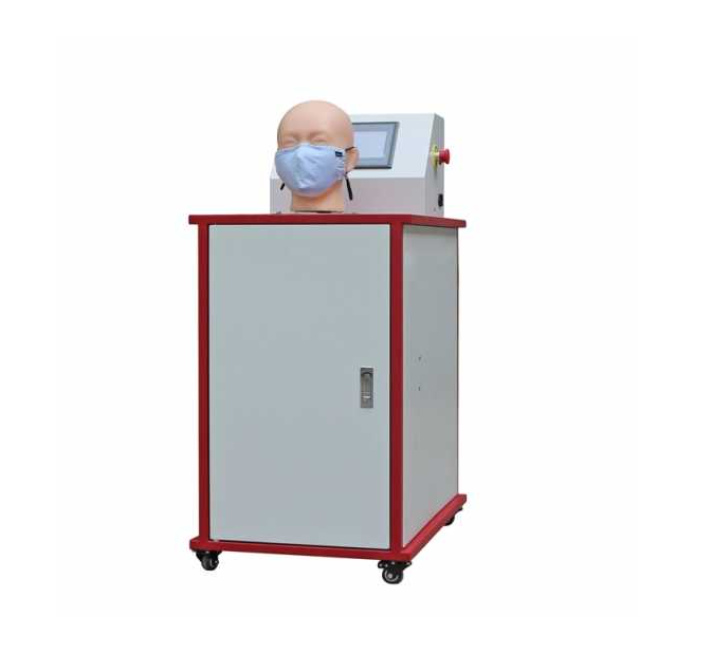
Detailed Working Principle of Mask Breathing Resistance Tester
The working principle of the Mask Breathing Resistance Tester combines precise mechanical design with advanced sensing technology, functioning like a sophisticated “miniature system” that simulates human breathing.
First, the tester needs to recreate the airflow conditions generated during human respiration. Through a high-precision airflow control system, the equipment can provide a stable and specific airflow rate, creating an “artificial respiratory system” for the mask. During testing, the airflow rate is generally set according to the range of airflow generated during normal human breathing, ensuring that the test results closely reflect actual wearing conditions.
After the simulated airflow is generated, the mask sample is placed onto the testing platform. At this stage, a standard headform with a shape similar to the human face plays an important role. It allows the mask to be tested under conditions that closely simulate real wearing situations. The headform acts like a reliable “model,” maintaining a fixed position to ensure that the wearing angle, fitting condition, and contact area of the mask meet standard requirements. This prevents variations in wearing methods from affecting the accuracy of test results.
Next comes the most critical stage — breathing resistance measurement. As airflow passes through the mask, the high-precision differential pressure sensor inside the tester begins measuring the pressure changes. This sensor functions like a highly sensitive “monitor,” continuously detecting the pressure difference between the inner and outer sides of the mask.
When air flows through the mask, the filtering materials and structural layers create resistance to airflow, causing a pressure difference between the inside and outside of the mask. The magnitude of this pressure difference directly represents the breathing resistance of the mask. In simple terms, a larger pressure difference indicates higher breathing resistance, while a smaller pressure difference indicates lower breathing resistance.
Throughout the entire testing process, the instrument is also equipped with an advanced data acquisition and processing system. This system works like an intelligent “assistant,” quickly and accurately recording pressure data from the differential pressure sensor, as well as airflow data provided by the airflow control system.
Based on these collected parameters and built-in calculation formulas, the tester can precisely determine the inhalation resistance and exhalation resistance of the mask. The final test results are clearly displayed on the instrument screen or stored in the internal data storage system, allowing convenient review, comparison, and further analysis.
Operating Procedure of Mask Breathing Resistance Tester
After understanding the working principle of the Mask Breathing Resistance Tester, many people may wonder how this equipment is actually operated. The following section provides a detailed explanation of the testing procedure.
1. Power-On and Preheating
Before turning on the main power supply, carefully confirm that the power source meets the requirements of AC 220V, 50Hz, and that the voltage fluctuation range does not exceed ±7%. This is similar to providing the tester with a stable “energy source.” An unstable power supply may affect the accuracy of test results.
After confirming the power conditions, switch on the equipment. The tester will display the welcome interface. Then, place the instrument in a standard testing environment and allow it to preheat for at least 30 minutes.
The 30-minute preheating period is essential. If the equipment does not reach a stable operating condition, it may produce inaccurate measurements, resulting in deviations in the final test results.
2. Sample Preparation
According to the requirements of relevant testing standards, prepare a certain number of mask samples for testing. Generally, the number of samples should be no fewer than 5 pieces to ensure that the test results are representative and reliable.
Before testing, visually inspect each sample to ensure there are no obvious defects, such as damage, stains, deformation, or other abnormalities. If the sample itself has quality issues, the test data obtained may not accurately reflect the actual performance of the mask.
3. Test Parameter Setting
After preparing the samples, configure the testing parameters before starting the test.
Through the instrument’s operation interface, select the required testing mode, such as inhalation resistance testing or exhalation resistance testing. At the same time, set the testing duration and airflow rate according to the testing requirements.
Under normal conditions, the test airflow is typically set at 85 L/min, which simulates the average airflow rate during human breathing. This airflow setting is critical because airflow that is too high or too low may cause the test results to deviate from actual wearing conditions.
Similar to testing water resistance using different water flow rates, different airflow conditions will produce different resistance values. Therefore, accurate airflow control is essential for reliable results.
4. Sample Installation and Testing
After completing parameter settings, the actual testing process can begin.
First, carefully place the mask sample onto the test headform. The headform is designed to simulate the structure of the human face and provides a realistic wearing condition.
During installation, carefully adjust the mask position and head strap tightness to ensure that the mask fits tightly against the test headform without air leakage.
During the test, appropriate measures should be taken to prevent the sample from being sucked into the breathing tube inlet. For example, a protective mesh can be installed at the tube opening, or the sample position and angle can be adjusted properly.
Once everything is ready, press the “Test” button. The tester will begin operation automatically. Airflow will pass through the mask according to the preset flow rate, while the differential pressure sensor continuously monitors the pressure difference between the inner and outer sides of the mask and transfers the data to the data processing system.
5. Result Evaluation
After the test is completed, the system automatically evaluates the test results according to preset standards and clearly displays the result as “Qualified” or “Unqualified” on the screen.
According to relevant testing requirements, when the airflow rate is 85 L/min, the breathing resistance requirements are generally:
Inhalation resistance: ≤175 Pa
Exhalation resistance: ≤145 Pa
If the measured values are within the specified range, the mask meets the breathing resistance requirements. If the values exceed the limits, further analysis is required to determine whether the issue comes from the manufacturing process or defects in the sample itself.
If additional samples need to be tested, simply repeat the above testing procedures.
6. Equipment Shutdown and Maintenance
After all tests are completed, press the “Return” button to return to the main interface. Then switch off the equipment power supply and air source, and cover the instrument with a dust-proof cover.
The dust-proof cover should always be kept clean and free from dust or contaminants. Proper protection and maintenance help extend the service life of the testing instrument and ensure long-term measurement accuracy.
Conclusion
The Mask Breathing Resistance Tester is not merely a testing instrument; it is an important safeguard for respiratory health. Through accurate evaluation of mask breathing resistance, it plays a key role in mask production and quality inspection, ensuring that masks provide both effective protection and comfortable breathing performance.With continuous technological development, testing equipment will become increasingly advanced, providing stronger support for public health and personal respiratory protection.
In the future, whether responding to unexpected public health challenges or meeting daily respiratory protection needs, masks will continue to play an essential role. Behind every safe and comfortable mask is the continuous development and application of advanced testing technologies, including the Mask Breathing Resistance Tester, helping manufacturers deliver higher-quality and more comfortable protective products.
Previous: What are the differences between explosion-proof torque rheometers?
N e x t : the last page
