





Why Is Gas Oxidizing Properties Testing Important for Chemical Safety?
2026/09/03
Share:

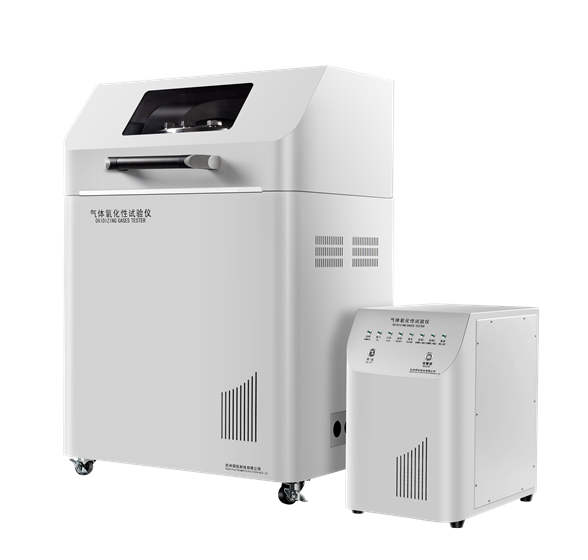
Design Concept and Safety Architecture
Considering that the test subjects often possess flammable, explosive, or toxic and hazardous properties, the Gas Oxidizing Properties Tester places strong emphasis on “separation of personnel and equipment” and intrinsic safety in its design.
Split-Type Structural Design: The instrument generally adopts a layout in which the test apparatus is separated from the control system. The main test unit is placed in an explosion-proof environment, while the control unit is located away from the hazardous area. This design not only protects precision electronic components from corrosion or explosion impacts but also fundamentally ensures the personal safety of operators.
Multiple Safety Protection Mechanisms: The equipment is equipped with multiple explosion-proof safety functions, including an automatic pressure relief device. After the test is completed, the system can automatically release the pressure inside the test vessel, avoiding risks associated with manual operation. Meanwhile, the fault detection system and automatic audible and visual alarm functions can monitor the operating status in real time and immediately issue warnings and initiate appropriate measures in the event of an abnormal condition.
Remote Control and Automation: The instrument supports remote ignition and PC software control, enabling full automation of the testing process. From parameter setting, automatic gas mixing, and ignition testing to data storage and report generation, the entire process requires no manual intervention. This intelligent operation not only reduces human error but also significantly improves testing efficiency.
Application Fields and Social Value of the Gas Oxidizing Properties Tester
The Gas Oxidizing Properties Tester has a wide range of applications, mainly serving the following fields:
Classification and Labeling of Hazardous Chemicals:
The equipment helps manufacturers systematically and accurately determine the oxidizing properties of gas samples in strict accordance with relevant international and national standards. Based on scientific test results, companies can clearly determine whether a gas is classified as an oxidizing gas and then apply the appropriate safety labels in accordance with regulatory requirements. This enables them to fulfill their statutory notification obligations and effectively avoid compliance risks and safety accidents caused by unclear classification or improper labeling.
Hazardous Materials Transportation and Storage:
In the logistics of hazardous materials, this instrument provides essential scientific support for transportation companies and storage facilities. By accurately determining the oxidizing properties of gases, companies can reasonably determine packaging levels, transportation conditions, and storage segregation requirements. This fundamentally helps prevent fires or explosions that may result from the co-storage or co-transportation of chemicals with different properties, thereby ensuring the safe and stable operation of the entire logistics chain.
Selection of Gas Cylinder Valves:
Considering the specific characteristics of strongly oxidizing gases, the Gas Oxidizing Properties Tester can provide accurate guidance for selecting gas cylinder valve vent outlets in accordance with relevant ISO requirements. It helps designers and users scientifically evaluate the resistance of valve materials and structures, ensuring that they can effectively withstand corrosion and high-pressure conditions during long-term contact with strongly oxidizing gases, thereby ensuring equipment service life and operational safety.
Scientific Research and Quality Control:
In scientific research, the instrument provides strong technical support for new material development institutions and enables comprehensive safety evaluation of new gas mixtures, providing researchers with critical data for reference. In terms of quality control, quality inspection departments can use the equipment to conduct strict compliance sampling inspections of chemicals entering the market, ensuring that marketed products meet relevant safety standards and effectively safeguarding public safety and market order.
Guide to Selecting a Gas Oxidizing Properties Tester
When purchasing a Gas Oxidizing Properties Tester, users need to comprehensively consider equipment performance, actual testing requirements, and long-term service support. The following key factors deserve particular attention:
Accuracy and Stability:
The accuracy and stability of the equipment are important indicators of its measurement capability and directly affect the accuracy and reliability of test results. A high-precision instrument can perform detailed measurements of gas samples, while good stability ensures that the equipment maintains consistent and repeatable data during continuous operation or under different environmental conditions. Therefore, users should prioritize products that have undergone rigorous calibration, feature mature technology, and offer high accuracy and good stability to meet stringent safety testing requirements.
Functions and Expandability:
Different Gas Oxidizing Properties Testers may differ significantly in their functional configurations, such as testing range, level of automation, and data processing capabilities. Users should select products with functions that match their specific application scenarios and testing requirements, avoiding unnecessary or insufficient features. Attention should also be paid to equipment expandability, including support for module upgrades, software updates, and interface expansion, so that the equipment can accommodate new requirements arising from future business development or changes in standards and remain applicable and technologically advanced over an extended service period.
Brand and After-Sales Service:
Selecting a reputable and well-established brand in the industry generally provides greater assurance in terms of quality control, technological development, and market validation. At the same time, a comprehensive after-sales service system is equally important, including installation and commissioning, operational training, regular maintenance, and prompt technical support. A responsible manufacturer can provide timely and professional repair and technical guidance throughout the equipment's service life, helping users reduce downtime and ensure the continuous and safe operation of testing activities.
In summary, the Gas Oxidizing Properties Tester is not merely a precision instrument in the laboratory, but also an important safeguard within the chemical safety system. Through highly automated and intelligent technologies, it transforms complex and hazardous gas oxidizing property tests into a safe, standardized, and traceable data process. With advances in technology, such instruments will play an increasingly indispensable role in improving the management of hazardous chemicals and preventing industrial accidents, providing solid technical support for building a safe and sustainable chemical industry environment.
Previous: What is the Standard Helmet Visual Field Tester used for?
N e x t : Why Is Gas Hazard Characteristics Testing Important for Chemical Safety?
